As a nation susceptible to the vagaries of weather, the country appears to have come to terms with the phenomenon of nature’s wrath manifesting itself in different forms across various regions of the land.
Cyclones, earthquakes, cloud bursts, flashfloods, avalanches, landslides, and draughts - the list is exhaustive!
Recently, the unprecedented challenge of soaring temperatures that Leh’s high-altitude commercial airport was grappling with seriously impacted flight operations. The cold desert region has reportedly witnessed a spike in daytime temperatures, causing serious repercussions for air travel.
A troubling sign of the broader impacts of global warming, one may ask.
As events in the recent past have shown, the Himalayan region states of the country have always been vulnerable to climate change impacts.
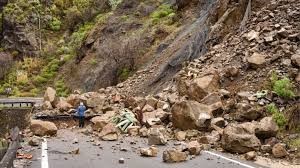
With frequent cloudbursts and resultant landslides continuing to wreak havoc in Uttarakhand, the horrors of the 2013 floods that ravaged the state refuse to fade away from one’s memory.
News reports about the recent isolation of the Kedarnath valley due to a landslide give one the jitters. The destruction of the Kedarnath highway by flooding only serves to magnify the severity of the mayhem.
Kerala, in the meanwhile, seems to be setting up a precedent of sorts as far as climate-related disasters are concerned.
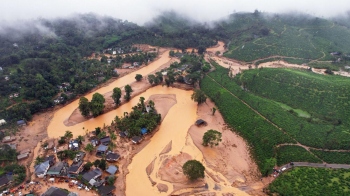
As the worst landslide in the history of Kerala, and perhaps one of the worst ever witnessed in the country, the multiple landslides triggered by heavy rains which occurred at Mundakkai and some other villages in the hilly district of Wayanad in Kerala brought torrents of mud, water, and boulders cascading down onto the area.
Whole settlements were washed away, hundreds lost their lives even as many remain unaccounted for. With death and devastation all around, it is a story of a tragedy that seems to be revisiting the region recurrently.
“What happened in Mundakkai, Wayanad is not an aberration; it’s the new normal. It’s the beginning!” (Editor, Countercurrents.org). A scary affirmation but one which needs to be taken seriously nevertheless! As claimed, unchecked development models and environmental degradation are undoubtedly the main contributory factors of all such disasters.
Just as the Himalayan state of Uttarakhand remains vulnerable to disaster due to unsustainable development and an increase in pilgrims visiting various shrines in ‘Dev Bhoomi’, it is the extreme aversion shown for disaster and climate-resilient approach while envisaging various developmental works that has spelt doom for most of the other states in the country.
Due to its physio-graphic and climatic conditions, India is one of the most disaster-prone areas of the world as is evident from the conditions prevalent in the majority of its states which lie exposed to the threats of recurring natural hazards.
India’s response to the growing threat of natural disasters has however never encouraged any long-term plans to avert calamitous events of the magnitude we are witnessing now.
Rather, the interim plans put into effect whenever disaster strikes are limited to ‘search-and-rescue’ operations without any sincere efforts being made to ward off the disaster through a system of early warnings that could alert the authorities to the danger, allowing them sufficient time to prevent any serious damage.
Of course disasters come unannounced; but they do give sufficient ‘notice’ of their impending strike. But it is we who are guilty of turning a blind eye to the ominous warnings, and end up suffering the consequences.
It is even more atrocious to have each disaster being treated as a one off event by people in the locality and continuing to live with the assurance that it will never happen again.
In fact, where the situation actually warrants extreme caution to be exercised and appropriate steps taken to ensure that a repeat of the mishap never occurs, the administration’s ennui over the whole matter is shocking!
The ‘Red Cross’ says that countries must stop managing each crisis as a separate surprise and instead build systems that can cope with climate threats. But sadly that has never ever featured in the order of priorities; no, not at least for India. With a distinct thrust on disaster management, and not disaster prevention and mitigation, can the nation feel secured against such threats!
Apprehensions already exist over human-induced climate change causing severe weather events across the world, impacting the lives and livelihoods of millions. We could thus infer that almost all the recent ‘adverse’ happenings could be largely attributed to human activity and behaviour.
A feeling that the evolving tourism patterns have had a definite role to play in the astronomical rise in disaster incidences across the country is not misplaced either!
While various avenues are being explored to promote the tourism potential of any region, the government and the stakeholders refuse to see the slew of negative impacts brought in its wake.
In the pursuit of presenting appealing features of one’s region to draw more and more visitors, it is generally observed that the administration is not above compromising the natural and cultural heritage of local landscapes.
Some may see altering nature as a sign of human progress. However, if that advancement is to be made by attempted modification of the natural environment by humans to satisfy their needs even at the cost of blatant destruction, nature will hit back with a vengeance.
It is time we realized that nature is striking back at us for our rapacious ways. If the current rates of nature destruction continue unabated, we are in for some really tough times ahead.
It is said that nature can bounce back quickly when given space to recover. So what stops us! Before we are sucked into the vortex of a never-ending deluge of miseries wrought on us by a succession of calamities, it is only appropriate that we make peace with nature.