This is a mysterious, curious and un-ignorable beast. It can make life a misery for you; on the other hand, if you don't take it too serious, you can also have fun at this character's cost. But the online troll is a mystery, and one which can stick to you like a leech.
Entering my thirtieth year in cyberspace, having been since 1995, I've had my fair share of online trolls. Maybe more than fair. It reminds me of the story in Konkani the title of which reads: "Borem korunk gel'lear, fattir pod'dta." Or, if you go to help out, you will surely end up getting hit on your back.
For every one part that you read in an online debate, there are nine parts below the surface, which you don't see and never even get a clue about. So, most readers might not notice when someone is deliberately trolling.
Journalist Tanushree Pandey commented recently: "I spoke to @boomlive_in about female journalists in India being attacked, harassed, and trolled online for doing their work and holding the establishment accountable for its wrongdoings. It's considered anti-establishment."
Incidentally, 'Troll' is an Old Norse term for fiend, demon, werewolf or jotunn (a type of being in Germanic mythology).
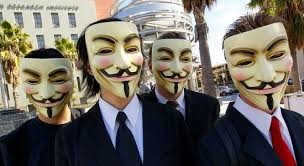
On the Internet, a troll is someone who tries to make people angry through what they post, write or say. They excite strong emotions, get reactions, or cause other problems. In the social media, they make inflammatory or inappropriate comments. As we've seen in Goa of late, trolling is not restricted to the Internet. It can also be translated into the world of politics or communalism.
But cyberspace can remind you of a romance. When a community is initially formed (mailing-list, WhatsApp or Facebook group, maybe even a Instagram group or social channel) everyone appreciates the work. Slowly, human differences show up. In a while, one or the other attention-seeker will start posting hard and fast. Repeated posts will be made, often in a way that rakes up controversy and excites emotions. Some troll by just posting off-topic posts, or telling you their personal stories.
Way back in the 1990s, when the Goanet was the main social media platform for Goa and its diaspora, we saw the first signs of the rise of trolls. A few people would indulge in inexplicable behaviour.
Instead of helping with initiatives, or supporting one another, they'll come for your throat. Even to disagree would be okay. But the way they do it is meant to rake up bitterness and controversy.
If someone says something nasty to you, there's every chance that you would get hurt and respond equally nastily. Thus the cycle goes on.
The BBC has an interesting article titled 'Why do people troll and what can you do about it?' According to that, people troll others for a number of reasons -- attention seeking, revenge, insecurity, online anonymity (which makes them feel more 'powerful'), or the nature of some online environments.
One interesting reason is that trolls may have a "higher level of negative social potency". This means they may actually enjoy causing mischief and suffering among others.
In many cases, trolls begin by targeting one person because they may disagree with them. Being human, it is only fair to not agree with everything that someone says. Or even to vehemently disagree due to sharp difference in political perspectives.
But to personalise these differences, to cast aspersions on a person's motives... all this is unfair.
Over time, a pattern develops. You find a handful of disgruntled individuals were causing all the trouble. This would instigate a few more to get on board 'MV Troublemakers'.
Sometimes, there was a clear political interest too. When some politicians saw the impact that social media was having in India, already by the late 1990s, they would get their cats-paws to enter the field, and seek to influence the debate. A few others did it more honestly: they got involved in their own name.
The trolls' ability to derail serious discussions is not to be underestimated. More than this, it could also spread bitterness all round, deflecting from months or years of attempts to build up serious and useful discussions on one or the other point.
Generally, one would ignore such trolling attempts and laugh it off. Till, one fine day, the potential seriousness of it came to the fore. A former Indian ambassador, the late Placido D'Souza, who had been an early member of Goan networks in cyberspace, said: "You seem to be getting involved in quite a few controversies." Knowing how these "controversies" were engineered, the unfairness of it all hit home.
On another occasion, someone in Goa wanted to create a controversy created an entirely make-believe story, which he planted on another troll in cyberspace. The later spread it very confidently. Till, about a decade later, he sought to privately apologise. He found out he had been misled on an issue he (only then) realised didn't have an iota of truth in it.
So, how does one deal with trolls? You could block them; which comes across as undemocratic. You could adopt the editor late Vinod Mehta approach, where he would take criticism against himself, and highlight it! You could give it to them as hard as they give, and let the reader judge who's being ludicrous. Or, you could simply laugh them out of town.
Whichever approach you follow, you surely need to understand the online troll. What makes him (only seldom her) tick. What pleasure they get. Above all: how not to fall in their trap!