As the vibrant chaos of another Ganesh festival fades into memory, Goa gently settles back into its quiet, coastal rhythm.
The echoing beat of the ‘Ghumat’ and the fragrant smoke of ‘Aartis’ give way to the familiar murmur of the monsoon sea. With decorations packed away, families return to their daily routines, carrying the warmth of recent reunions and the lingering sweetening of ‘Modaks’. For us though, a visit to the scenic village of Adpai in Ponda taluka during the Ganesh festivities was truly a revelation.
An aspect of the festival hitherto unknown to me opened my eyes to the strict adherence of customs and traditions that continues unhindered even today in the milieu of contemporary culture.
Adpai village is famous for its dense, labyrinthine layout and a tightly knit community where almost every resident is interconnected through vast ancestral lineages.
Rather than functioning as isolated households, the village is structured around massive joint-family networks known as ‘Kutumbs’. This unique socio-geographic fabric directly shapes its most famous cultural traditions.
Unlike most of Goa, where individual households host their own idols, Adpai celebrates Ganesh Chaturthi collectively. Seventeen major family lineages (Kutumbs) anchor the village, drawing huge extended families back to their shared ancestral homes for the ‘Kutumb Ganeshotsav’.
The crown jewel of this celebration is the Adpai Ganesh ‘Visarjan’, a spectacular 150-year-old traditional celebration held on the fifth day of Chaturthi.
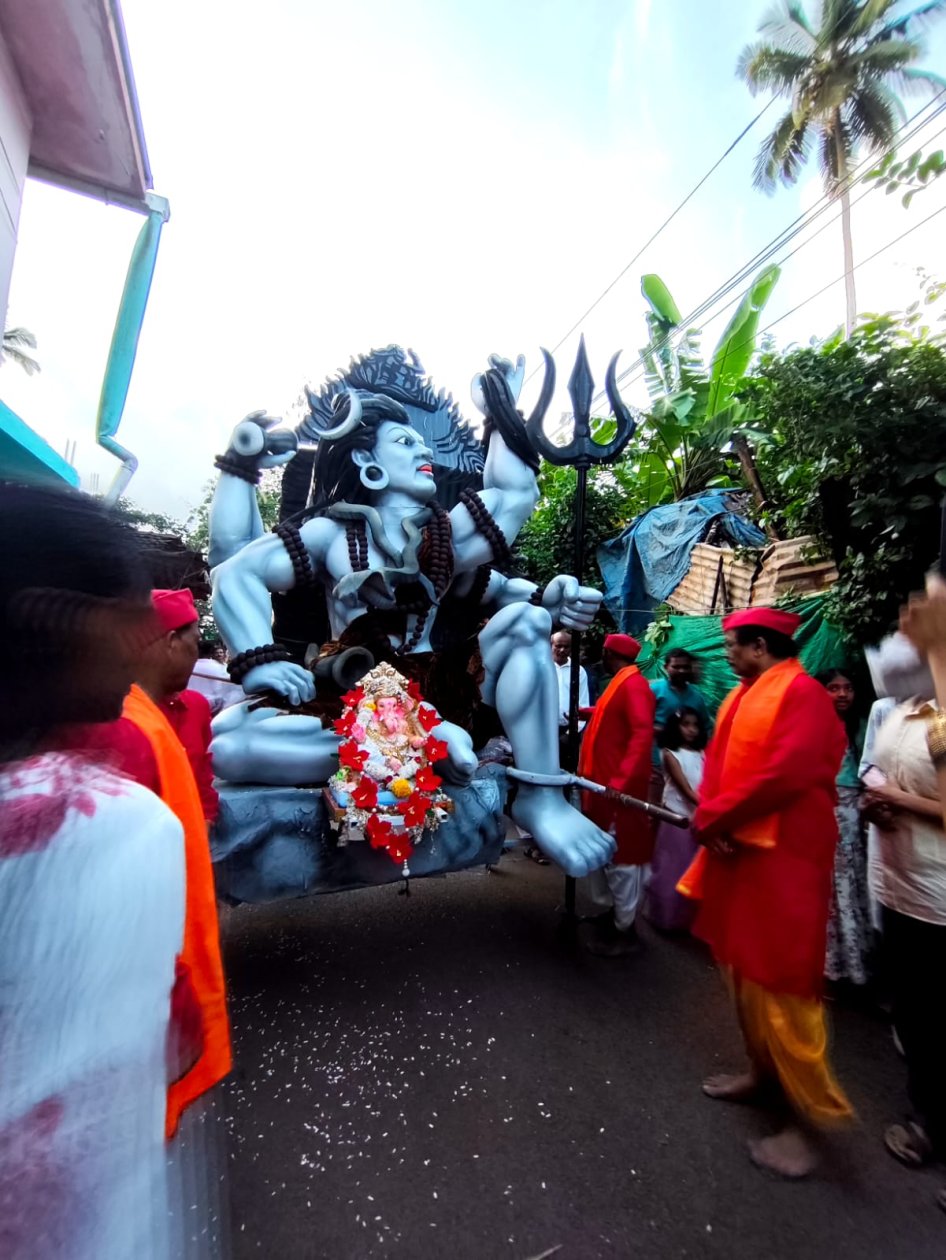
Each ‘Kutumb’ designs a specific theme, colour code, and handmade creative float called ‘Chitrarath’. On this day, the entire village turns into a vibrant, moving carnival as the families sing, dance, and carry their Ganesh idols down the narrow lanes to the Zuari River for immersion.
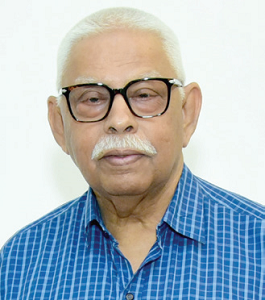
We visited Suresh Kaka at Adpai on the fourth day of the festival. A perfect host, he guided us through the village acquainting us with the traditions that showcased the uniqueness of the celebrations. Various competitions kept alive the spirit of the festival. Inside his home, the women were bustling, preparing ‘modaks’ for an upcoming contest. Suresh Kaka explained the meticulous logistics of the grand finale.
By noon on the fifth day, incoming vehicles are halted at the neighbouring village of Durbhat. At 3 pm, the grand procession begins, heading toward the river where the idols are placed onto canoes for their final immersion which concludes by sunset.
Suresh Kaka’s immense pride was palpable – a sentiment mirrored by every villager whose unmatched enthusiasm drives this five-day spectacle.
Sagar Naik Mule, acclaimed ‘Kaavi’ artiste from Adpai, and a personal friend, was not less eloquent about the grand, five-day joint family and community celebration centered around ancestral roots and the unique joint immersion tradition of his village.
Locally known as ‘Chovoth’ or ‘Chavath’, Ganesh Chaturthi marks a profound period of homecoming for the Goan diaspora. Transcending geographical boundaries, family members return to ancestral roofs to fulfill centuries-old vows, embracing a “one family, one Ganesh” tradition.
This collective worship preserves a shared community identity, epitomized by the ‘Sawardekar Wada’ in Sanvordem, South Goa, which is renowned for hosting India’s biggest joint-family Ganesh Chaturthi celebration.
Besides the ‘Kutumbaka Ganeshotsav’ of Adpai, and the ‘Sawardekar Wada’ joint family celebration, Goa hosts several other unique and historic community and family Ganesh Chaturthi celebrations rooted in multi-generational traditions.
However, a poignant shift is occurring. What was once a vibrant anchor pulling far-flung families back to their roots is increasingly evolving into a ritualistic routine for the modern generation.
The bustling warmth of a packed household, filled with shared laughter, is frequently replaced by hasty visits, perfunctory prayers, and digital greetings.
While the superficial grandeur and festive spectacles remain, the core essence of seamless family bonding and a shared pause from the chaos of modern life is often lost in transit. The modern rush has stripped away the inherent magic of the festival, leaving behind just a checklist of tasks and a few days off.
Festivals are not merely days of leisure, they are the vibrant canvas upon which the region’s diverse cultural identity is painted. To celebrate them without their accompanying customs is akin to observing an empty frame without its masterpiece.
Traditional rituals serve as spiritual anchors and historical bridges keeping a fast-evolving society grounded.
They act as a living repository of ancient wisdom, philosophy, and history. When families come together to draw intricate ‘rangolis’, light ‘diyas’, or prepare age-old culinary recipes, they are not just performing repetitive tasks – they are actively participating in an act of cultural preservation.
In a rapidly globalizing world where culture lines frequently blur, these unique practices ensure that the younger generations understand their roots, values, and the profound symbolic meanings behind every ritual – whether it is the triumph of light over darkness or the expression of gratitude to nature.
Furthermore, these meticulous preparations demand collective effort, fostering unparalleled social cohesion and a deep sense of belonging among families and neighbours. Honouring these traditions ensures that the celebration remains a sacred, soulful experience rather than a commercialized event.
The shared compliance with custom creates a collective rhythm that strengthens communal harmony and instills a deep sense of belonging. Ultimately, honouring traditions during festivals ensures that the celebration remains a sacred, soulful experience rather than a commercialized event, keeping the region’s rich heritage alive in its truest essence.
The modern generation increasingly barters centuries of heritage for the fleeting promise of convenience. In a world ruled by instant gratification, sacred rituals are replaced by fast-paced alternatives, and deep-rooted traditions are flattened into digestible digital trends, we risk a dangerous trade-off.
By prioritizing efficiency over substance, we risk disconnecting from our ancestral roots and losing the very identity that anchors us in a changing world.