Maithili Prabhudesai
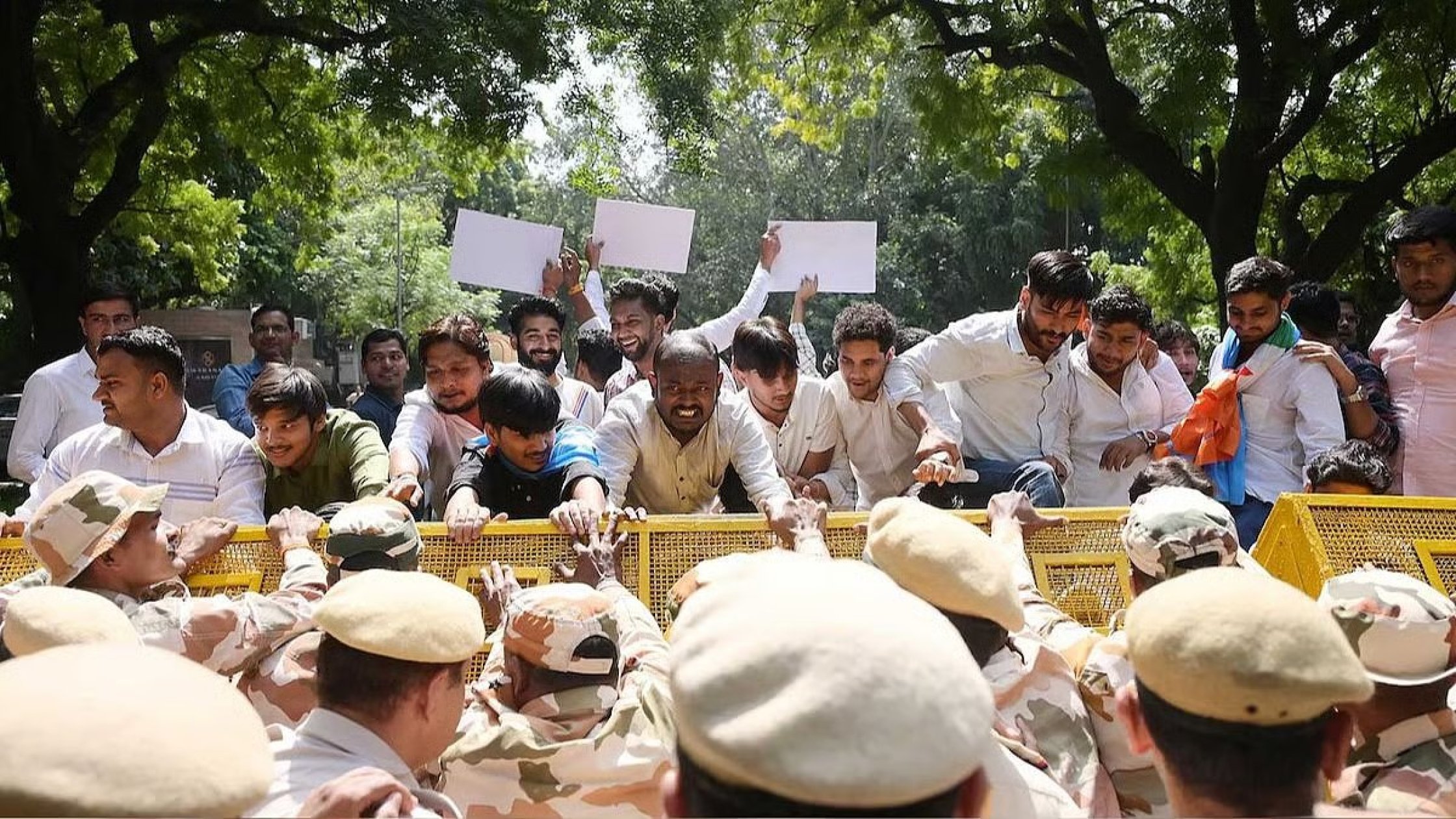
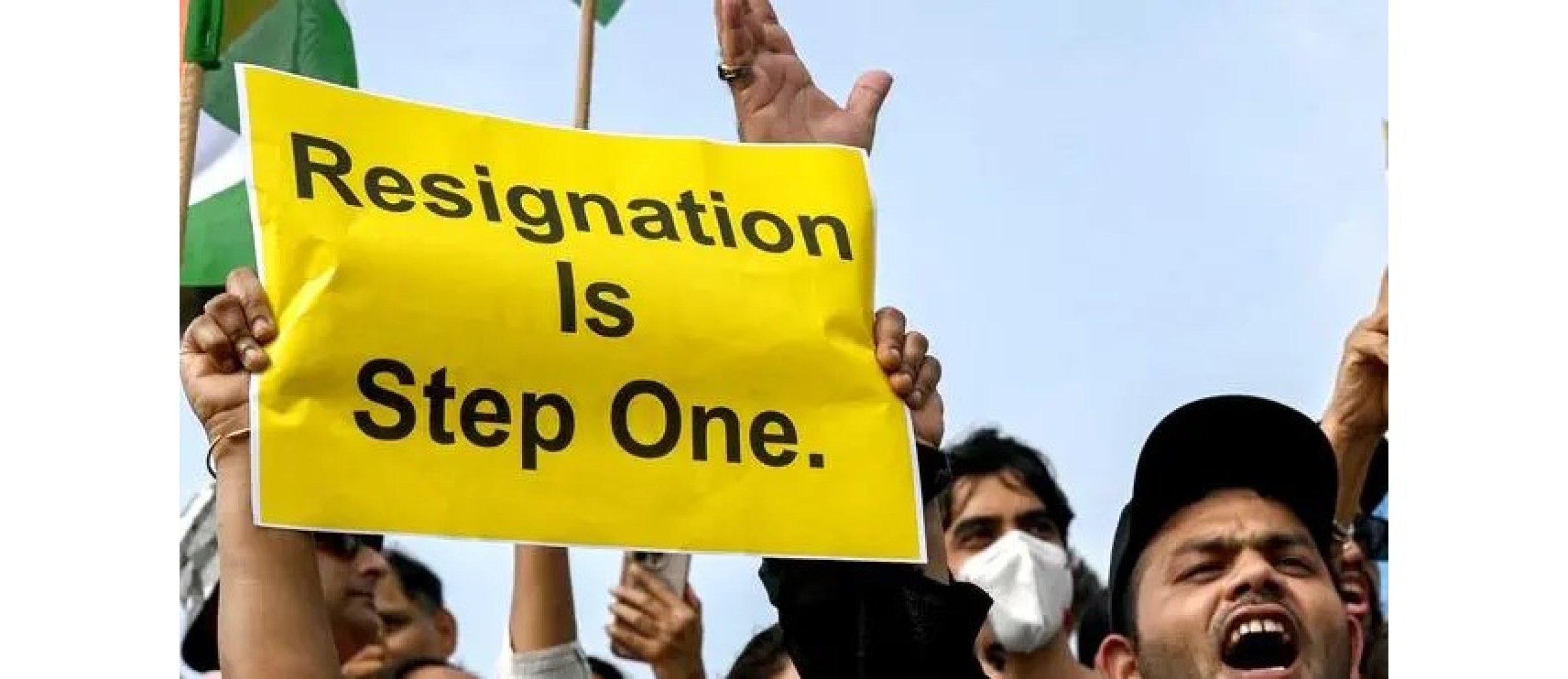
The resignation of Union Education Minister Dharmendra Pradhan following sustained youth protests was a significant moment of political accountability. It demonstrated that when young citizens organise around issues affecting their education and future, their concerns can translate into political consequences. Dharmendra Pradhan’s resignation was accepted on July 25, after which Pralhad Joshi was assigned charge of the Ministry of Education.
But the latest UGC-NET controversy raises a question that goes beyond the resignation itself: What happens after political accountability?
The National Testing Agency has now announced a fresh UGC-NET June 2026 examination in English, Commerce and Sociology after an expert committee identified several problems in the original papers, including factual, typographical, language and translation errors, along with repeated questions. The re-examination is scheduled for September 9 and 10, and affected candidates will not be required to pay an additional fee.
For the candidates concerned, this is far from a minor administrative inconvenience. A national-level examination demands months of preparation, considerable academic effort, and often financial investment. Having to prepare and appear again because of shortcomings in the examination process creates additional uncertainty for students whose academic and professional plans may already depend on the outcome. Their frustration is therefore understandable. So is the demand for accountability.
The public conversation now needs to move to its next stage. The minister has changed. The examination system, however, remains. This should not be interpreted as assigning responsibility for the present controversy to the new Education Minister. The June examination was conducted before the current minister assumed charge. Rather, the episode illustrates a broader principle of public administration: a change in political leadership does not automatically amount to institutional reform.
An examination paper is not ordinarily the product of one person’s decision. It passes through a chain of processes involving question-setting, subject expertise, moderation, translation, verification, technological preparation and final approval. When serious errors survive that chain, the important question is not only who should answer for them, but also which safeguards failed to detect them.
Were there sufficient independent checks? Was factual accuracy adequately verified? Did qualified experts review translations? Were previous question papers systematically examined for substantial repetition? At what stage were complaints assessed? And could these problems have been identified before candidates were required to sit for the examination?
These are institutional questions. Asking them does not diminish individual accountability. On the contrary, it makes accountability more meaningful by seeking to understand how a failure occurred and how to prevent it from recurring.
This distinction is particularly important in high-stakes examinations. UGC-NET determines eligibility connected to Junior Research Fellowships, Assistant Professorship, and certain PhD pathways. Its credibility therefore has consequences beyond a single examination cycle.
The appropriate response should consequently have two dimensions.
First, accountability. Where responsibility is established, it should be clearly identified and addressed.
Second, institutional reform. The procedures that allowed the failure to occur should be examined and strengthened. One cannot substitute for the other.
There is a risk in treating the removal or resignation of an individual as the final solution to an institutional problem. A change in personnel can provide political accountability, but if the underlying procedures remain unchanged, the possibility of repetition remains.
That is why the present response deserves attention beyond the re-examination itself. NTA has indicated that it is reviewing its internal processes and protocols, including question-setting, moderation, translation and composition. The Education Ministry has also sought a broader overhaul of NTA’s examination processes.
The effectiveness of these measures will depend on what follows.
A review should lead to clearly defined safeguards. Responsibilities at different stages should be documented. Independent expert verification should be strengthened. Translation and factual checks should not be treated as merely procedural formalities. Mechanisms for identifying repeated questions and assessing candidate complaints should be robust enough to detect problems before an examination is compromised.
Equally important is transparency. Students and the wider public should be able to understand, within reasonable limits, what went wrong and what has been changed as a result.
Institutional confidence cannot be built on assurances alone; it is built when reforms are visible and measurable.
There is a wider lesson here about youth participation in democracy.
The protests demonstrated that young citizens can question institutions, organise collectively and demand accountability. That is an important expression of democratic participation.
But perhaps the next stage of that participation should be equally significant: Moving from “Who should be held responsible?” to “What should change?”
The two questions are not contradictory. The first establishes accountability. The second seeks institutional learning. India needs both.
The latest UGC-NET episode should therefore not become another cycle in which public anger rises, an individual is held responsible, attention moves elsewhere, and the underlying weaknesses remain insufficiently examined. Nor should legitimate criticism be dismissed simply because political leadership has changed.
Instead, this moment can be used constructively. The immediate responsibility is to provide affected candidates with a fair, transparent and credible re-examination. The longer-term responsibility is to ensure that the examination system learns from what happened.
The real test of accountability, therefore, may not be whether a person resigns after an institutional failure.
It may be whether the institution becomes stronger after that failure.
A change in leadership can close one political chapter. Reform is what determines whether the same problem has to be reopened in the next one.