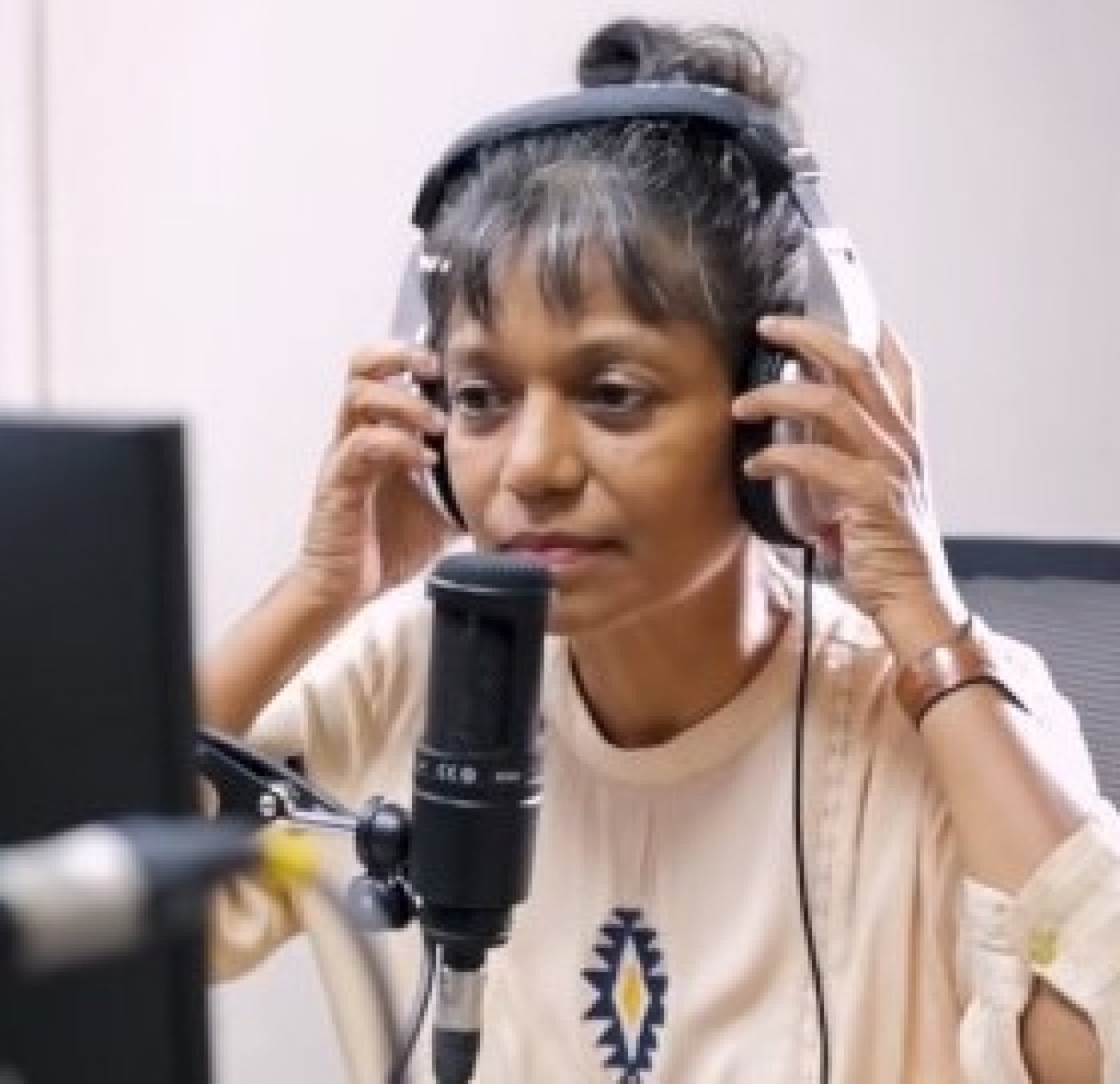
It came as quite a surprise to learn that Goa was about to get a new radio station. In fact, only a few days after hearing about the plan, we could hear the community radio station (CRS) come alive on the airwaves last Sunday. Goa thus got its “first” community radio station---and, interestingly enough, one based in the village of Moira, in Bardez.
Longtime fans of the radio, like this columnist, have been despairing for equally long a time over the way that medium has been functioning across India. After campaigns in the 1990s and an opening up of community radio in 2007, everyone thought it had a great future in India. But was that the case?
Today, the reality is that getting permissions to set up a community radio station is not quite easy. In Goa, some commercial FM radio stations have closed down too. St Xavier's College at Mapusa got a licence, while Goa University attempted to get one.
An amazing experiment like WorldSpace, which brought us crystal clear music to large parts of the globe, has long since folded up.
Goa's radio history is unique and deserves a closer study. It began in the 1940s with the Portuguese-run Emissora de Goa. That was launched with tentative test transmissions, and then grew to become one of the popular broadcasters in Asia (after bigger names like Radio Ceylon).
These big and influential radio stations were run from tiny parts of the continent. Today, the generation that heard them has largely passed on. But there are books capturing that history, narrating the stories of the late prominent announcer Imelda Tavora, and the 1950s radio personality Rodrigo Augiar (told by his daughter Sharbelle Fernandez).
All India Radio-Akashvani came in from the early 1960s. Later, Goa was chosen, unexpectedly, along with the four metros to have FM broadcasting started here in the 1990s. Newspapers like the Times of India and Mid-Day took to the airwaves here.
Later, in this century, licences for private stations in Goa were auctioned. Radio Mirchi 98.3, Big FM 92.7 and Radio Indigo 91.9 emerged. Only the last continues to operate.
Gyan Vani 107.8 MHz, the educational network linked to IGNOU, stopped broadcasting in Goa, though some of its programmes were informative.
As Radio Mandovi crackled to life (I missed the first few minutes, struggling to pick it up on my dial), one hopes for the best, but also sees space for caution.
It is a good thing that the initiative has reached so far. It is led by expat Ashwin Fernandes (whom one knew as a tech-savvy youngster maybe two decades ago). Content is managed by Cordelia Francis, a journalist colleague, with a team of more, and Fernandes' PACT Foundation.
For long now, it has been said that Goa is "the only state' without a community radio station of its own. Voice of Xavier's, or VOX 90.4 MHz, however was inaugurated by St Xavier's College, Mapusa, in Dec 2006, by the forward-looking then Principal Newman Fernandes.
Yet, despite its launch, it didn´t hit the airwaves. Maybe it came too early; it was then tough to generate audio content, with tools and skills not easily available here. Of course, the electronics talent within the college did a good job in even creating their own inexpensive transmitter.
Radio in India is facing what some call a "three-way squeeze". The government has been cautious over opening up this sector, which has been heavily regulated since colonial times. Radio faces economic, regulation and digital competition challenges. Private FM is heavily dependent on advertising. Licences come with many terms, which might be hard for smaller players to keep up with. News is disallowed on private or community FM stations.
With the growth of the social media, there is also competition from YouTube, Spotify and other spaces. Getting trained personnel can be a challenge, ditto for locally-produced content, though the government promises support.
Yet, one can´t write off radio. This technology is far from outdated; it has a role to play. Radio has enormous potential for hyperlocal, multilingual and low-cost communication.
In Goa, radio has its own challenges. This is a small, fragmented advertising market. Commercial FM stations rely heavily on music and standardised formats. So, there is little incentive to invest heavily in expensive, locally produced programming. But Goa is rich in stories waiting to be told.
AIR, despite its headstart and rich archives, through FM Rainbow, main and Vividh Bharati services, has to face changing listening habits and institutional constraints. It seems to have reduced Goa-specific FM programming. So how does Goa turn its cultural richness into financially sustainable, well produced and compelling programming? Will the audiences recognise its potential?
Another issue is reach. Radio Mandovi said it would be heard in a 10 km radius from Moira. That restricts its reach.
In the meanwhile, we have also lost the habit of radio listening. When did we last tune in to radio?
Even buying a decent radio can be tough, though smartphone apps (like FM Radio, which I'm listening on right now) help to somewhat fill the gap.
But this need not make us gloomy. Stations like Radio Sarang (at Mangalore's St Aloysius Deemed University) has scaled up in style. It broadcasts in multiple languages (four, including Konkani). If you're far from Mangaluru, tune in at https://radiosarang.com/#
Others like RadioMango.Ca, the Canada-based Konkani broadcaster, has run its two-hours-a-week programme for over a decade.
If the new radio station can live up to its promise, it can contribute to Goa´s understanding of itself.