It’s the ‘Sharad Navratri’ season! Honoring the strength and grace of the divine feminine, Navratri invites us to reflect on the diverse forms of Goddess Durga, who embodies courage, wisdom, and compassion.
Across nine sacred nights, communities come together in a vibrant tapestry of prayer, fasting, and joyful dance, celebrating the ultimate triumph of light over darkness and renewing our own inner strength for the year ahead.
Yet, as the rhythms of our daily lives evolve, this centuries-old reverence is increasingly stepping beyond the boundaries of our homes and neighbourhood pandals.
The transformation of ‘Durga Puja’ and its parallel festive season into a ‘corporate fascination’ represents a profound shift where ancient cultural traditions seamlessly merge with modern workplace strategies.
While the traditional heart of the festival beats inside the heavily decorated public pandals that open on the sixth day, the corporate version of the celebration commences much earlier inside office complexes, driven by meticulously planned human resource strategies.
At the centre of this workplace phenomenon is the rising significance of ‘festive dress codes’, where employees are encouraged to wear specific, coordinated colours each day of the festival.
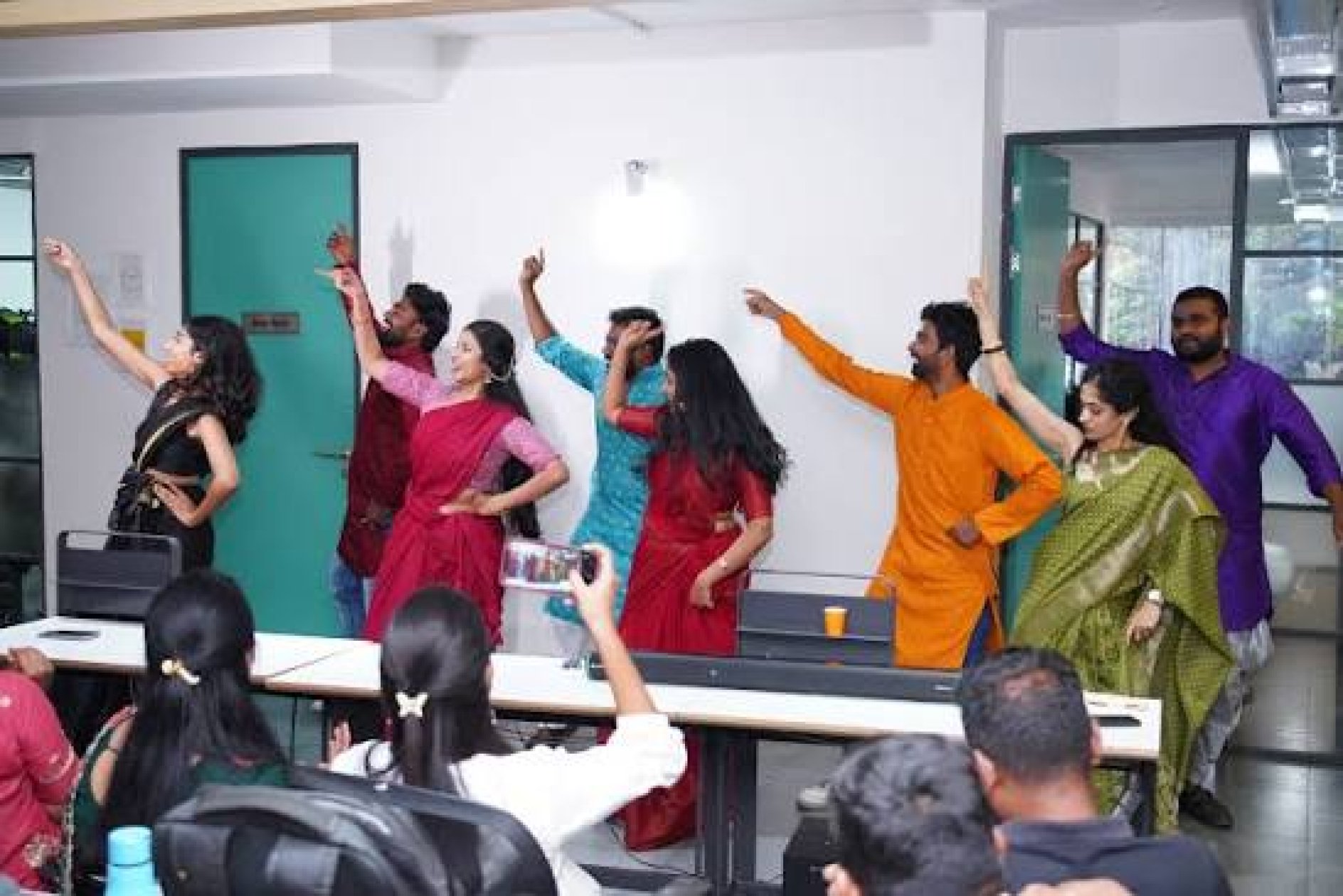
For the staff working in these environments, these colour mandates assume a double-edged significance. On one hand, adhering to the daily color theme fosters a powerful sense of visual solidarity and collective identity, temporarily dismantling rigid corporate hierarchies and breaking the monotony of formal business attire.
On the other hand, it creates a subtle social expectation where participation becomes an informal benchmark for team spirit. Employees often plan their wardrobes weeks in advance to avoid the social exclusion of being the only person not wearing the designated colour of the day.
HR departments across corporates have effectively gamified these traditional workplace events to make employees feel more motivated, connected, and happy at work. Evolving into high-production office events, these festive celebrations now feature interdepartmental competitions for the best floor art, desk decorations, and traditional attire.
These colourful gatherings have evolved from internal celebrations into valuable social media capital. By regularly posting photos of smiling, colour-coordinated teams, companies broadcast a vibrant workplace culture to attract prospective talent. In doing so, they effectively transform employee devotion into corporate branding.
Ultimately, by elevating the importance of daily colours and structured office celebrations, the corporate world has successfully reframed a deeply spiritual festival into a vital mechanism for team building, consumerism, and corporate identity.
This embrace has progressed to a point where the workplace has effectively replaced the home as the primary venue for high-energy celebrations among young professionals.
While traditional home observations have remained quiet, intimate, and often tied to exhausting domestic chores like deep cleaning and cooking for relatives, the modern office transforms the festival into a curated, stress-free playground designed purely for entertainment and socialization.
This shift is most visible in the sheer scale of engagement that happens before the official holidays even begin. At home, the days leading up to the festival are filled with frantic preparation, but at the office, they are filled with structured revelry.
Teams abandon their daily targets to huddle over elaborate floor art competitions, turning corridors into vibrant galleries of colour. The daily dress code turns the morning cubicle arrival into a fashion show, where colleagues hype each other up, take endless group selfies, and showcase elaborate traditional outfits that would otherwise sit in a wardrobe.
Because everyone is participating simultaneously, the office generates a concentrated collective energy and a festive buzz that is hard to replicate in a modern, nuclear home setup.
Furthermore, the workplace has effectively transformed the festival into a game, introducing an element of thrill and reward through competitions like ‘Best Dressed Team’ or ‘Most Creative Cubicle’, turning the celebration into a collaborative team-building exercise.
For a millennial or Gen-Z workforce living away from their hometowns in corporate hubs, these project teams have become surrogate families.
Celebrating at work offers a ready-made, diverse community to share food and traditions, allowing them to experience the peak joy of the festive spirit without any of the familial pressures, generation gaps, or logistical stress that often accompany home celebrations.
Ultimately, the corporate world has successfully decoupled the festival from its rigid domestic duties and repackaged it as a premium lifestyle experience.
By infusing the work week with colour coordinates, friendly rivalries, and institutional pampering, companies ensure that the most memorable, dynamic, and uninhibited fun of the festive season happens right under the office fluorescent lights.
Nevertheless, celebrating festivals in the workplace can be a wonderful way to bridge the gap for a fast-paced world, ensuring people do not miss out due to a long commute or a demanding work schedule.
While it might not completely replace the intimate warmth of family traditions, it provides an excellent opportunity for mutual cultural appreciation.
In nuclear families where everyone works, celebrations at home can sometimes feel small or quiet. The workplace provides a ready-made, diverse community to share food, laughter, and traditions.
Furthermore, office celebrations often bring together people from various backgrounds, turning a festival into an excellent opportunity for team bonding and mutual cultural appreciation.
Planning a festival at home takes immense time and effort, but a well-organized office event allows employees to enjoy the decorations, treats, and rituals without the added burden of hosting after a long workday.
After all, the true essence of any festival lies in shared joy, gratitude, and connection, rather than the scale or location of the celebration.