ROHIT BHANDIYE
PANAJI
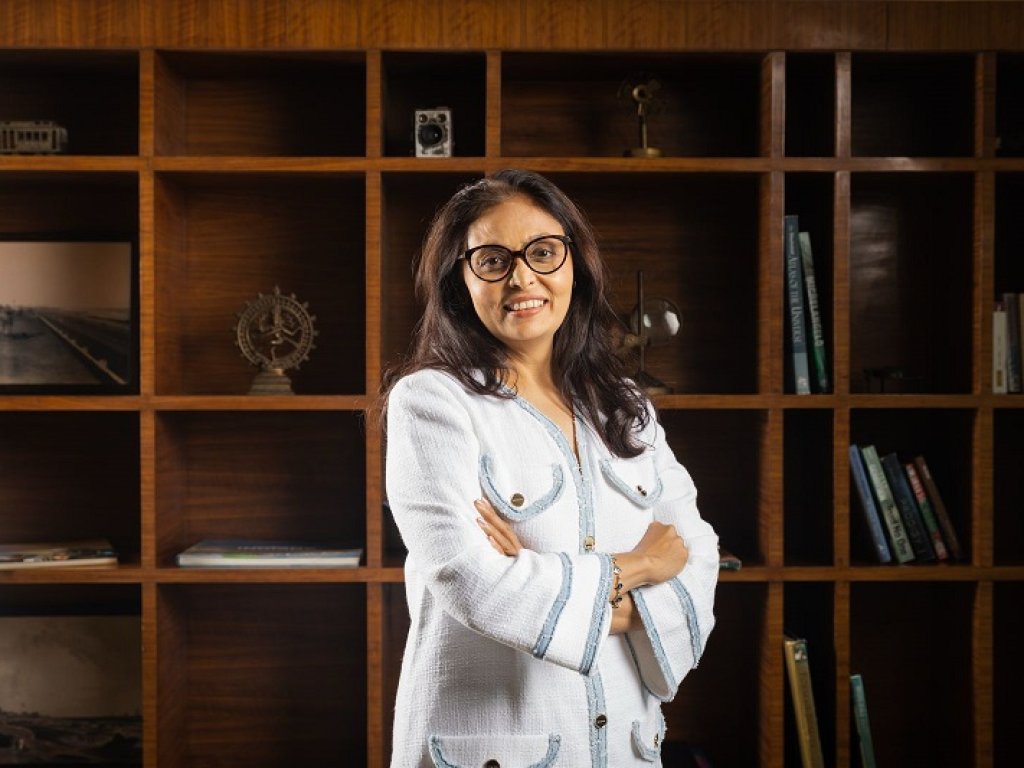
Goa's successful hosting of the seventh edition of the Ultimate Table Tennis (UTT) league has underlined the competition's growing role in shaping the future of Indian table tennis, with league co-owner Vita Dani saying the ultimate objective remains helping India win its first Olympic medal in the sport.
Held at the Dr Shyama Prasad Mukherjee Indoor Stadium in Taleigao from July 9 to 26, the franchise-based league, founded in 2017 by Niraj Bajaj and Vita Dani, has evolved into one of the country's premier table tennis competitions. Beyond providing world-class competition, UTT has emerged as an important platform for identifying and nurturing young Indian talent.
“Our aim is to promote the game and ensure that Indian players benefit the most. For any athlete, the most prestigious thing is to get an Olympic medal. We want an Indian player to win an Olympic medal in TT. And we are working towards it," Dani told The Goan.
"In Paris, we were one game away. But the good part is that we are closer to the medal. And if you look at our juniors, they are doing pretty well. Manav (Thakkar) and Manush (Shah) are world No. 2 in men's doubles. Divyanshi (Bhowmick) is doing exceedingly well at the global level in the junior circuit. She is Asia No. 1 in girls' singles.
"The performances of these athletes reassure me that UTT is definitely taking all the right decisions, doing all the right things, giving the right exposure, giving the right platform to our players,” Dani said.
In the last seven editions, UTT has travelled to seven different locations – Mumbai, Kolkata, New Delhi, Pune, Chennai, Ahmedabad and Goa.
When asked how the league came to Goa, Dani replied, “When we started UTT, our first format was going to different cities in one year. And we realised that there was excitement in all the cities. So, in the second year we had the same format. And thereafter we said, 'Why don't we go to each of the cities where the franchises are?' So, we decided to take the game to the people, and that's how we are here in Goa.”
The league co-owner said that UTT is also helping grassroots development of the sport.
“We support school games and district-level programmes. And we are willing to do a lot more at the grassroots level, which we are committed to. And we do it every year. But we want to go for it in a big way because eventually it's the grassroots that will really produce talent,” Dani said.
However, one of the challenges that remains for the league is the sustainability of its franchises. After all, crowd attendance has not been great at all the venues. While Dempo Goa Challengers, Dabang Delhi TTC and U Mumba TT have broken even, Dani is confident that other franchises will break even soon.
Dani said, “In India, I don't think gate receipts really add too much to the balance sheet. What matters is good sponsors. And I am very proud to say that we have one of the most credible global partners - Butterfly and ChatGPT – on board.
"When we started UTT, it was not with the purpose of making money, but it was the purpose of giving back to the game, giving back to the country. And I am very happy to report that last season, Goa broke even. If you look at this season, U Mumba and Dabangg Delhi have also broken even. So, you see some of them will make money.”
“So, each of the franchises also has to put in some effort to generate revenue. And we are doing things centrally so that we can get that load off the franchisee. So, it's my guarantee to you that we are one of the most economically run sports leagues. Our model is truly frugal in terms of spending. And even after that, when young players are prospering and are proving themselves, that itself is heartening for me. And that's my ROI,” she said.
Dani believes UTT's progress is particularly noteworthy given the financial realities of Indian sport outside cricket and kabaddi.
“Apart from cricket and kabaddi, in which league in India does a franchise make money or break even? Given the fact that we are an independent league owner with no expectations of broadcast money, I think that almost forty per cent of the teams are breaking even is commendable. And I really respect all those teams who are making efforts to break even because then that can become a sustainable model.”