MAPUSA
For nearly two months, Goa's coastline has been quiet.
The mechanised trawlers remained anchored, purse seiners lay idle and hundreds of fishermen waited for August 1, when the annual monsoon fishing ban comes to an end and the fleet finally returns to the Arabian Sea.
The 61-day fishing ban is much more than an administrative restriction. It is nature's recovery period – allowing fish and other marine species to breed undisturbed before commercial fishing resumes.
Every year, this biological pause replenishes fish stocks that sustain not only fishermen but an entire coastal economy comprising fish vendors, exporters, ice plants, transporters, processing units and thousands of families whose livelihoods depend on the sea.
But this year's reopening carries an unmistakable sense of uncertainty. The questions confronting Goa's fisheries extend well beyond whether fishermen will return with full nets. They touch upon the future resilience of an industry increasingly squeezed by climate variability, rising operational costs, ageing infrastructure, illegal fishing and changing consumer expectations.
The boats may be heading back to sea, but the industry is navigating far more turbulent waters than ever before.
When monsoon becomes unpredictable
Unlike farming, fisheries do not depend directly on rainfall. Fish do not disappear simply because rainfall is deficient. Yet the southwest monsoon remains one of the most important ecological drivers of marine productivity along India's west coast. Heavy rainfall flushes nutrient-rich freshwater into rivers, estuaries and coastal waters, stimulating plankton blooms that form the foundation of the marine food chain. Ocean currents generated during the monsoon redistribute nutrients, influence water temperatures and affect spawning, migration and feeding behaviour of commercially valuable species such as mackerel, sardines, prawns and tuna.
This year, Goa has recorded a rainfall deficit in the first two months following an erratic monsoon. Scientists caution against drawing direct conclusions between one deficient monsoon and fish landings. Marine ecosystems respond to multiple interacting factors including sea surface temperature, ocean currents, wind patterns and broader climatic cycles.
However, climate variability is steadily emerging as a long-term concern. Director of Fisheries Shamila Monteiro says deficient rainfall could influence fish composition, although its impact on overall production remains uncertain. "It could have more effect on the composition. Individual species-wise it may vary, but on total production we will have to wait and see," Monteiro said.
Former National Institute of Oceanography scientist Dr Ramesh Kumar believes the larger concern is not deficient rainfall alone but the warming of the oceans. According to marine scientists, rising sea temperatures are gradually altering fish migration routes, changing breeding patterns and shifting the distribution of several commercially important species. Such changes may not be dramatic in a single season but can reshape fisheries over the coming decades.
For fishermen, the challenge is simple: uncertainty. Traditional knowledge built over generations is becoming less reliable as weather patterns become increasingly erratic.
The economics of going fishing
Climate is only one part of the equation. The economics of fishing have become equally unpredictable. Even if fish are plentiful, making a profit has become considerably harder. Diesel continues to account for the largest share of operating expenses for mechanised fishing vessels. Every increase in fuel prices substantially raises the cost of a fishing trip before a single kilogram of fish is landed.
Boat owners are simultaneously dealing with rising labour costs, expensive engine repairs, increasing prices of fishing nets, maintenance of refrigeration systems, ice and harbour charges.
For many traditional fishermen operating smaller wooden canoes or fibre boats, the economics are even more unforgiving. Their catches are limited by weather, shorter fishing ranges and dependence on nearshore resources that are under increasing pressure.
Ironically, consumers paying record prices for fish often assume fishermen are earning more. The reality is considerably different. Much of the price escalation is absorbed along the supply chain through transportation, auction commissions, wholesalers and retailers, leaving primary producers with relatively modest returns.
Monteiro points out that government assistance is available through low-interest credit. "We have got the Kisan Credit Card scheme where fishermen can avail loans up to Rs 3 lakh at subsidised interest rates facilitated by the Central and State governments. Besides this, several schemes are available under PMMSY," she said.
Yet access to institutional finance alone cannot offset the steadily increasing cost of fishing.
Infrastructure: promises versus reality
Lower operating costs alone are not enough. Once boats return with their catch, inadequate infrastructure presents another bottleneck.
Across Goa's fishing villages, demands remain remarkably consistent: better jetties, hygienic fish landing centres, auction halls, cold storage, clean drinking water, sanitation facilities, lighting and improved road connectivity. Several existing jetties require repairs while some proposed projects continue to move slowly through administrative approvals and tendering procedures.
The fisheries department maintains that considerable progress has already been achieved. "Government has provided enough facilities. Cutbona has one of the best jetties. Toilet facilities exist at almost all jetties. Only at Kharewada, Vasco, there are issues because the land belongs to the Mormugao Port Authority, but even there toilet construction is underway," Monteiro said.
Fishermen acknowledge improvements but argue that infrastructure has not kept pace with changing demands of the industry. Today's seafood market increasingly demands hygienic handling, uninterrupted cold chains, traceability and international quality standards. Without modern landing centres and efficient post-harvest facilities, the State risks losing competitiveness not because of poor fish quality but because of inadequate infrastructure after the catch reaches shore.
Illegal fishing remains a sore point
Even the best infrastructure, however, cannot compensate for what many fishermen regard as the industry's biggest unfair advantage — illegal fishing. Fishing associations have repeatedly alleged that vessels from neighbouring States enter Goa's waters during restricted periods or use prohibited gear that damages juvenile fish populations and breeding grounds.
The fisheries department says enforcement has become stronger. "We conduct continuous patrolling to check illegal fishing. Whenever any illegality is found, our authorised officials immediately take action," Monteiro said.
The government has also expanded enforcement powers by authorising additional fisheries officers and strengthening coordination with the Coastal Police. Yet many fishermen believe enforcement remains inconsistent.
Technology could become the next frontier.
The State has already announced plans for drone-based coastal surveillance and digital monitoring of fishing activity. If effectively implemented, such systems could improve monitoring of fishing zones, identify violations in real time and strengthen evidence collection for prosecutions.
The Fisheries Director said the proposed drone-based surveillance system has been delayed due to security-related concerns. "We are waiting for guidelines to be issued by the Central government," Monteiro said.
Why fish is becoming a luxury
Despite stronger enforcement, the pressures confronting Goa's fisheries do not end at sea. They eventually reach fish markets, where consumers are paying the price. For many Goan households, fish is no longer the affordable daily staple it once was. Popular varieties frequently witness sharp price spikes, especially during lean periods.
The reasons are cumulative rather than singular. Higher fuel costs increase transportation expenses. Labour shortages push up operating costs. Weather disruptions reduce landings. Demand often exceeds local supply, requiring imports from neighbouring States.
The result is a paradox. Consumers complain of unaffordable fish while fishermen insist they are not receiving proportionately higher earnings. Recognising the growing concern, the State government earlier announced plans to constitute a committee to study fish pricing and examine the feasibility of a subsidised fish scheme. Whether that proposal evolves into a workable policy remains to be seen.
A blue economy at crossroads
Fishing today is no longer only about catching fish. It forms part of what policymakers increasingly describe as the "blue economy" – an integrated marine economy involving exports, seafood processing, logistics, tourism, marine conservation and coastal livelihoods.
Goa exports high-value seafood including prawns to international markets where buyers increasingly insist on traceability, sustainability certification and strict quality standards. Future competitiveness will therefore depend as much on modern infrastructure, digital traceability, scientific stock assessments and cold-chain efficiency as on the quantity of fish landed.
Climate resilience will also become central to fisheries policy. Marine scientists increasingly advocate ecosystem-based fisheries management, real-time stock assessments, satellite-assisted ocean forecasting, protection of spawning grounds and stronger regulation of coastal habitats such as mangroves and estuaries that serve as nurseries for marine life.
These investments may appear distant from everyday fishing, but they will determine whether future generations inherit healthy fisheries or diminishing catches.
Looking beyond the next season
The reopening of the fishing season should not merely mark the return of boats to sea. It should also serve as a reminder that Goa's marine fisheries require long-term planning rather than seasonal responses.
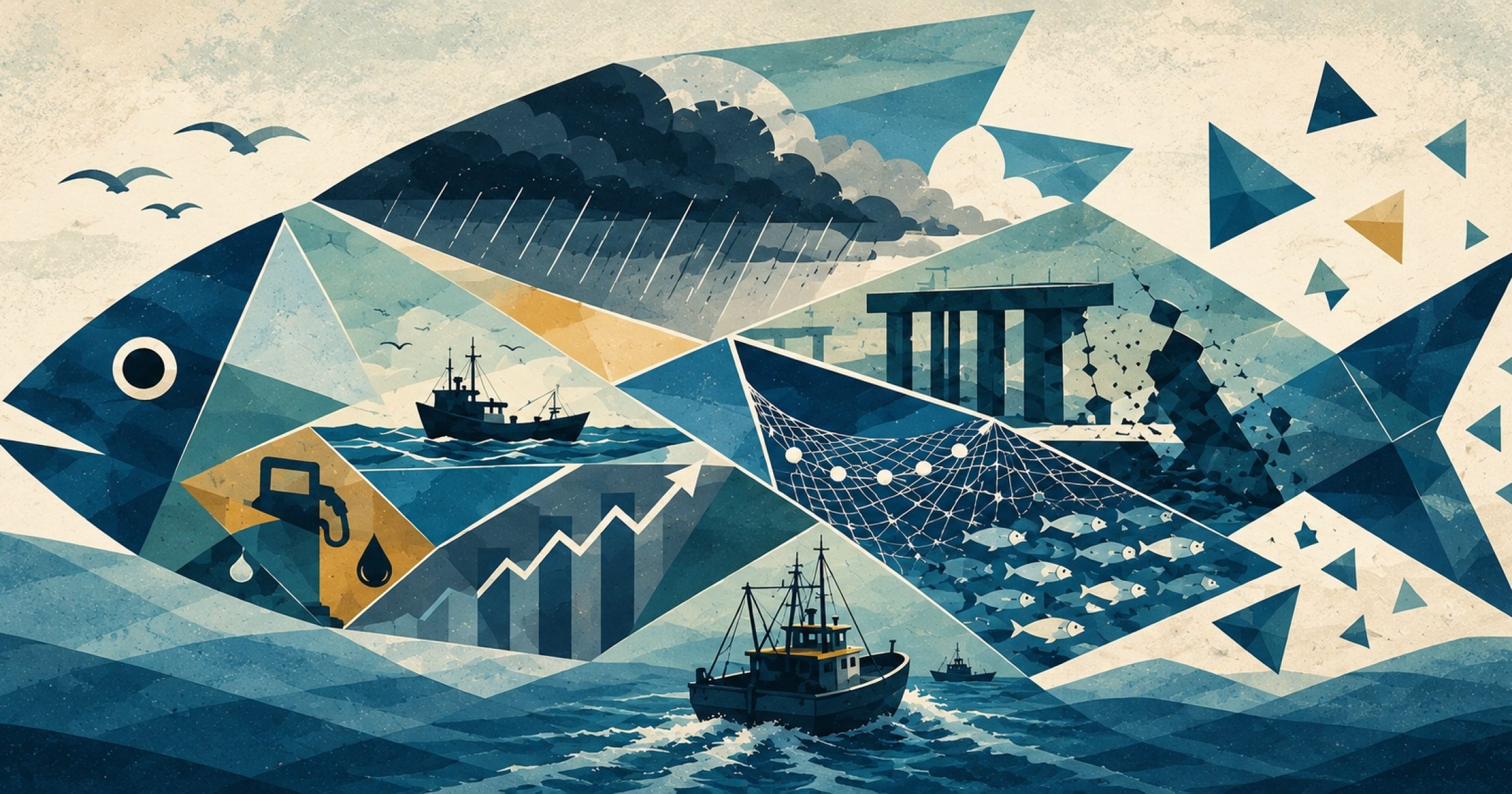
The sector today faces challenges that extend beyond fish stocks. Climate uncertainty, coastal development, rising input costs, infrastructure deficits, labour shortages, illegal fishing and affordability for consumers are all interconnected. Addressing any one issue in isolation is unlikely to produce lasting results.
The future of Goa's fisheries will depend on stronger scientific stock assessments, better monitoring of marine resources, timely infrastructure development, technology-driven enforcement against illegal fishing, modern fish landing centres and policies that ensure both fishermen and consumers receive a fair deal.
As hundreds of boats venture back into the Arabian Sea in the new season, the hope is not simply for a good catch. The larger challenge is ensuring that Goa's fishing industry remains economically viable, environmentally sustainable and capable of preserving one of the State's oldest traditions for generations to come.