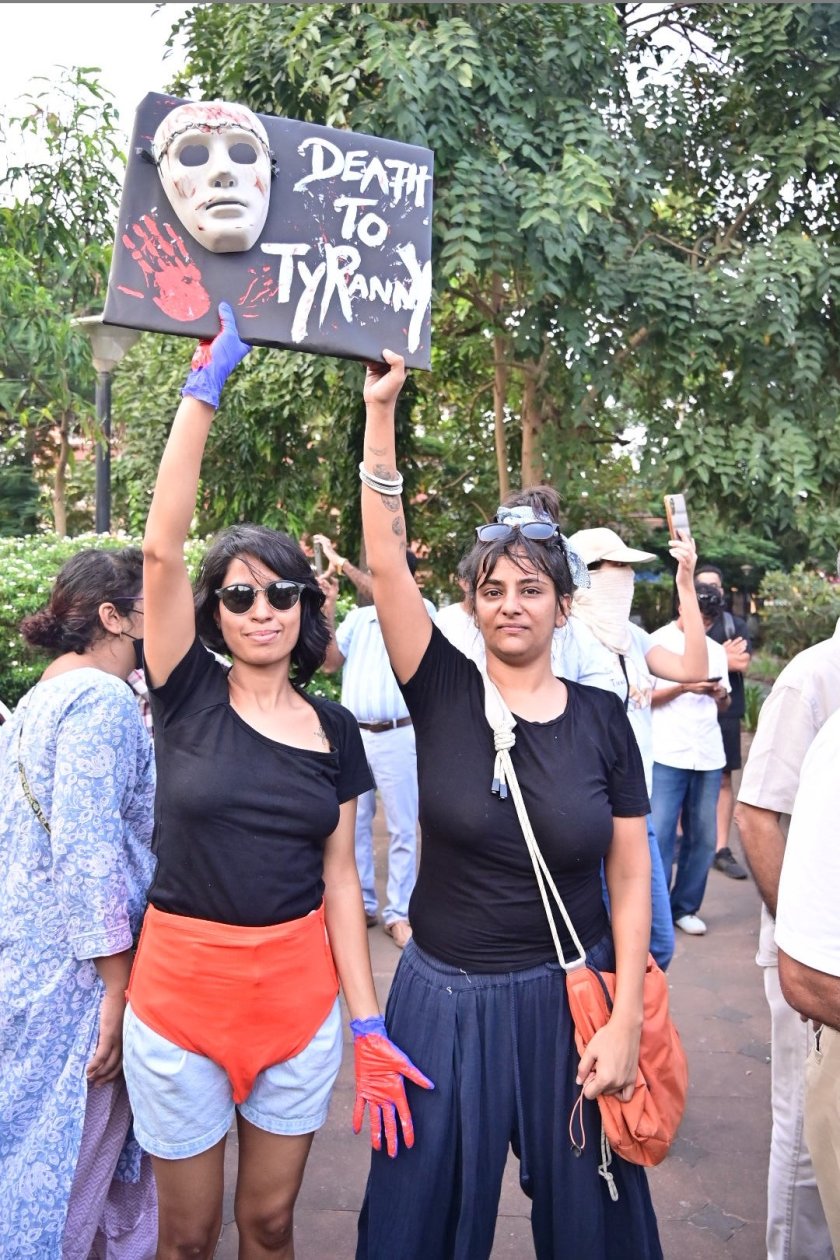
 Protesters during a CJP demonstration at Azad Maidan. File photo
MAPUSA
The right to protest is a cornerstone of democracy, allowing citizens to question those in power and hold governments accountable.
But recent events in Panaji have raised uncomfortable questions over whether this constitutional right is being applied equally or whether the political identity of protesters determines how the State responds.
The contrasting treatment of the Cockroach Janata Party (CJP) demonstration at Azad Maidan on October 11 and the BJP Goa Pradesh Mahila Morcha protest the following day offers a telling illustration of this concern.
Contrasting treatment
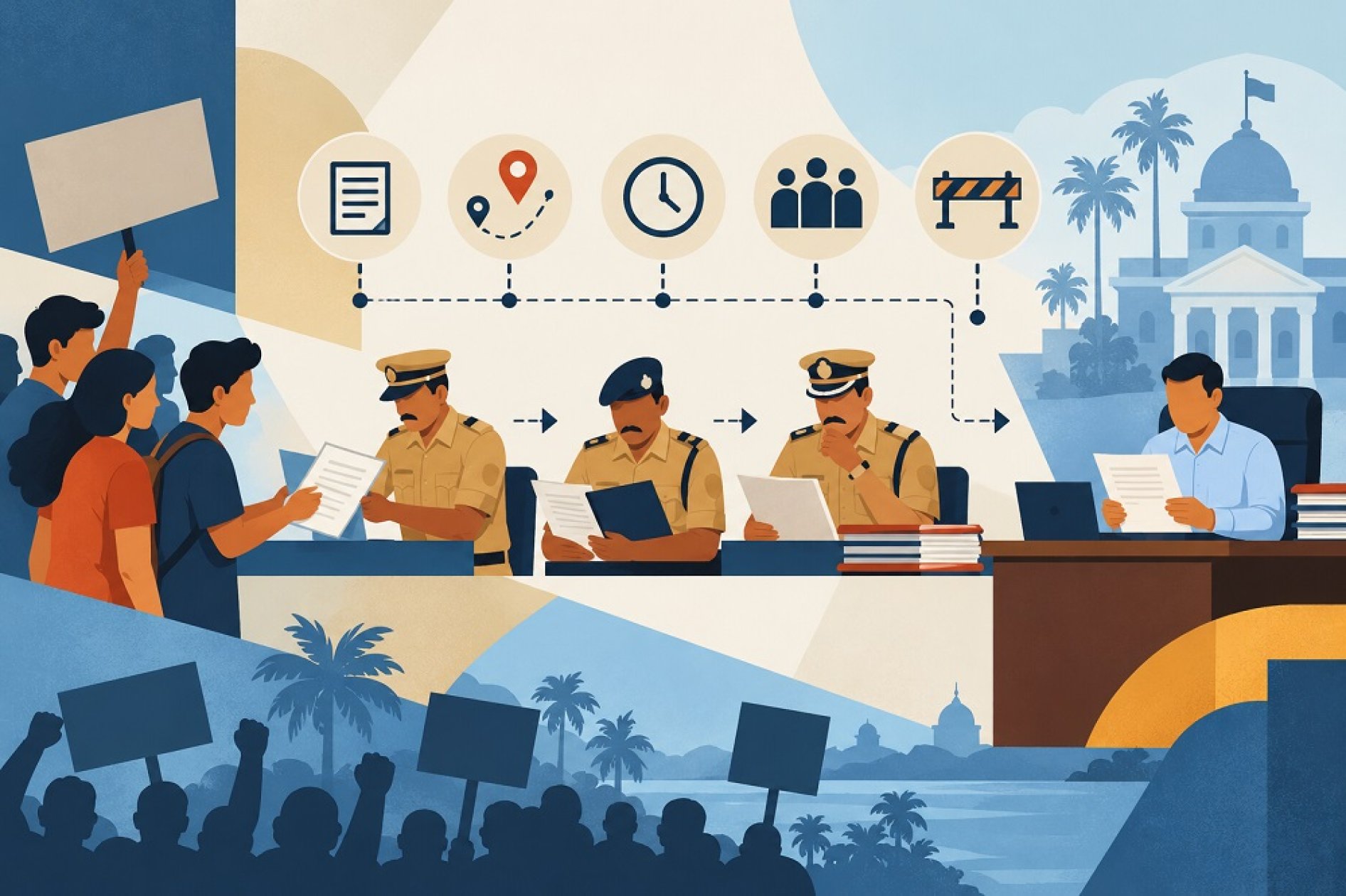
The CJP, comprising largely young people, had sought permission to hold a peaceful demonstration on electoral accountability. The administration denied permission. When protesters attempted to enter the venue, police stopped them and detained seven persons. The Bombay High Court at Goa subsequently ordered their release.
A day later, the BJP Mahila Morcha held a demonstration in Panaji demanding the resignation of Congress MP Angomcha Bimol Akoijam over allegations of sexual harassment involving female students at Jawaharlal Nehru University. The protest proceeded with police protection, without the kind of confrontation and detentions that marked the CJP demonstration.
The circumstances of the two protests were not necessarily identical, and the denial of permission to one group does not, by itself, establish political discrimination. Authorities are entitled to regulate demonstrations for legitimate reasons, including traffic management and public order.
The question of equal treatment
But the question is whether these rules are applied consistently, transparently and without political favour. When protesters questioning electoral processes are denied permission and detained, while a demonstration organised by the ruling party's women's wing proceeds with police facilitation, the contrast inevitably invites scrutiny.
If there were valid reasons for the different treatment, the administration owes the public a clear explanation. The concern is not merely about permission to protest, but how the police exercise their authority once protesters assemble.
A right, not a privilege
Retired IPS officer and former Deputy Inspector General Bosco George said permission was necessary to enable authorities to make arrangements for traffic and security. However, he stressed that this requirement could not become a means of extinguishing dissent.
“You cannot deny a person from protesting. It's enshrined in our Constitution. But it depends how the authorities interpret the right,” George said.
He argued that political parties in power tend to favour their own organisations and groups aligned with them while suppressing the opposition. “These are the games which (political) parties in power play,” he said.
His observation points to a larger institutional concern: rules that appear neutral on paper can become instruments of political control when their application depends on who is exercising the right.
Voices of concern
Political analyst Trajano D'Mello said the Congress government, too, had obstructed opposition protests, though he believes the present BJP government is doing so more brazenly. He cited restrictions on designated protest sites, arguing that administrative decisions can be used to frustrate dissent without directly banning it.
Political commentator Mahesh Rane of Mapusa similarly alleged that the police and the wider administration provide extensive security and assistance to demonstrations organised by the ruling party while adopting a hard line against those protesting government policies.
The issue is not confined to Goa. The handling of opposition and civil society demonstrations in Delhi and other parts of the country has repeatedly raised concerns over police discretion, restrictions on assembly and the shrinking space for peaceful dissent. The CJP episode has brought these questions into sharper focus in Goa.
The real test of a government's commitment to constitutional freedoms is not how readily it accommodates demonstrations in its own support, but how fairly it protects the right of its critics to speak, assemble and dissent. Otherwise, the right to protest risks becoming a constitutional guarantee in theory but a political privilege in practice.