


MAPUSA
What began as a protest over the NEET paper leak and police action against students in Delhi has evolved into something much larger in Goa.
The immediate trigger may have been a social media post by BJP Vice President Narendra Sawaikar, but the rapid spread of student protests across the State suggests that the anger runs deeper than a single remark.
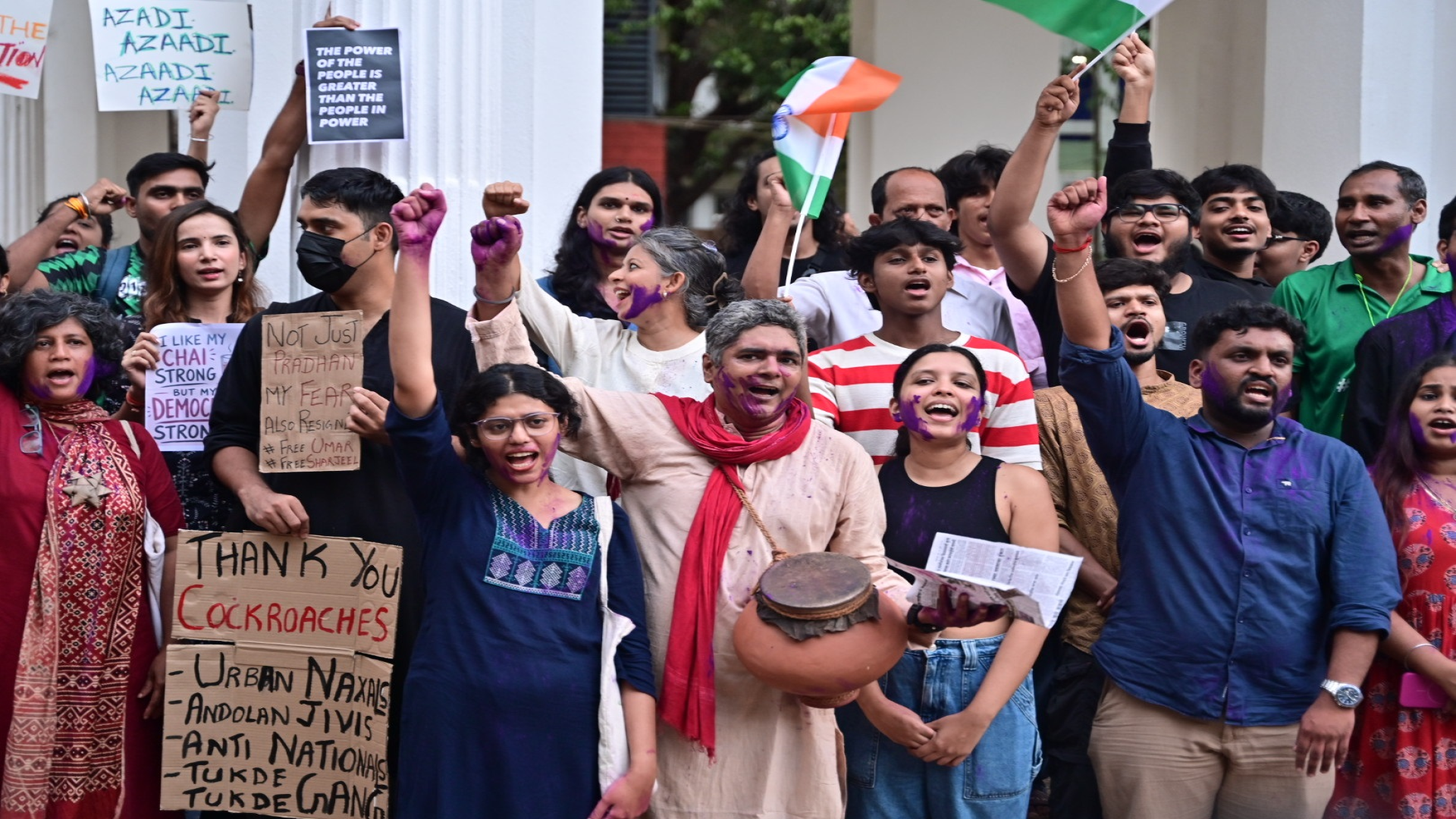
Sawaikar's post on X, stating, "Cockroaches with the termites! Save the nation!", ignited a political storm after many interpreted it as referring to students participating in protests demanding accountability over the NEET controversy and the resignation of Union Education Minister Dharmendra Pradhan. Although Sawaikar later clarified that his comment was general and not aimed at students, the clarification did little to calm public sentiment.
In politics, perception often outweighs intent, and the timing of the post made the association almost inevitable. The Opposition quickly seized upon the controversy, accusing the BJP leader of insulting the country's youth and belittling a peaceful democratic movement. But beyond the predictable political exchanges, what deserves closer attention is the response from Goa's student community.
Students did not merely express outrage on social media. They organised.
A spontaneous protest in Panaji drew a crowd that reportedly exceeded even the organisers' expectations. The movement then spread to Mapusa and is expected to find resonance in Margao.
Such momentum is rare in Goa, where student mobilisation on political issues has been relatively subdued for decades.
A legacy of student movements
The State has witnessed powerful student movements before. In the 1980s, the Progressive Students Union (PSU) spearheaded agitations that challenged governments and shaped public discourse. Students also took to the streets during the agitation over allegations against then minister Dayanand Narvekar, with protests eventually contributing to his resignation.
Those movements were confrontational and often violent, reflecting the political climate of the time. The present movement, however, is markedly different.
The demonstrations have remained peaceful, disciplined and organised. Rather than road blockades or vandalism, students have relied on rallies, speeches and public solidarity. Their message has centred on fairness in competitive examinations, accountability in governance and the right to dissent without intimidation.
That distinction is significant. Today's students appear conscious of the consequences of any violence, particularly in an era where social media can instantly shape public narratives and where governments are perceived to respond firmly to street protests. Peaceful protest has become both a strategic choice and a statement in itself.
More than a social media post
The "termite" controversy therefore acquired symbolic importance. For many students, the issue was no longer simply about a social media post. It became a question of respect.
President of Together for Mapusa, Advocate Mahesh Rane, described the remark as "insensitive and unnecessary", arguing that students protesting peacefully for their rights should not be subjected to derogatory labels. According to him, such comments only deepen the sense of alienation among young people who already feel unheard.
His assessment reflects a broader concern. Across the country, the NEET controversy has become more than an examination issue. It has evolved into a debate over transparency, accountability and the aspirations of millions of students whose futures depend on competitive examinations.
In that context, dismissive language from political leaders risks reinforcing perceptions that legitimate concerns are being trivialised.
Interestingly, the unease is not confined to the Opposition. Even among sections of BJP supporters, there appears to be discomfort over the language used. Some party sympathisers have argued that students, irrespective of whether one agrees with their demands, have every democratic right to protest peacefully and deserve respect rather than ridicule.
A challenge for the political establishment
Calls for a public apology reflect recognition that political rhetoric can have lasting consequences, particularly when directed at young citizens. The protests also present a political challenge for the ruling establishment. Student movements possess a unique moral legitimacy because they are generally perceived as being driven by ideals rather than electoral calculations.
When such movements gather momentum, governments often find it difficult to dismiss them as routine political opposition.
Equally noteworthy is the speed with which the movement has spread. From Delhi's Jantar Mantar to Panaji, Mapusa and now Margao, the protests have travelled through social media networks, student organisations and word of mouth.
The issue has resonated not because students in Goa were directly affected by the alleged paper leak, but because many identify with broader concerns over merit, fairness and accountability.
The return of student activism
Goa's youth, long perceived as politically disengaged, have demonstrated that they are willing to step into the public square when they believe issues directly affect their future. Their protests have been peaceful, organised and largely issue-based. That alone makes them noteworthy.
For the BJP, the controversy serves as a reminder that words matter, particularly when addressing a generation that is increasingly vocal and connected.
For the Opposition, the protests offer an opportunity to channel public discontent, though sustaining student trust will require more than political slogans.
Ultimately, the larger story is not about a single "termite" remark. It is about the re-emergence of student activism in Goa. If handled with sensitivity and respect, it could strengthen democratic engagement.
If met with contempt or excessive confrontation, it risks deepening the disconnect between the political establishment and the very generation that will shape India's future.


