PANAJI
The Goa Legislative Assembly's three-day monsoon session, which ended minutes before midnight on Wednesday (September 2), may not have altered the balance of power. The BJP-led government still commands a crushing 32-7 advantage in the 40-member legislature but the session delivered something perhaps more politically significant: a glimpse of how both the ruling party and the Opposition intend to fight the battle for 2027.
With barely months left before politicians and political parties enter the assembly election due in early 2027, this session was, as expected, more of messaging and political optics than government accountability or legislative business.
Indeed, the House did pass over a dozen government sponsored legislations -- both new statutes as well as amendments to existing ones. But this happened with the treasury benches heavily relying on their overwhelming numbers.
The Opposition, lacking the numbers, was focused on exposing vulnerabilities, cornering ministers and raising issues like the power tariff-billing-smart meter imbroglio, hoping these will resonate outside the legislature.
In that contest, both sides seemed to have scored wins, but the Opposition arguably left with the more valuable commodity: political momentum.
Numbers to the aid
The government's strategy was evident from the outset. Chief Minister Pramod Sawant and his government were set to introduce and dispose of a large number of bills and business, including financial, in just three days riding on its four-fifths majority.
For four years since eight Congress MLAs crossed the aisle and joined the treasury benches in September 2022, outcomes in the House were largely predetermined under this manufactured arithmetic.
This held true for much of the sittings on all three days of the monsoon session.
The Registration (Goa Amendment) Bill, like all other bills, sailed through despite sustained objections from Opposition MLAs and the amendments the latter proposed were comfortably defeated.
But the session did expose the limits of this kind of a brute majority, with instances where the Opposition landed significant punches on the government's jaw like in the case of the amendment to the Goa Private Universities Act.
It had proposed relaxing for future private university proponents diluting the minimum land requirements, infrastructure expenditure, library facilities and the mandatory Rs 5-crore endowment fund.
Initially, the government defended the amendments as a deregulation exercise and argued that the future institutions would continue to remain under UGC norms. But as the debate progressed and Opposition MLAs kept picking holes and glaring lacunae in its draft, even challenging its rationale and intent, the government found itself increasingly cornered and on the defensive. Eventually, Sawant made the rare tactical retreat and withdrew the bill rather than risk political damage.
Also, the biggest headline emerged even before the start of the session on Monday when it withdrew the proposed Goa Prohibition of Unlawful Conversion of Religion Bill, 2026. The legislation aimed to penalise religious conversions through coercion, fraud, inducement, or marriage with strict punishments, including life imprisonment, and faced flak as soon as reports emerged that the Cabinet had cleared it for enactment in the session.
Not just the political Opposition but civil society and some Church-linked organisations had raised a stink over the legislation and its possible misuse. It sent jitters in a large section of the ruling camp as well and legislators like Michael and Delilah Lobo and the Independent backing the BJP government Aleixo Reginaldo Lourenço.
The government then removed the Bill from the Assembly agenda, perhaps out of concern over the political sensitivity of religious issues ahead of the 2027 elections.
Oppn punches above its weight
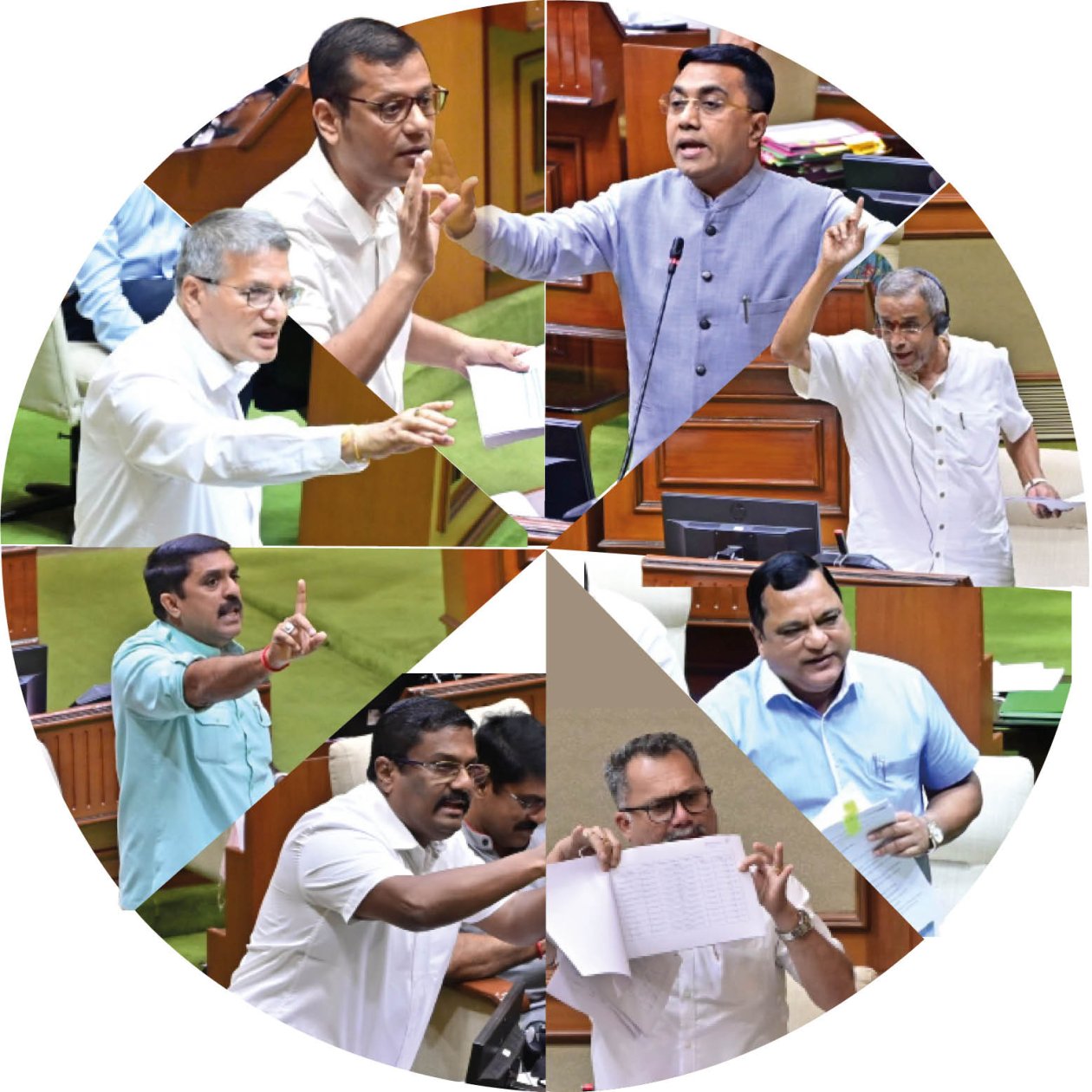
The seven-member and politically diverse Opposition cannot realistically defeat legislation on the floor of the House and its only weapon is scrutiny. In this session, it used that fairly effectively.
If the government demonstrated the power of numbers, the Opposition relied heavily on coordination, even if at several times individual personality clashes among them often surfaced.
Congress' Yuri Alemao remained the Opposition's principal spearhead by virtue of the privileges of his Leader of the Opposition designation. On the private universities bill, land-use issues or procedural battles with the Speaker, he did ensure the Opposition maintained constant pressure on the treasury benches.
His colleague Carlos Alvares-Ferreira continued to play the role of legislative technician, dissecting provisions, proposing amendments and testing government arguments clause by clause, even when defeat on the vote count was inevitable.
AAP's Venzy Viegas and Cruz Silva maintained the party's visibility by raising governance and accountability issues on matters like education, health and electricity costs which their party values.
RGP's Viresh Borkar remained focused on land-use controversies.
But GFP chief Vijai Sardesai once again demonstrated his effective debating skills, despite sitting in a one-member party. His critique of the private universities bill and cunning taunts at individual ministers often drifted the discussions from legislative technicalities to larger governance and public policy concerns.
Issue-based unity
The session offered some clues about the shape of future Opposition politics and possible dynamics but there were also signs that fissures remain.
Congress, AAP and RGP functioned with more coordination on several issues, especially the demand for discussions on alleged land-use irregularities. They did jointly challenge procedural rulings, coordinated protests and pursued common lines of attack against the government.
GFP's Sardesai largely supported the substance of Opposition positions but maintained a degree of tactical independence although he did show signs of greater bonhomie and matching chemistry with the Viegas-Silva duo of the AAP.
The most visible example of the tentative Opposition unity came when they protested the Speaker's disallowance of questions relating to 'No Development Areas' under Section 39A.
Sardesai stayed muted from that particular protest, despite sharing many of the concerns that were raised.
The takeaway is clear. Issue-based cooperation among Opposition parties is strengthening. But their conduct during the session stopped short of suggesting any formal political alignment ahead of 2027.
Clearest win for Opposition
The withdrawal of the Private Universities (Amendment) Bill stands out as the Opposition's defining achievement.
In purely legislative terms, it was a rare instance of the government backing down.
Politically, it was even more significant.
The Opposition successfully framed the bill as one that weakened safeguards, detrimental to strengthening higher education. MLAs repeatedly questioned the removal of mandatory financial commitments, infrastructure requirements and library obligations, warning that the amendments would make it easier for institutions with dubious reputations entering the sector and blemishing Goa's reputation.
The government's eventual withdrawal turned could might have been a routine legislative defeat for the seven-member Opposition into a win that matters, especially when it is confronting a 32-strong treasury bloc.
Mhadei remains a unifying fault line
The Mhadei issue once again demonstrated its unique place in Goa's politics.
Unlike many other contentious subjects, Mhadei continues to generate broad consensus across party lines and every political formation wants to be seen as defending Goa's water interests and resisting diversion efforts by Karnataka.
The discussion on a calling attention motion jointly moved by Alemao and Viegas, therefore carried less partisan heat than most other debates but reinforced the issue's enduring electoral significance.
As election politics gathers pace, Mhadei is expected to remain one of the few issues on which parties compete over commitment rather than ideology.
The debate that never happened
Article 39 A represented the Opposition's biggest frustration in this session.
For nearly two years, this controversial section 39A of the Town and Country Planning Act has dominated political discourse with questions surrounding land-use changes, No Development Areas (NDAs), planning permissions and allegations of large-scale land-use conversions have fuelled fierce debate in the State but the Assembly never seriously discussed the issue.
Speaker Ganesh Gaonkar repeatedly declined to admit questions linked to Section 39A, citing procedural rules and pending litigation before the High Court. That triggered some of the session's most dramatic scenes.
Opposition MLAs stormed the well of the House, proceedings were adjourned and some legislators were marshalled out. The Speaker defended his decision as a procedural necessity but the Opposition portrayed it as an effort to shield the government from scrutiny.
Whatever the explanation, the outcome was politically consequential. The issue that has shaped Goa's political discourse more than any other over the past two years remained effectively outside legislative scrutiny and debate in this session.
An early rehearsal for 2027
In retrospect, the session served less as a legislative exercise and more as an early election rehearsal.
While the BJP showcased its enduring dominance and legislative control, the Opposition demonstrated discipline, sharper coordination and the ability to extract political concessions despite lacking the numbers.
The government was not threatened. The equations inside the House did not change but the session did highlight a reality that will define the run-up to 2027 -- the BJP-led ruling side possesses the numbers but the Opposition increasingly believes it possesses the issues.
Over three days in Porvorim, the government left with its heft intact and the Opposition left with a narrative it can carry into the next election cycle and in the final stretch of an Assembly's term, narrative often matters more than numbers.