MAPUSA
If the three-day monsoon session of the Goa Legislative Assembly was intended to be a short legislative exercise, it certainly did not remain one.
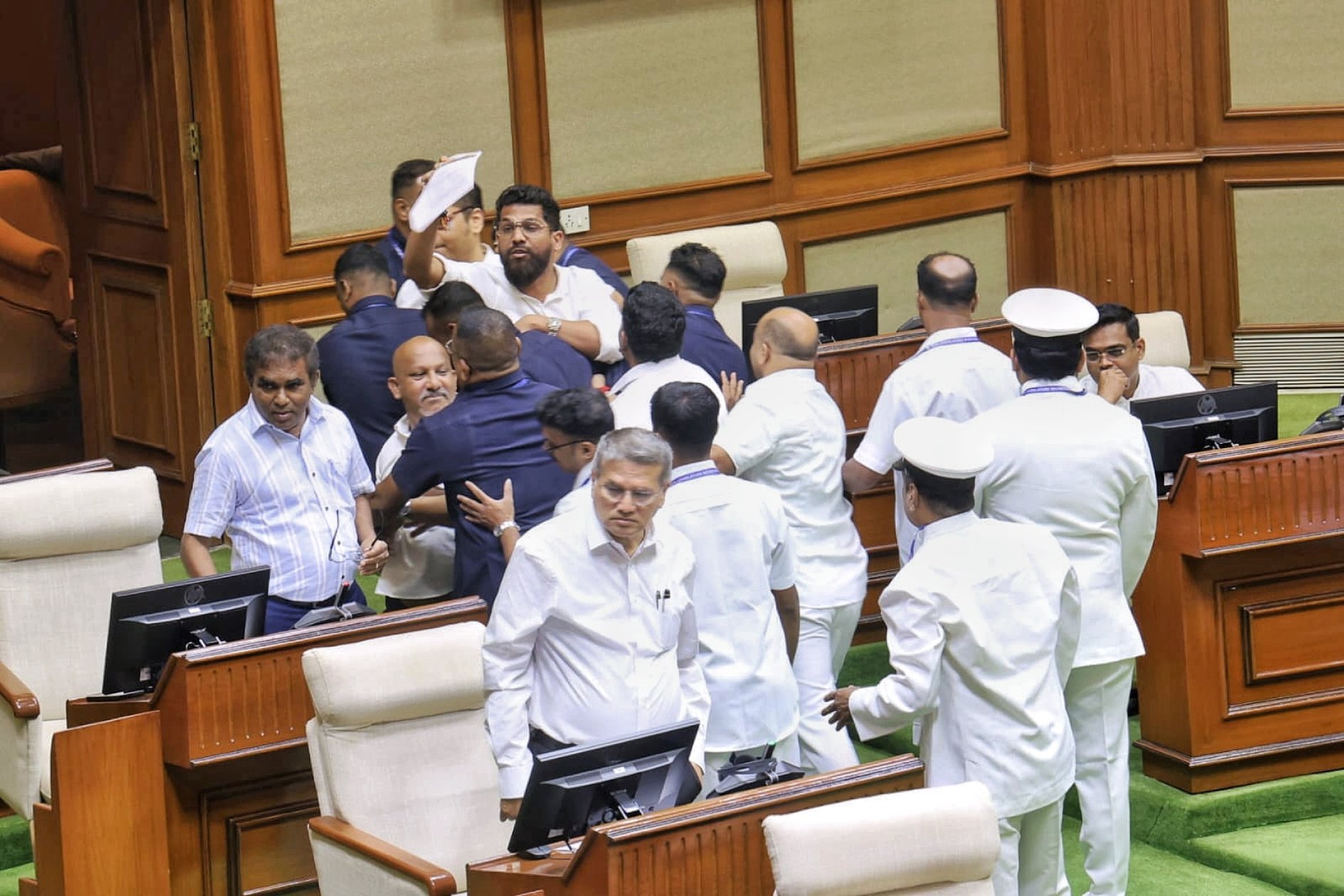
The Opposition came prepared to make up for lost time. With little opportunity to raise issues on the floor of the House, Opposition MLAs repeatedly confronted the Speaker and ministers, stormed the Well and sought to turn Question Hour and Zero Hour into platforms for issues dominating public discourse outside the Assembly.
The government, meanwhile, adopted a largely defensive but firm strategy — engage, explain and, where necessary, promise inquiries, but avoid conceding ground on politically sensitive demands being pressed by the Opposition.
The battle lines were drawn almost immediately.
Opposition makes its presence felt
Question Hour began with a confrontation over the Speaker's decision to disallow a question relating to No Development Zones and land conversions. Leader of Opposition Yuri Alemao, along with Opposition MLAs, challenged the ruling and stormed the Well. The subsequent marshalling out of Alemao, RGP MLA Viresh Borkar and Congress MLA Altone D’Costa only amplified the controversy.
From the Opposition's standpoint, the disruption served a purpose. In a session where time was at a premium, it ensured that the issue of what the government did not allow to be discussed became almost as important as what was actually discussed.
The GIDC plot allotment controversy produced another political flashpoint. GFP MLA Vijai Sardesai alleged favouritism and manipulation in the allotment process and demanded a House Committee inquiry. AAP MLA Venzy Viegas joined the demand.
The exchange between Sardesai and Industries Minister Mauvin Godinho became increasingly personal, providing some of the session's most heated moments. Yet the government did not yield. Despite the allegations and political pressure, the Opposition failed to force the appointment of a House Committee.
That perhaps best sums up the Opposition's performance during the session: it succeeded in creating pressure, but not necessarily extracting decisions. Zero Hour, however, emerged as the Opposition's most useful space. Traditionally intended to raise urgent public issues and elicit a response from the concerned minister, Zero Hour witnessed unusually extended exchanges.
The Chinchinim NH-66 bypass issue saw the Opposition demand a stilted bypass, while the government maintained that the project had progressed too far to be altered. The salaries of around 400 education employees, including those associated with the Diocesan Education Society, similarly triggered a government-Opposition exchange.
Whether it was a conscious decision by the Speaker to provide greater space to the Opposition because of the short session is difficult to say. But the additional exchanges undoubtedly gave Opposition MLAs room to raise issues that may otherwise have received limited attention.
Law and order becomes govt's Achilles heel
If Day One was about procedure and governance, Day Two turned the spotlight on the government's biggest political vulnerability – law and order.
The Opposition tore into the government over rising crime, drawing ammunition from the shooting incident near the Assembly complex and Porvorim police station and the continuing controversy over drugs entering Colvale Central Jail.
Chief Minister Pramod Sawant defended his government's record and attributed part of the increase in crime to migrants. But the most politically uncomfortable intervention came from Congress MLA Carlos Ferreira, who went beyond the usual criticism of crime figures and raised allegations of corruption, police misconduct and alleged inaction in cases involving police personnel. That intervention changed the tenor of the debate.
The Chief Minister's decision to order an inquiry and announce suspension of those found involved gave the Opposition something tangible to take away from the debate. More importantly, it placed the functioning of the police department itself under scrutiny.
The final day brought another issue with the potential to resonate directly with households – electricity bills. Opposition MLAs stormed the Well at least three times, demanding relief for consumers facing soaring bills. The issue even stretched Question Hour beyond its normal one-hour duration, spilling into the time earmarked for Zero Hour – an unusual development.
The smart-meter controversy added another layer to the confrontation. But once again, the government refused to blink. It reiterated that the smart-meter rollout for domestic consumers was on hold, but stopped short of offering the broader relief or rollback sought by the Opposition.
Govt holds its ground
The Opposition was louder, more confrontational and more successful in putting politically sensitive issues into the public domain. It demonstrated that a short session need not necessarily mean a quiet session.
But the government largely succeeded in preventing those confrontations from turning into major institutional setbacks. It refused a House Committee on the GIDC issue, did not alter its position on the Chinchinim bypass, offered no immediate electricity-bill relief and maintained its position on smart meters.
Where the Opposition did score a point was on policing. Ferreira's allegations forced the government to move beyond political defence and order action.
Ultimately, the session was less about legislation and more about political positioning. With the next Assembly election cycle approaching, the significance of the issues raised by the Opposition goes well beyond the three days of the session.
Electricity bills, crime, land use and allegations of favouritism are not disappearing with the adjournment of the House. In that sense, the three-day monsoon session may have been short on time – but it offered an early indication of the issues likely to dominate Goa's political battlefield in the months ahead.