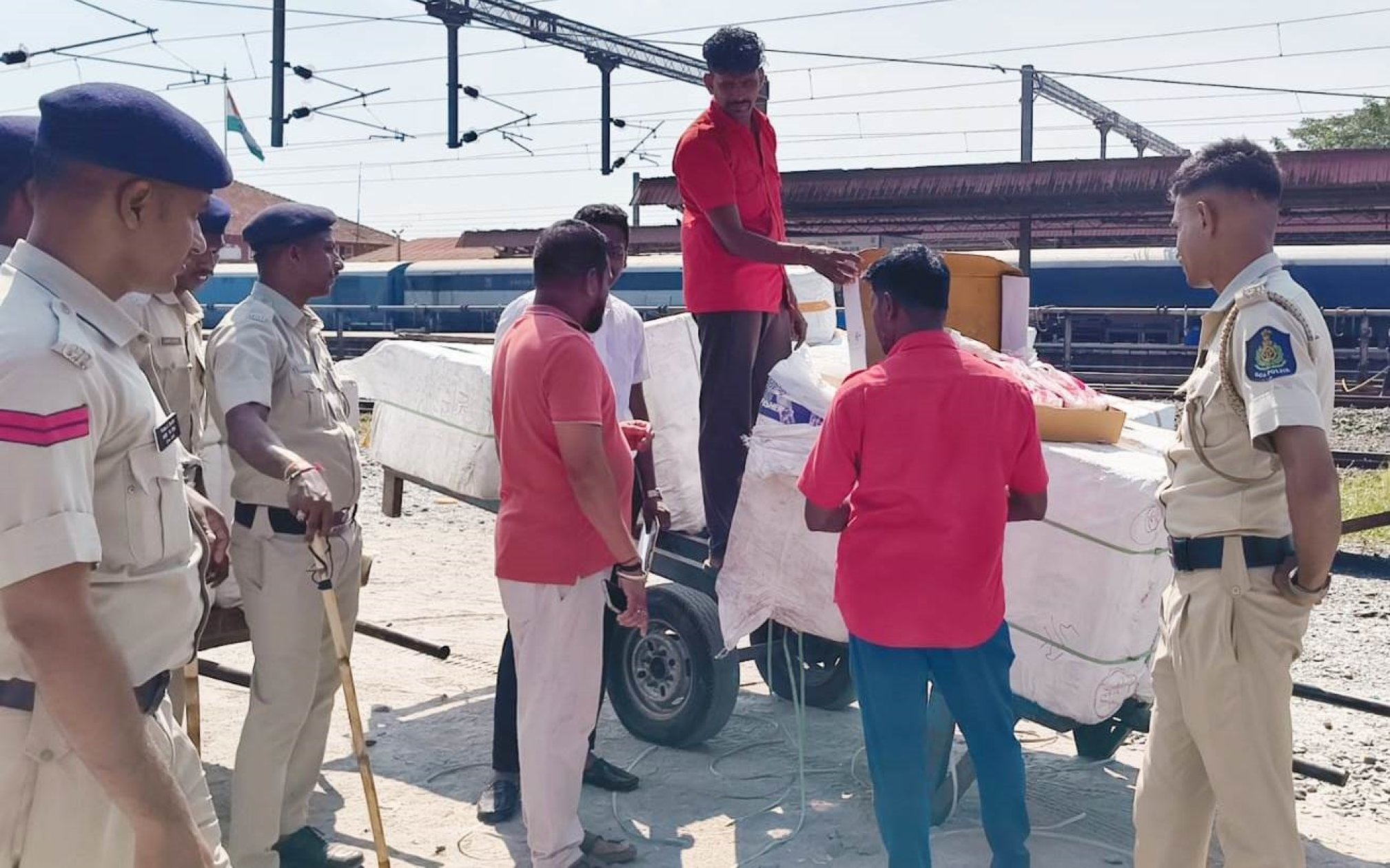
 The poultry consignment seized at the Margao railway station on November 6.
MARGAO
When the Nizamuddin-Vasco Goa Express pulledinto Margao railway station in the early hours of November 6, a largeconsignment of poultry products was unloaded.
Hours later, when the consignment wascollected, a team from the Food and Drugs Administration (FDA) inspected themeat and declared it unfit for consumption. The products had travelled by trainfor nearly 36 hours under questionable refrigeration conditions, reportedlywith only ice added at the time of loading at Hazrat Nizamuddin railway stationin Delhi. The consignment, weighing 2.1 tonnes and valued at Rs 4.20 lakh, wassubsequently destroyed by the FDA team.
The incident has brought into focus the safetyof chicken transported thousands of kilometres by train under such conditions.More importantly, it raises questions about why the authorities have failed toact against the transportation of such consignments over the past severalmonths, if not years.
The November 6 operation, conducted by membersof the Goa Poultry Farmers, Traders and Shopkeepers, was reportedly the sixthsuch raid on poultry consignments at Margao railway station, suggesting thatthe transportation of poultry products to Goa by train has been a regularpractice.
President of the Goa Poultry ShopkeepersAssociation, Prisco Sequeira, said Delhi has large poultry markets, with around150 vehicles arriving and departing every day as part of the poultry trade.
“We suspect that unscrupulous suppliers aresending leftover meat to Goa at cheaper rates after regular trading, includinglame, damaged and injured birds. It is sold at lower prices to select hotels,restaurants and other establishments. However, these are not quality products,thereby compromising the health and safety of consumers,” Sequeira said.
He stressed the need for a robust regulatorymechanism to ensure that only hygienic and safe poultry and meat products enterGoa. “Goa is a tourist destination and imports large quantities of meat andfish products from outside the State. There is an urgent need to put a proper systemin place to ensure that only hygienic meat, fit for human consumption, isallowed to enter the State,” Sequeira said.