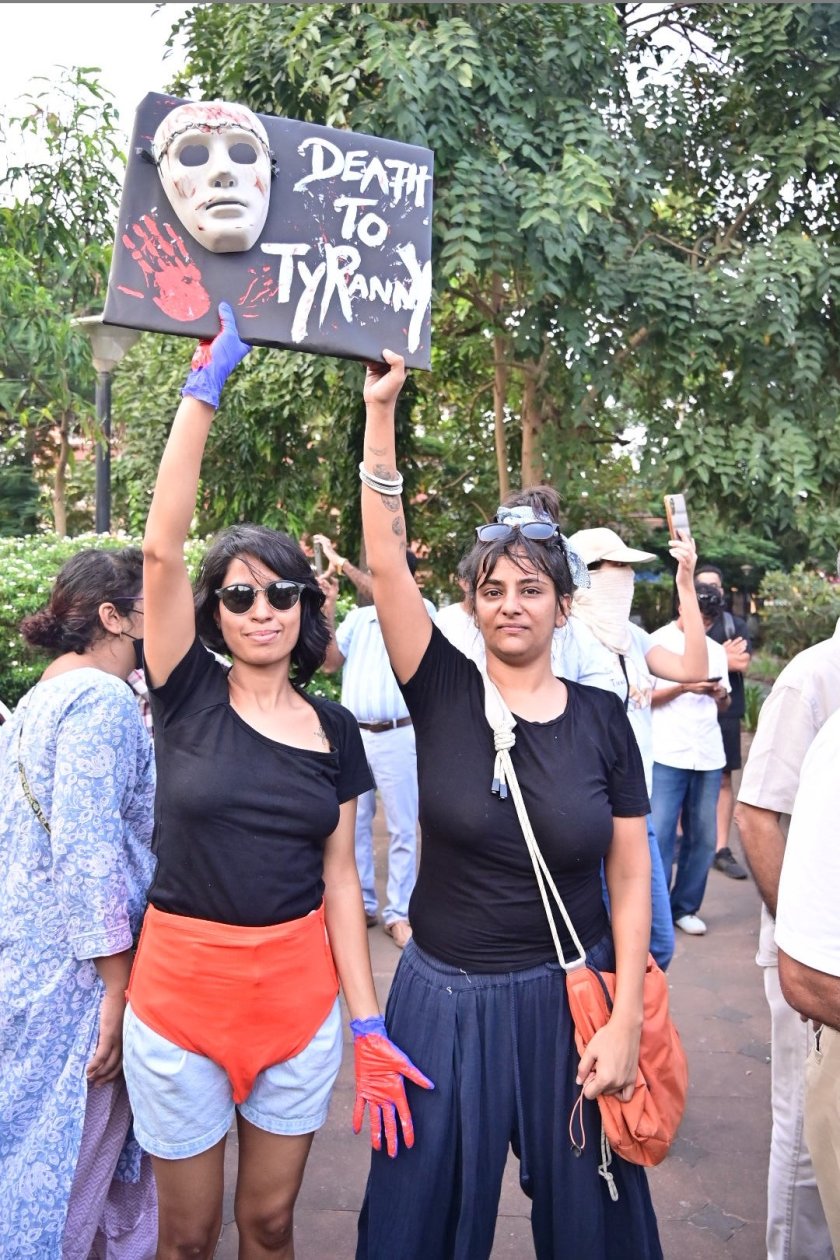
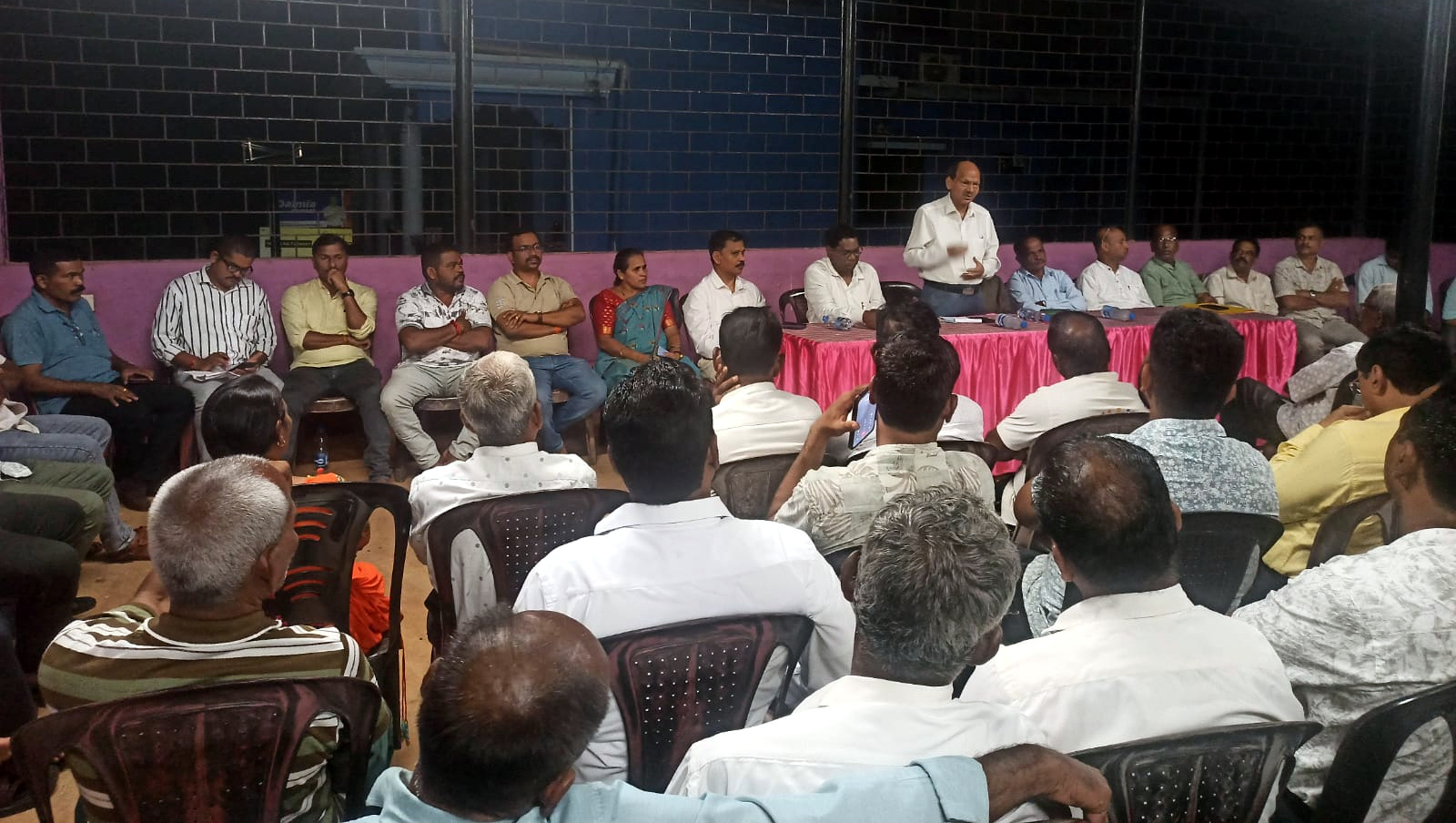
 File photo of Scheduled Tribe (ST) leaders and community members during a recent gathering at Netravali on June 27 to demand political reservation for the ST community.
ALFRED FERNANDES
SANGUEM
Parallel campaigns regarding the reservation of the Sanguem Assembly constituency for the Scheduled Tribe (ST) community have emerged as one of the more significant political developments ahead of the 2027 Assembly elections.
One campaign by ST leaders has been demanding the reservation of the Sanguem assembly constituency for the ST community at the 2027 assembly elections to ensure political representation for the community in the Goa Assembly.
On the other hand, another group of ST leaders from Sanguem are against the reservation of the Sanguem seat for ST candidates till a fresh census and statewide delimitation exercise are undertaken. They do not want authorities to base any decision on the delimitation exercise carried out in 2008, arguing that the process relied on data from the 2001 Census, which was conducted before Goa's tribal communities were granted Scheduled Tribe status in 2003.
ST seat for Sanguem
Over the past several months, this campaign has steadily gathered momentum, with a series of public meetings being organised across the ST-dominated areas of Bhati, Netravali, Rivona and Wadem to mobilise support for political reservation.
Community leaders, social organisations, elected representatives and local residents have consistently maintained that Sanguem has a substantial Scheduled Tribe population and that reserving the constituency would ensure equitable political representation for the community in the Goa Legislative Assembly.
Adding further strength to the movement has been the active participation of leaders associated with the United Tribal Associations Alliance (UTAA), whose presence at these meetings has lent greater visibility and momentum to the campaign.
Prominent leaders, including Govind Gaude, Prakash Velip, Vassudev Meng Gaonkar and several local panchayat members, have repeatedly attended these gatherings, urging the government to reserve the Sanguem Assembly constituency for Scheduled Tribe candidates.
Some leaders have gone a step further by warning that if the Sanguem constituency is not reserved before the 2027 Assembly elections, the Scheduled Tribe community may field or support an independent candidate to safeguard its political interests. The repeated meetings and public declarations have transformed the demand for reservation into a major political issue in the constituency.
The sustained campaign has also had direct political implications for Social Welfare Minister and Sanguem MLA Subhash Phal Dessai.
Responding to the growing demand, Phal Dessai recently told the media that if the Sanguem Assembly constituency is reserved for Scheduled Tribe candidates, he would abide by the decision of the BJP.
He further stated that he would actively campaign for the BJP's Scheduled Tribe candidate if reservation is implemented, reaffirming his commitment to the party's decision.
Although no political party has officially announced its candidates, several names are already doing the rounds in political circles. Vassudev Meng Gaonkar, Rajesh Gaonkar, Suresh Kepekar and Advocate Anand Gaonkar are considered among the prominent aspirants should the constituency be reserved.
Another emerging contender is Satyavan Gaonkar, a mining engineer by profession, who is reportedly seeking a ticket from the Congress. Satyavan has already begun conducting a series of grassroots meetings across the constituency and is understood to have conveyed his willingness to contest the election during interactions with senior Congress leaders.
With no other prominent choice, Congress may consider Satyavan Gaonkar as a suitable candidate in Sanguem. Though new in the political sphere, he is fairly known in the area for being a mines engineer and having worked at various mines at Sanguem.
Parallel campaign
Parallel to the campaign for reservation, another section of residents and political leaders has urged the government not to reserve the Sanguem constituency without first following the constitutional process.
Representations and memorandums have been submitted to the government authorities stating that any decision on reservation should be preceded by a comprehensive delimitation exercise, updated demographic surveys and a scientific assessment of population data, in accordance with constitutional and legal provisions governing the reservation of Assembly constituencies.
Those advocating this position have maintained that they are not opposed to political representation for Scheduled Tribes. Rather, they argue that reservation should be implemented only after a transparent and legally mandated delimitation exercise, ensuring that all assembly constituencies in Goa are assessed uniformly on the basis of the latest demographic data rather than through an isolated decision affecting only Sanguem.
Incidentally, local leaders and residents who have been advocating this stand have largely remained on the back foot in recent months.
Beyond submitting representations and memorandums to the government and other authorities concerned, they have not undertaken public mobilisation on the scale witnessed by the pro-reservation campaign.
As a result, the demand for immediate reservation of the Sanguem Assembly constituency for Scheduled Tribes has continued to dominate the political narrative across the constituency.
The road ahead
With both sides firmly articulating their positions, the future status of the Sanguem assembly constituency has become one of the most closely watched political issues in Goa ahead of the 2027 Assembly elections.
The eventual decision on whether the constituency is reserved—and the process adopted by the government in arriving at that decision—is likely to have far-reaching political consequences, not only for aspiring Scheduled Tribe leaders but also for the electoral prospects of the sitting MLA and the strategies of major political parties in Sanguem.