PANAJI
The demand for political reservation for Goa’s Scheduled Tribes (ST) communities -- Gauda, Kunbi, and Velip -- has resurfaced with urgency as the 2027 Assembly elections close in.
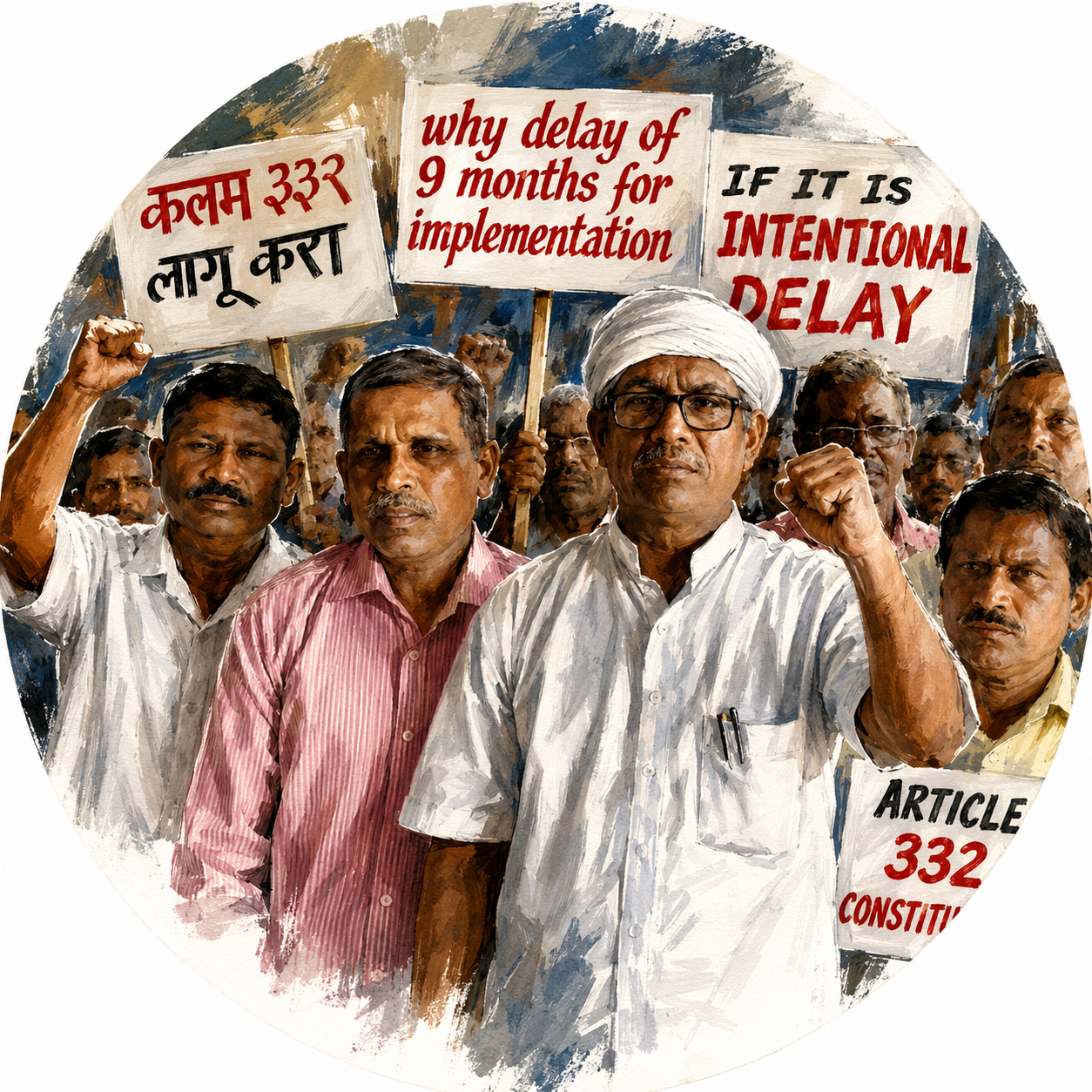
Mission Political, the conglomerate tribal organisation, warning of intensified agitation and working against the government (read BJP) unless its promise to reserve seats for STs in the 40 member legislature in this election cycle materialises.
The issue, long deferred, is now nearing fruition, although the question of whether the Census Commissioner and the Election Commission will do the formalities of ensuring the quota is in place ahead of the assembly election continues to rest on thin ice. If it does happen, then it is undeniable that reservations of the expected four seats will greatly impact the electoral arithmetic and futures of political parties and several individual politicians.
Historical quirk: Why no quota existed
Goa’s STs missed out on reservation twice. In 1987 88, when statehood was granted and the Assembly expanded from 30 to 40 seats, the delimitation then reserved only Dhargalim for Scheduled Castes. At the time, Gauda, Kunbi, and Velip were classified as OBCs, not STs, and therefore ineligible.
By 2002 04, when the Justice Kuldeep Singh Commission redrew constituencies as part of an exercise carried out nationally, the three communities had already been recognised as STs (2003). Yet their demand for reserved seats faltered because the Commission was relying on 1991 Census data, which did not reflect their new status. It resulted in Goa's first election in the 21st century having no ST quota, a “quirk of fate” that continues to rankle.
Seats likely for reservation
If reservation is finally granted, one seat -- Pernem -- is already reserved for Scheduled Castes. Out of the remaining 39, at least three or up to four constituencies with the most ST populations -- Priol in North Goa while Sanguem, Quepem and possibly Nuvem in South Goa -- are prime candidates.
Other constituencies such as Canacona, Dharbandora and Bicholim may also be considered, depending on census figures finalised by the Census Commissioner and political negotiations before the Election Commission before finalising the deal. The exact number will depend on how the quota is calculated against population share, but even three reserved seats would alter electoral equations.
BJP’s dilemma
For the ruling Bharatiya Janata Party (BJP), the issue is double edged. On one hand, the party has cultivated tribal leaders like Speaker Ramesh Tawadkar and MLA Ganesh Gaonkar. On the other, rivalries with figures such as Govind Gaude have exposed the fissures within.
Reservation could strengthen the bargaining power of these tribal leaders within the BJP, forcing the party to manage competing ambitions of other younger leaders as well.
If Sanguem or Quepem are reserved, the BJP would have to field ST candidates, potentially sidelining its existing non tribal incumbents -- Drinking Water Minister Subhash Phaldesai and former Deputy Chief Minister Chandrakant Kavlekar. This is most likely to trigger a messy uproar of dissent in the local units.
The party’s tentative strategy of engineering a working internal truce between Gaude, Tawadkar and Gaonkar also carries risk. Unless it broadens dialogue with federations like GAKUVED and addresses demands for welfare schemes -- tribal bhavan, tribal sub plan, and reservation for jobs and in the education sector -- it may face erosion of support, which the Opposition or aspiring younger politicians from within the tribal communities could exploit.
Opportunity for Opposition parties
For the Opposition parties, particularly the Congress, the Aam Aadmi Party (AAP), and the beleaguered Revolutionary Goans Party (RGP), the likely reservation of three or four seats for STs could throw up an opportunity to tap younger and fresh tribal leaders.
The Congress, weakened Statewide by defections of its leaders to the BJP, could regain relevance by aligning with dissident tribal leaders. It also faces the threat of losing a constituency for one of its three MLAs -- Altone D'Costa -- whose Quepem constituency will most likely be among the seats in the ST quota.
AAP, which is positioning itself as an alternative, also has the opportunity to use the reservation to mobilise new cadres.
The RGP, with its rhetoric of Goan identity, could also tap into tribal discontent, but the serious internal turmoil it is witnessing over the last two months throws questions over its ability to seize this immediate political opportunity.
Each of these Opposition parties will no doubt attempt to exploit the opportunity which will be thrown up by reservation of a quota of seats for STs. How successful they will be is something that will be revealed as the process adopted by the Census Commissioner and the Election Commission takes shape, if at all. But public agitations, corruption charges against incumbent BJP tribal leaders, and gestures of solidarity with 'Mission Political' are likely to be their tactics.
Reservation would also give them fresh grounds to contest seats where BJP’s dominance has been entrenched.
Mission Political’s pressure
Mission Political emerged as the spearhead of the demand over the last couple of years. Its leaders Govind Shirodkar and Ravindra Velip have warned of “village by village resistance” if the government delays, and the group has already met Union Home Minister Amit Shah multiple times, but with little progress in the process to ensure reservation is clinched.
For the organisation and the communities it is fighting the battle for, reservation is not just symbolic but also represents constitutional recognition and political empowerment.
By framing the issue as one of dignity and rights, Mission Political has ensured that any delay will be seen as betrayal, a scenario which the ruling BJP knows it will pay a price for, with elections looming and the threatened agitation impacting it.
Nonetheless, the fallout of granting reservation will have ripples across Goa’s politics with the reserved seats altering candidate selection, party strategies, and the Opposition's alliance arithmetic.
For the BJP, it throws up the challenge of recalibrating its tribal representation between existing leaders from the community -- Minister Ramesh Tawadkar, Speaker Ganesh Gaonkar and former minister Govind Gaude -- and aspiring younger tribal leaders. For the Opposition, on the other hand, it opens newer battlegrounds.
The larger question, however, is whether Goa’s tribal leadership can align the personal ambitions from reservation of Assembly seats with the welfare of the tribals as a whole.
For, reservation may empower individual leaders, but unless it translates into durable institutions and welfare delivery, disillusionment in the communities will persist.