UDAY SAWANT
VALPOI
The increasing number of drowning deaths in rivers, waterfalls and rain-filled illegal laterite quarries across Sattari taluka has become a matter of serious concern.
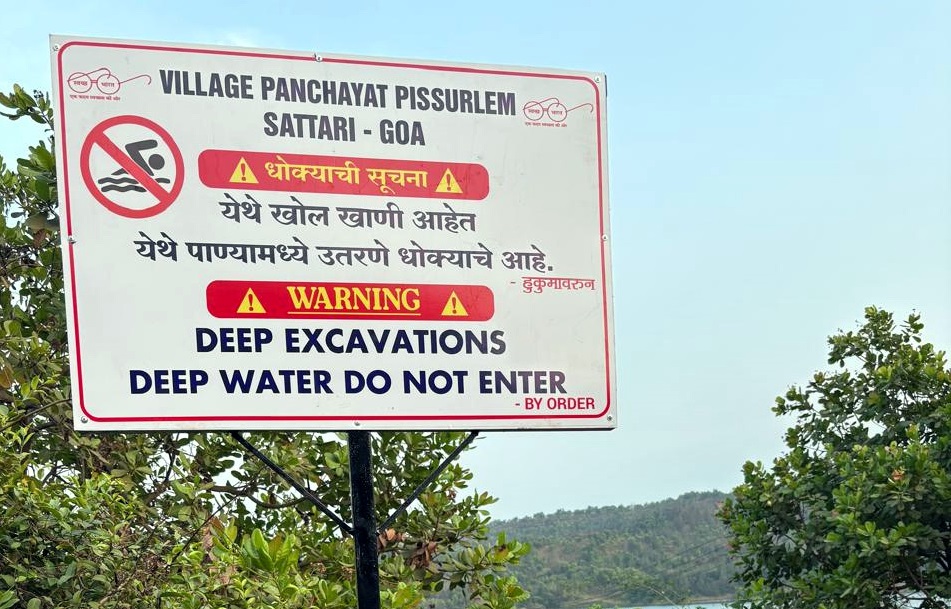
Although local panchayats have installed warning signboards and introduced safety guidelines at several locations, these measures have failed to effectively prevent such tragic incidents.
As a result, innocent lives continue to be lost every year, while the reputation of the affected villages is also being tarnished.
Drunken revelry, major cause of fatal accidents
Residents point out that alcohol consumption has been a leading factor behind many drowning deaths reported over the past decade.
A large number of visitors go to rivers and waterfalls for recreation and picnics. Many consume liquor, play loud music, create disturbances, and eventually venture into deep pools and hazardous sections of rivers under the influence of alcohol, often failing to assess the river's depth, water current or submerged rocks, leading to drowning accidents.
Locals have been demanding strict inspections, penalties against drunken bathers, and, where necessary, restrictions on entry to vulnerable locations. They also believe that the police, the deputy collector, the Mamlatdar and the panchayats concerned should jointly formulate a permanent action plan to prevent such tragedies.
Illegal laterite quarries pose serious threat
Across several parts of Sattari Taluka, abandoned laterite quarry pits remain uncovered. During the monsoon, these pits fill with rainwater, and since the depth of these water-filled pits is difficult to judge, there is a significant threat to both humans and livestock.
Although the Department of Mines and Geology conducts periodic raids against illegal quarrying, residents claim that such activities often resume after some time. Many abandoned quarry pits remain unfenced, creating dangerous conditions.
The government had previously initiated a programme to install protective fencing around these abandoned pits, but the work remains incomplete.
Locals have urged the Deputy Collector's office to conduct a comprehensive survey and immediately install fencing, warning signs and other safety measures at these sites.
Warning boards installed, yet rules still ignored
Considering the rise in drowning incidents across Goa, several panchayats have erected warning signboards along riverbanks. Panchayats in Nagargao, Savarde, Bhironda, Khotode and Guleli have appealed to visitors not to enter dangerous stretches of rivers and have warned of legal action against violators.
However, many people continue to ignore these warnings and venture into hazardous waters, resulting in repeated accidents.
Residents say that merely installing signboards is not enough and that regular monitoring, enforcement and action against violators are equally important.
Demand for police deployment, safety measures
Popular picnic destinations such as Mhovacho Guno in Savarde Panchayat and riverbanks within Bhironda Panchayat attract large numbers of tourists during the summer. Unfortunately, several fatal incidents have already occurred at these locations.
Village Gram Sabhas have repeatedly passed resolutions requesting police deployment on weekends and public holidays. However, the absence of a permanent police presence has allowed drunken behaviour and reckless activities to continue, increasing the likelihood of accidents.
Experts believe that awareness campaigns alone are insufficient. Effective implementation of CCTV surveillance, trained volunteers, lifeguards, rescue equipment, emergency helpline numbers, restrictions on intoxicated visitors and regular police patrols at vulnerable tourist locations could significantly reduce drowning incidents.
Special precautions during monsoon
With the onset of the monsoon, numerous waterfalls across Sattari have become active once again, attracting thousands of visitors. Many of these waterfalls are located within the Mhadei Wildlife Sanctuary and are extremely dangerous during heavy rainfall.
While the forest department has officially permitted access to certain waterfalls where the Goa Forest Development Corporation has provided basic visitor facilities, several other waterfalls remain completely unregulated, lacking lifeguards, rescue equipment or any form of safety infrastructure.
Heavy rainfall often causes sudden increases in water flow and the formation of deep pools and slippery rocks, making these locations highly risky. Locals insist that visitors must follow all safety guidelines, while the forest department should strengthen safety arrangements at vulnerable sites.
Calls for immediate action
Bhironda Sarpanch Udaysing Rane said the Panchayat has repeatedly written to the local police regarding drowning incidents. He stated that deploying police personnel at vulnerable locations on weekends and public holidays would greatly help in preventing such accidents.
“Many young people visiting these picnic spots consume alcohol before entering the river, leading to tragic loss of life. Such incidents damage the reputation of the area and cause immense distress to local residents,” said Rane.
“The government must take this issue seriously by deploying police personnel at sensitive locations, strengthening safety measures and developing proper tourist facilities. This will not only prevent accidents but also promote safe and sustainable tourism in Sattari.”