
LISSY MARUTHANAKUZHY
THE GOAN I PANAJI
This year marks the platinum jubilee of the Daughters of St Paul, popularly known as Pauline Sisters, in India and 62 years in Goa. Marking the occasion, Auxiliary Bishop Simiao Purificacao Fernandes will celebrate the Thanksgiving Eucharist at St Sebastian’s Chapel, Panaji, on June 29.
With hearts full of gratitude, we journey through this Jubilee Year, remembering with affection our friends and benefactors who have walked alongside us over the past 75 years.
THE ORIGIN
The roots of our mission trace back to Blessed James Alberione, who, as a 16-year-old seminarian on the night of December 31, 1900, spent hours in prayer before the Blessed Sacrament at the Cathedral at Alba, Italy. During that vigil, he felt a clear call from God to do something for the people of the new century.
Gradually he recognised his call to proclaim the Gospel using emerging means of social communication. Alberione founded the ‘Daughters of St Paul’ in 1915 at Alba, Italy. Venerable Thecla Merlo led the congregation from its initial stage along with the founder. Alberione became a pioneer in evangelising and educating through modern media, founding five religious congregations and five secular institutes.
IN INDIA
The Archdiocese of Bombay welcomed the Daughters of St Paul from Italy in 1951. Our mission began humbly, with family visits and distribution of good reading books from the Philippines and the United States.
The early years were marked by hardships, as our pioneers simultaneously learned the local language and engaged in the mission. Illnesses and lack of finance tossed the young sisters’ lives, but they were also strengthened.
In 1959, we published our first book in India, edited by Sister Pierluisa Albini. Today our sisters also contribute to magazines and Catholic news agencies in India and abroad. With the arrival of a printing machine from the Philippines in 1960, publishing took firm root in Indian soil.
IN GOA
In 1964, we opened the third community in Goa. Bishop Francisco Rebelo invited us to the Archdiocese of Goa, and we gladly accepted to extend our mission in Goa.
Archbishop Raul Gonsalves was also a source of great support in our mission.
We are encouraged by Cardinal Filipe Neri Ferrão’s appreciation in many ways for our mission through the media of communications.
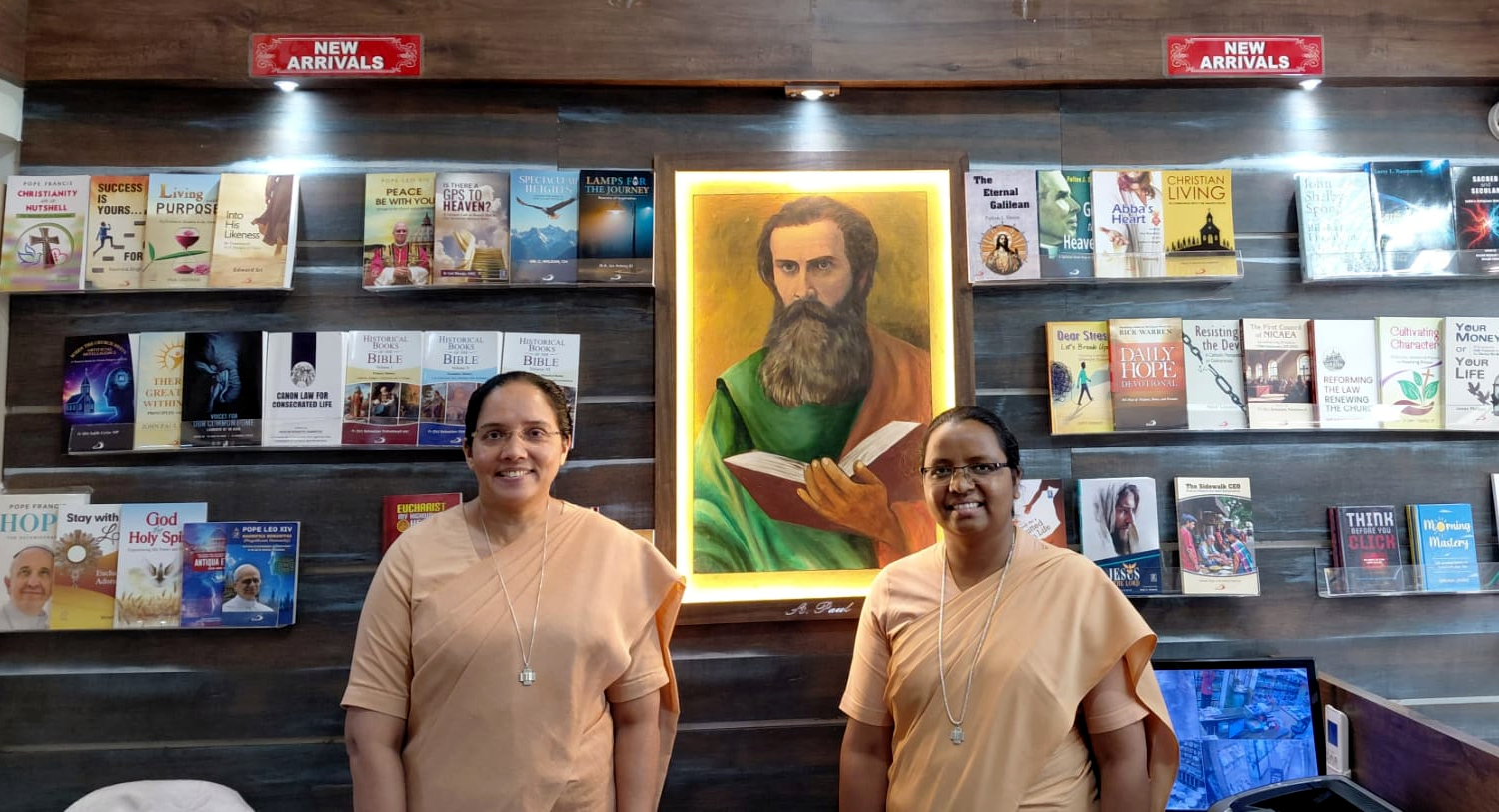
Through our Pauline Book and Media centres at Panaji and Mapusa, we reach out to our faithful with our value-oriented books.
It was Goa that opened a door for us to give radio programmes from 1973 on different themes.
Sr Annie Ponmani of the Daughters of St Paul said, “We have had a positive influence on the attitudes of clergy and laypeople. Without their appreciation and collaboration, we could not have published and distributed millions of copies of good books, music albums, videos, and Bibles and Gospels for all categories of people.”
EXPANDING THE MISSION
Over the years, we have operated in 16 dioceses across India, engaging ourselves in diverse services such as family visiting, organising Bible Sundays and Gospel Weeks, managing Pauline Book & Media Centres, and conducting media education workshops.
We not only distribute content but also form consciences, building responsible and faith-filled citizens for tomorrow. Local ordinaries and priests recognised the uniqueness of our mission and collaborated wholeheartedly, guiding us to venture into new apostolic activities.
TRADITION MEETS INNOVATION
Since 2020 we have entered the broadcast media in collaboration with Catholic Charismatic Renewal Television (CCRTV) at Panaji. The programmes telecast include Journeying with St Paul, Living like St Paul, and Holiness in the Pauline Family, among other occasional themes.
Robin D’Souza, founder member of Catholic Charismatic Renewal Television (CCRTV), recalls: “The journey of the Daughters of St Paul is a story of vision, communication, and meaningful collaboration.”
Through this partnership, the Daughters of St Paul contribute content, insights, and spiritual depth, reaching audiences beyond parish boundaries and strengthening grassroots faith communication.
Today, the journey of the Pauline Sisters continues as a blend of tradition and innovation, highlighting how religious congregations can remain relevant—by embracing technology, working together, and staying deeply connected to the people they serve. It is proof that when mission meets media, impact multiplies.
The journey continues in faith and hope.
[The writer is a member of the Daughters of St Paul and had served in Goa for six years]