MAPUSA
Earlier this week, sanitation workers cleared nearly three tonnes of discarded diapers and plastic waste from the villages of Rachol, Camurlim and Curtorim within just two days.
The shocking volume of waste prompted Curtorim MLA Alex Reginald Lourenco to appeal to residents to adopt responsible waste disposal practices and refrain from indiscriminate dumping.
But the incident was far from an isolated occurrence. Across Goa, open dumping of garbage has become one of the most visible signs of a waste management system struggling to keep pace with changing lifestyles, rapid urbanisation and a growing floating population.
From village roads to national highways, blackspots continue to emerge despite repeated clean-up drives, awareness campaigns and enforcement measures. The issue has now assumed greater significance in the wake of the Mapusa tragedy involving a 22-year-old youth whose death triggered wider discussions on garbage dumping, public shaming, enforcement and the pressures faced by individuals caught in the system.
The larger question confronting Goa today is straightforward but uncomfortable: Why does roadside dumping continue despite years of investment in waste management infrastructure?
A blackspot culture taking root
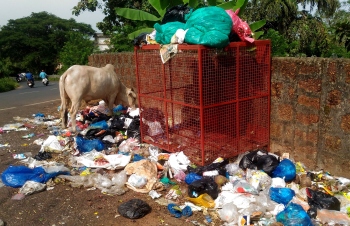
Drive through any part of Goa and the evidence is difficult to miss. Small heaps of garbage appear at road junctions, vacant plots, highway shoulders, culverts and isolated stretches of road. Some consist of household waste. Others contain garden debris, construction material, plastic packaging, bottles, thermocol sheets, coconut fronds and even furniture. What often begins as a single bag of waste soon grows into a permanent dumping site.
Residents and sanitation workers describe a familiar pattern. One person dumps waste at a deserted location. Others follow suit. Within days, the area becomes a recognised garbage blackspot. Even after local bodies remove the waste, fresh garbage often appears within hours.
The result is a never-ending cycle of dumping, cleaning and re-dumping that drains public resources while creating serious environmental and public health concerns. During the monsoon, the problem becomes even more acute. Garbage dumped along roadsides often gets washed into drains, streams and low-lying areas, contributing to flooding, foul odours and mosquito breeding.
Why are people still dumping waste?
The tendency is often dismissed as irresponsible behaviour, but the reality is more complex. Many residents point to practical difficulties in disposing of waste that does not fit into the routine door-to-door collection system.
Large cardboard cartons, thermocol packaging, broken furniture, coconut shells, palm fronds, garden waste and construction debris are often not accepted by regular garbage collectors. For many households, there are limited options available for disposal of such material. Consequently, deserted roadside locations become convenient dumping grounds.
Another challenge is inconsistency in waste collection services. Residents in some areas complain that garbage collection vehicles occasionally skip scheduled visits. For families living in apartments or densely populated urban areas, storing waste for several days is often impractical due to space constraints and concerns over odour and hygiene. When collection systems fail, even temporarily, people seek alternatives “ often illegal ones.
The migrant and rental housing challenge
One of the least discussed aspects of Goa's waste problem is the impact of rental housing and migrant populations. Over the last decade, Goa has witnessed significant migration for employment in construction, tourism, hospitality and service sectors. Thousands of workers live in rented accommodations, often in areas where waste collection systems were originally designed for much smaller populations.
Questions frequently arise regarding responsibility. Who ensures that tenants are registered for waste collection services? Who monitors disposal practices in rented properties? Who is held accountable when waste from such households ends up on the roadside?
The answers are often unclear. Local bodies acknowledge that enforcement becomes difficult when occupants change frequently and landlords remain disconnected from day-to-day waste management practices. Without a systematic mechanism to integrate rental households into local waste collection networks, roadside dumping is likely to persist.
Goa's villages are no longer villages
Traditional waste management practices in Goa were built around low-density settlements. Many village households managed organic waste through backyard composting, while recyclable material was limited in quantity.
That reality has changed dramatically. Several villages, particularly in coastal belts, have evolved into semi-urban settlements. Apartment complexes, villas, gated communities, homestays and holiday homes have transformed the demographic landscape. Many of these properties generate waste volumes similar to urban centres. Yet waste collection infrastructure in several villages has not expanded at the same pace.
As rural Goa becomes increasingly urban in character, the pressure on local waste management systems continues to intensify.
Tourism's hidden waste burden
As a tourism-dependent State, Goa faces a unique challenge. Restaurants, shacks, small eateries and tourism establishments generate substantial quantities of wet and dry waste every day. While many businesses comply with waste management regulations, officials acknowledge that some establishments continue to seek shortcuts. Under the cover of darkness, waste is often dumped in isolated locations rather than being processed through authorised channels. The problem becomes particularly visible during peak tourism seasons when waste generation rises sharply. For a State that markets itself as a clean and attractive destination, such practices undermine both environmental sustainability and tourism branding.
Awareness alone is not working
Over the years, authorities have invested heavily in public awareness campaigns. The Swachh Bharat Mission, Swachhta campaigns, Nitol Goem initiatives and local cleanliness drives have all sought to change public behaviour. Yet, roadside dumping remains widespread. The persistence of the problem suggests that awareness by itself is insufficient.
Behavioural change requires a combination of education, convenience, enforcement and infrastructure. People are more likely to comply when legal disposal options are accessible, affordable and easy to use. Where such options are absent, illegal dumping often becomes the path of least resistance.
The enforcement dilemma
Most municipalities and panchayats have provisions to penalise littering and illegal dumping. Several local bodies have imposed fines and conducted special enforcement drives. However, catching offenders remains difficult. Illegal dumping frequently occurs late at night or in isolated areas. The installation of CCTV surveillance systems is often suggested as a solution, but the costs involved are substantial, particularly for smaller panchayats. Even where cameras exist, monitoring and evidence collection require manpower and resources. As a result, enforcement often becomes reactive rather than preventive. The fear of getting caught remains relatively low compared to the convenience of dumping waste illegally.
GWMC's search for a practical alternative
According to Goa Waste Management Corporation (GWMC) Managing Director Harish Adconkar, the continued appearance of roadside garbage indicates that existing systems are not fully addressing public needs. "The responsibility of collecting waste lies with the respective village panchayats and municipalities. Whether it is being done effectively or not, I cannot comment. But it is a fact that we are getting garbage on the roadside. It is a reality. We can't hide it. It is there to be seen," Adconkar says.
He points out that waste management gaps often emerge in areas with rented households or where collection schedules and residents' availability do not match. "These are gaps which need to be addressed on priority and which need solutions at the level of individual local bodies," he says.
Recognising the need for alternatives, GWMC has begun establishing dedicated waste collection centres where residents can deposit segregated waste that cannot be handled through routine collection systems. Three such centres have already been initiated in Assolna, Curchorem and on the Margao-Fatorda bypass road. Adconkar says the larger vision is to create a network of manned waste collection centres along major highways. "We are starting with highways. If the model succeeds, then perhaps we can target major internal roads with government approval. Slowly but surely we will find a solution and provide an alternative to people," he says.
Lessons from the Mapusa tragedy
The recent Mapusa case has forced Goa to confront uncomfortable questions. The issue is no longer simply about identifying offenders and imposing penalties. It is also about understanding the pressures, social tensions and systemic failures that surround waste management.
When waste disposal becomes a flashpoint for conflict, public shaming and legal action, it reveals a deeper problem. Citizens are expected to comply with waste management rules. Equally, authorities must ensure that workable disposal mechanisms are available. A purely punitive approach cannot succeed if practical alternatives remain inadequate.
Finding balance between enforcement and solutions
The debate ultimately comes down to balancing two competing realities.
Communities do not want garbage dumps in their neighbourhoods. Yet many citizens struggle to find legal avenues for disposing of certain categories of waste. The answer lies somewhere between the "not in my backyard" sentiment and the aspiration of a clean, sustainable Goa.
Experts increasingly argue that the focus should shift towards creating a comprehensive disposal ecosystem that includes:
• More waste collection centres across Goa.
• Dedicated collection services for bulky waste.
• Better monitoring of rental properties.
• Mandatory waste management plans for commercial establishments.
• Stronger enforcement supported by surveillance technology.
• Consistent and reliable door-to-door collection services.
• Community-level composting and decentralised processing facilities.
Without these measures, roadside dumping is unlikely to disappear.
The road ahead
Goa has often been showcased as a national model in waste segregation and decentralised waste management. Yet the proliferation of roadside garbage blackspots exposes a gap between policy and practice. The challenge today is not merely collecting waste after it has been dumped.
The challenge is preventing it from being dumped in the first place. That requires more than awareness campaigns and periodic clean-up drives. It demands infrastructure, accountability, enforcement and realistic disposal options for every category of waste.
Until then, sanitation workers will continue removing tonnes of garbage from roadsides, only to watch the same blackspots reappear days later. And Goa's struggle against illegal dumping will remain a battle fought one garbage pile at a time.