TEAM AUTO I THE GOAN
The monsoon brings welcome relief from the heat, but it also creates some of the most challenging driving conditions of the year. Unfortunately, many motorists rely on advice that has been passed down for years without questioning whether it is true. Believing these myths can increase the risk of accidents, vehicle damage and expensive repairs.
Here are some of the most common monsoon myths every driver should stop believing.
Myth 1: SUVs can drive through any flooded road
Many people assume that owning an SUV means they can confidently drive through flooded streets. While SUVs generally have higher ground clearance than hatchbacks or sedans, they are not immune to flood damage.
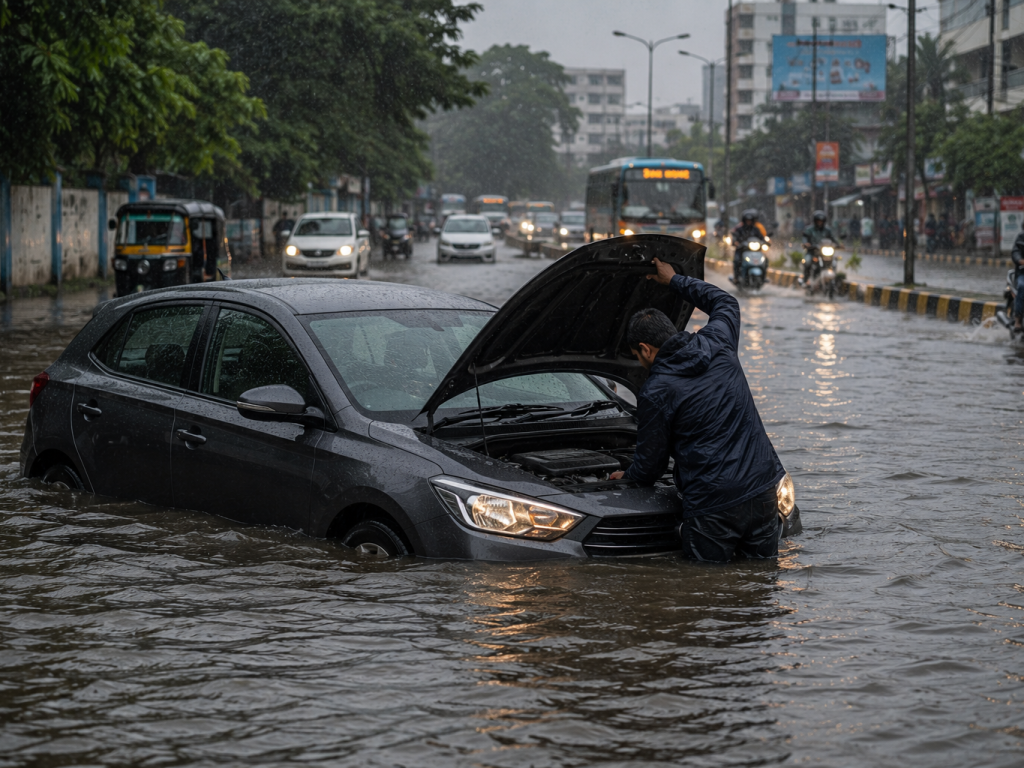
If water enters the engine through the air intake, it can cause a condition known as hydro-lock, leading to severe engine damage. Floodwater can also damage electrical systems, brakes, transmission components and wheel bearings. If you are unsure about the depth of the water, it is always safer to turn back and find another route.
Myth 2: If the engine stalls in water, keep trying to restart it
This is one of the costliest mistakes a driver can make.
If an engine stalls while crossing a flooded road, repeatedly turning the ignition can worsen the damage if water has entered the engine. Instead, switch off the vehicle, avoid restarting it and arrange for it to be towed to a service centre. A quick decision at that moment could save you from a major repair bill.
Myth 3: Good tyres don’t need checking during the monsoon
Many drivers believe that tyres only need attention when the tread looks worn. In reality, tyre condition is especially important during the rainy season.
Adequate tread depth helps channel water away from the tyre, improving grip on wet roads. Low tread depth increases the risk of aquaplaning, where the tyres lose contact with the road surface and the driver temporarily loses steering control. Tyre pressure should also be checked regularly, as incorrect pressure can reduce stability and braking performance.
Myth 4: ABS guarantees shorter stopping distances
Anti-lock Braking Systems (ABS) are valuable safety features, but they cannot overcome the laws of physics.
ABS prevents the wheels from locking during hard braking, allowing the driver to retain steering control. However, stopping distances on wet roads are still longer than on dry roads. Drivers should maintain greater following distances, reduce speed and brake smoothly instead of relying solely on technology.
Myth 5: Four-wheel drive means better braking
Four-wheel drive and all-wheel drive improve traction while accelerating, especially on slippery surfaces. However, they do not improve braking performance.
Whether you drive a hatchback, sedan or SUV, every vehicle depends on tyre grip to stop safely. Wet roads reduce that grip, meaning all vehicles require more distance to come to a complete halt.
Myth 6: You can drive at normal speeds if your car has modern safety features
Modern cars come equipped with traction control, electronic stability control, airbags and numerous driver assistance systems. While these technologies improve safety, they are designed to assist the driver, not replace careful driving.
Heavy rain reduces visibility, hides potholes and makes roads slippery. No safety feature can compensate for excessive speed or poor judgement.
Myth 7: Hazard lights should always be switched on during heavy rain
Many motorists automatically switch on their hazard lights as soon as visibility decreases. However, this can create confusion because hazard lights are intended to indicate that a vehicle is stationary or facing an emergency.
When driving in heavy rain, it is generally safer to use your normal headlights so that other road users can judge your direction of travel. Hazard lights should be reserved for situations where the vehicle has stopped due to a breakdown or another emergency, unless local traffic rules specifically require otherwise.
Myth 8: Brakes work perfectly immediately after driving through water
After passing through standing water, the brakes may become temporarily less effective because moisture reduces friction between the brake pads and discs or drums.
Once it is safe to do so, gently applying the brakes while driving at low speed can help dry them. Drivers should always allow extra stopping distance after crossing water until normal braking performance returns.
Drive with facts, not assumptions
Safe monsoon driving is less about owning the latest vehicle and more about making informed decisions behind the wheel. No car is completely immune to heavy rain, flooded roads or slippery surfaces.
Simple precautions such as slowing down, maintaining safe following distances, checking tyres and wipers regularly, and avoiding unnecessary risks can significantly improve safety. By replacing common myths with sound driving practices, motorists can protect themselves, their passengers and their vehicles throughout the rainy season.
The best safety feature in any vehicle is still an alert and cautious driver.