


MAPUSA
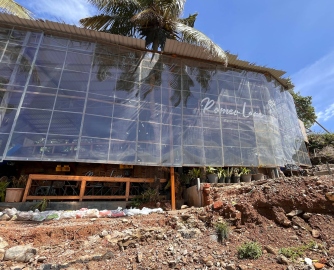
The Goa Coastal Zone Management Authority (GCZMA) has issued a fresh directive to Romeo Lane, a popular restaurant and club in Anjuna, mandating the demolition of multiple unauthorised constructions within its premises.
The directive, issued on July 30, identifies seven specific violations that must be rectified, including the removal of permanent steps leading from the ground to the upper deck of the establishment.
The GCZMA’s order comes in the wake of concerns that Romeo Lane had exceeded the permissions granted under the Coastal Regulation Zone (CRZ) norms.
The club was initially granted approval to erect temporary structures. However, it was found to have used non-permissible materials, contravening the guidelines set forth for construction in ecologically sensitive coastal areas.
The restaurant, situated within the no-development zone along the Anjuna coast, is a popular spot among the elite class of Indian tourists and has been mired in controversy for playing loud music.
The authority has directed the club to remove a concrete gutter running along the left side of the entire pathway within the premises. Both sides of the pathway feature retaining walls that have been deemed illegal and are required to be dismantled.
The permanent steps leading from the ground level to the upper deck, and continuing to the lower deck, are to be removed as they do not conform to the temporary structure approval granted to the club. The club must also remove the tiles and concrete that have been installed on the lower deck, which are considered unauthorized additions.
The GCZMA has further instructed the club to clear the site of any debris and remnants of reinforced cement concrete (RCC) footing that still exist, which are linked to the illegal constructions.
The GCZMA’s Member Secretary, Johnson Fernandes, emphasised in the order that any additional constructions beyond the approved plans must also be removed by the club within one month.
The property in question is located on Survey No. 213/5 in Anjuna, an area governed by strict CRZ regulations to protect the fragile coastal ecosystem.
This is not the first time Romeo Lane has faced legal action over unauthorised constructions.
In April 2024, the Bombay High Court at Goa ordered the demolition of sections of the club’s premises that had encroached on land belonging to the Goa Tourism Development Corporation (GTDC).
The encroachments were located on Survey Nos. 213/4 and 213/5. Following the court’s order, the club proceeded to demolish the encroached sections as directed.
The High Court’s April order also mandated the GCZMA and the Goa State Biodiversity Board to develop a restoration plan for the affected areas.
The court noted that the illegal constructions and encroachments had caused environmental damage, necessitating a thorough restoration to rehabilitate the ecosystem.
Once the restoration plan is finalised and placed on record by the GCZMA and the Goa State Biodiversity Board, the responsibility for executing the restoration will fall on the owners of Romeo Lane.
Restaurant agrees to fund Rs 11 lakh restoration work
As per the High Court directions, the District Rural Development Agency (DRDA), in collaboration with the Goa State Biodiversity Board (GSBB), has prepared a restoration plan for the area surrounding the demolished site near the restaurant, with an estimated cost of Rs 11 lakh.
The DRDA has indicated that a 75-day dry spell is required to carry out the restoration work. The proprietors of Romeo Lane have committed to deposit the necessary funds for the restoration work with the biodiversity board.
The coastal authority and the GSBB will now move forward with the restoration work according to the outlined plan.


