THE GOAN NETWORK
MARGAO
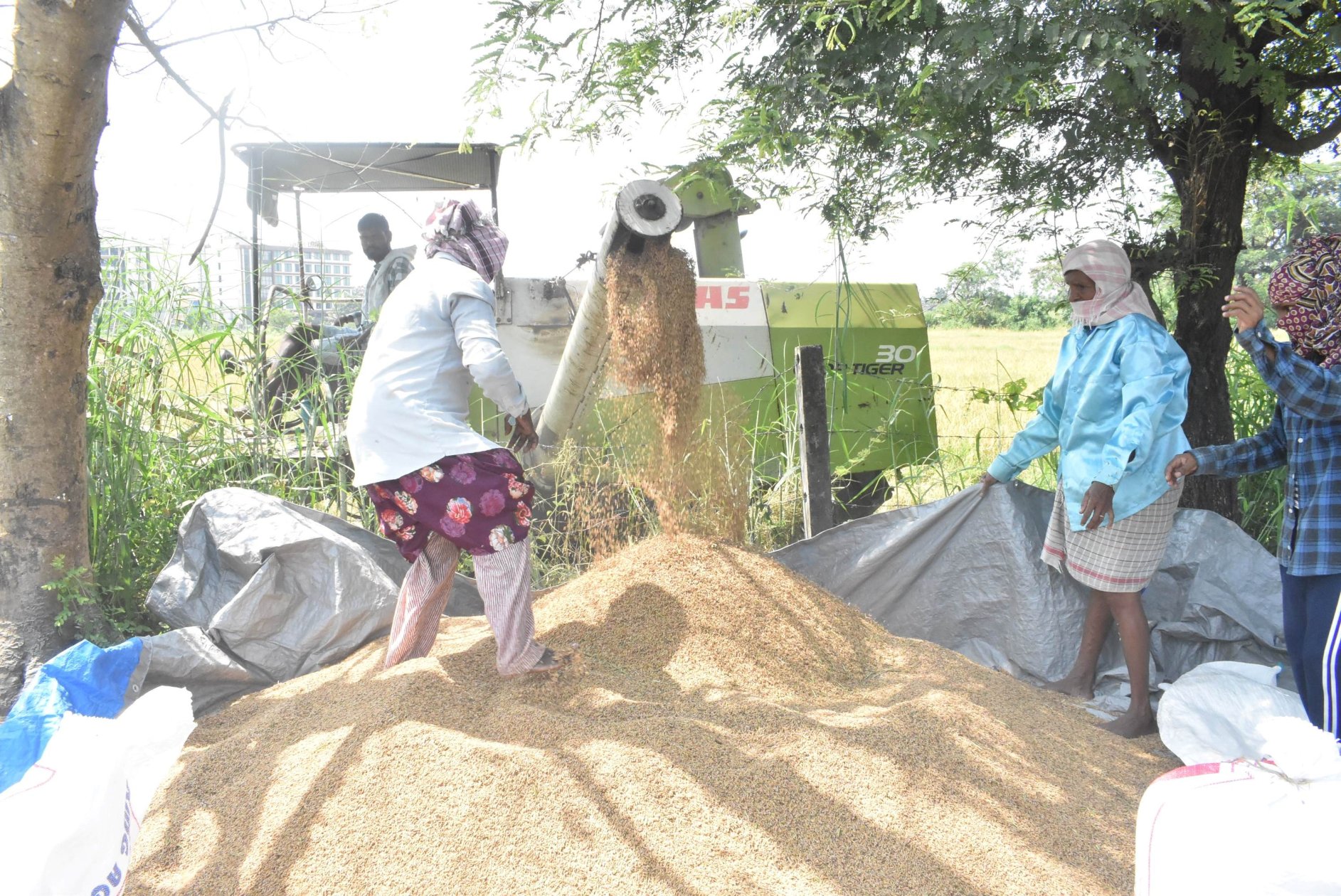
Farmers of Aquem Baixo harvested a moderate yield of paddy from their fields opposite the Margao railway station this season, despite the deficit rainfall. While the farmers are hopeful of a better harvest next year, they remain deeply concerned about the future of the agricultural fields that have been cultivated by their ancestors for generations.
The farmers, many of whom belong to the Scheduled Tribe (ST) and Other Backward Classes (OBC) communities, have been cultivating the fields continuously for the past 22 years, despite the government acquiring the land through the Goa State Urban Development Agency (GSUDA) during the BJP regime over two decades ago.
Progressive farmer Claudius Dias, who along with other farmers has been leading a sustained campaign for the return of the fields, has once again urged the government to restore the land to agriculture.
“Despite the government forcibly acquiring our fields, we have not stopped cultivating paddy and other crops even for a single year. This shows our love for agriculture, which not only provides us with a livelihood but also helps protect the environment,” Dias said.
He said the farmers managed to harvest a moderate crop this season despite the weather conditions. “The Jyoti variety of paddy has responded well to the weather conditions. We hope to reap a better yield next season,” Dias said.
The farmers have been fighting for the return of their fields ever since GSUDA acquired the land for a proposed transportation centre more than two decades ago. Over the years, they have approached politicians, ministers and MLAs, besides repeatedly knocking on the doors of the South Goa Planning and Development Authority (SGPDA) whenever the Outline Development Plan (ODP) is opened for suggestions and objections.
The farmers have urged the planning authorities to retain the agricultural character of the fields and prevent their conversion for non-agricultural activities.
However, despite the farmers continuing to till the land and depend on it for their livelihood, the government has changed the zoning of the fields to commercial, raising fears that the lush green agricultural land could eventually make way for commercial development.
For the farmers, the fight is not merely about land ownership. They say the continued cultivation of the fields represents their livelihood, their ancestral connection to the land and their commitment to preserving one of the remaining pockets of agricultural land in the area. After more than two decades of cultivating the fields despite the acquisition, the farmers are once again hoping that the government will reconsider its decision and return the land for agricultural use.