MARGAO
With the commencement of the new fishing season, traditional fishermen in the coastal village of Colva have resumed their age-old practice of adding value to their catch by drying excess fish.
Although the activity has begun on a modest scale, fishermen expect it to gather momentum from September onwards, once the rains subside and the South-West Monsoon retreats.
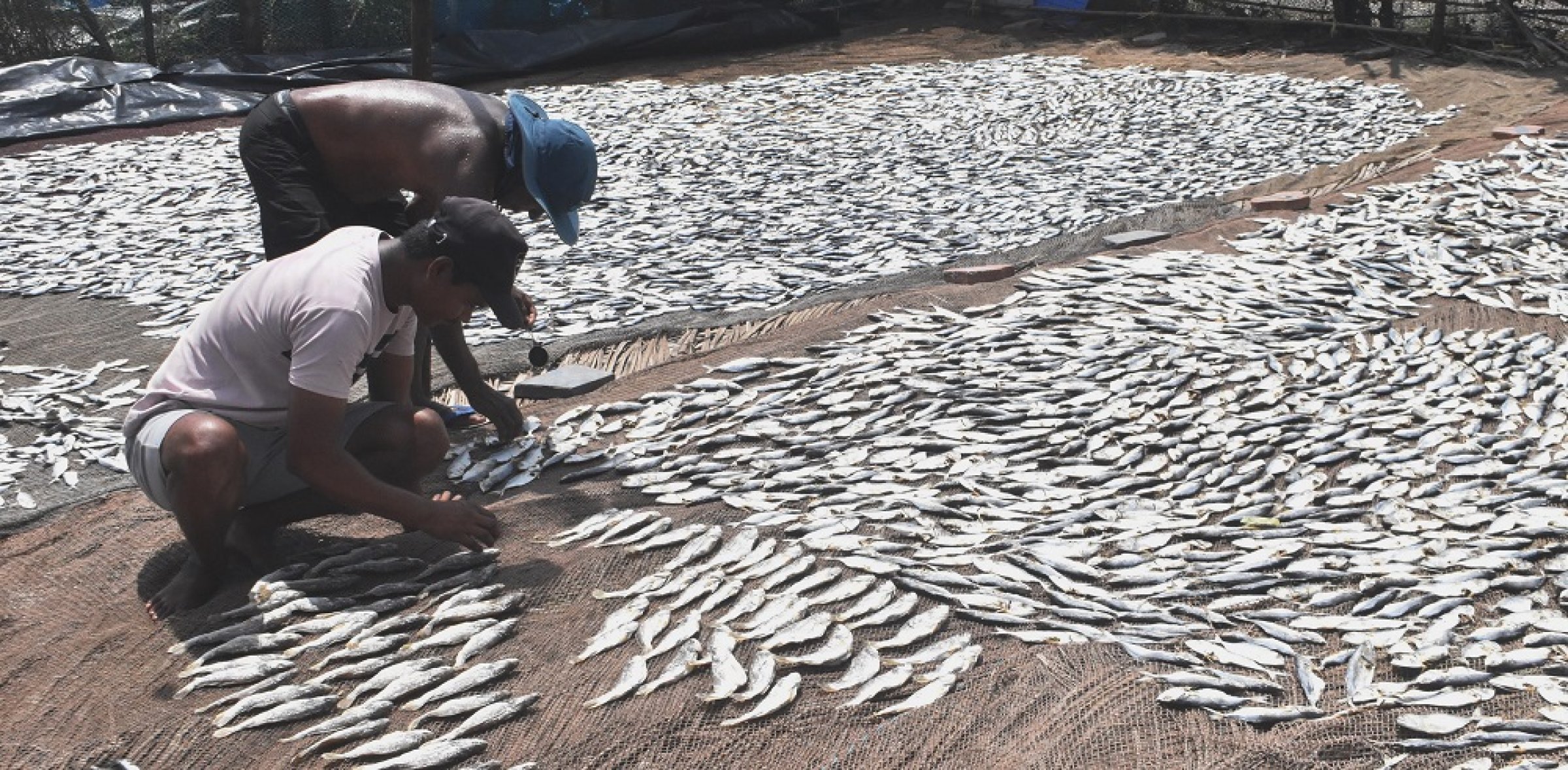
A visit to the coastal village on Wednesday revealed that fish drying had commenced at a moderate pace, with a few traditional fishermen and their workers engaged in processing and drying the excess fish caught from the sea.
At present, mackerel, including baby mackerel, is the main variety being dried. Fishermen follow the traditional process of salting the fish, washing it and then spreading it out to dry naturally under the sun.
However, the fishermen have so far refrained from drying larger varieties such as stingray and shark. Apart from these varieties not being landed in large quantities at present, the uncertain weather conditions and frequent rainfall make it risky for fishermen to invest in fish specifically for drying.
Traditional fisherman Inacio Goes said the dry fish activity had only just begun with the opening of the new fishing season. “Once the rains subside and there is bright sunlight, we will dry other varieties of fish, including stingray. Right now, we cannot afford to procure stingray because the weather conditions have yet to improve,” he said.
The traditional dry fish trade has been an important supplementary livelihood for several fishing families in Colva, with some fishermen continuing the practice for decades. The knowledge and techniques involved in processing and preserving fish have been passed down through generations.
Goes said he had entered the trade as a child by accompanying his father in the family’s fish-drying operations. “I joined my father in carrying out the dry fish operations when I was a kid. I am now a senior citizen and am still engaged in the activity,” he said.
For the traditional fishing community, fish drying not only provides an additional source of income but also helps preserve surplus catch that may otherwise go to waste. The practice remains closely linked to the seasonal rhythm of fishing, with favourable weather conditions playing a crucial role in determining the scale of operations.
Fishermen say the coming weeks will be important for the activity. Once the monsoon rains retreat and longer spells of strong sunshine set in, they expect more varieties of fish to be brought in for drying and the yards along the coastal village to become busier.