MAPUSA
For years, Goa's roadsides have been scarred by mounds of garbage – from food waste and sanitary waste to construction debris – despite repeated clean-up drives.
Now, the Goa Waste Management Corporation (GWMC) is attempting to tackle the problem at its source by replacing illegal dumping spots with monitored waste collection centres, beginning with a successful pilot project in South Goa.
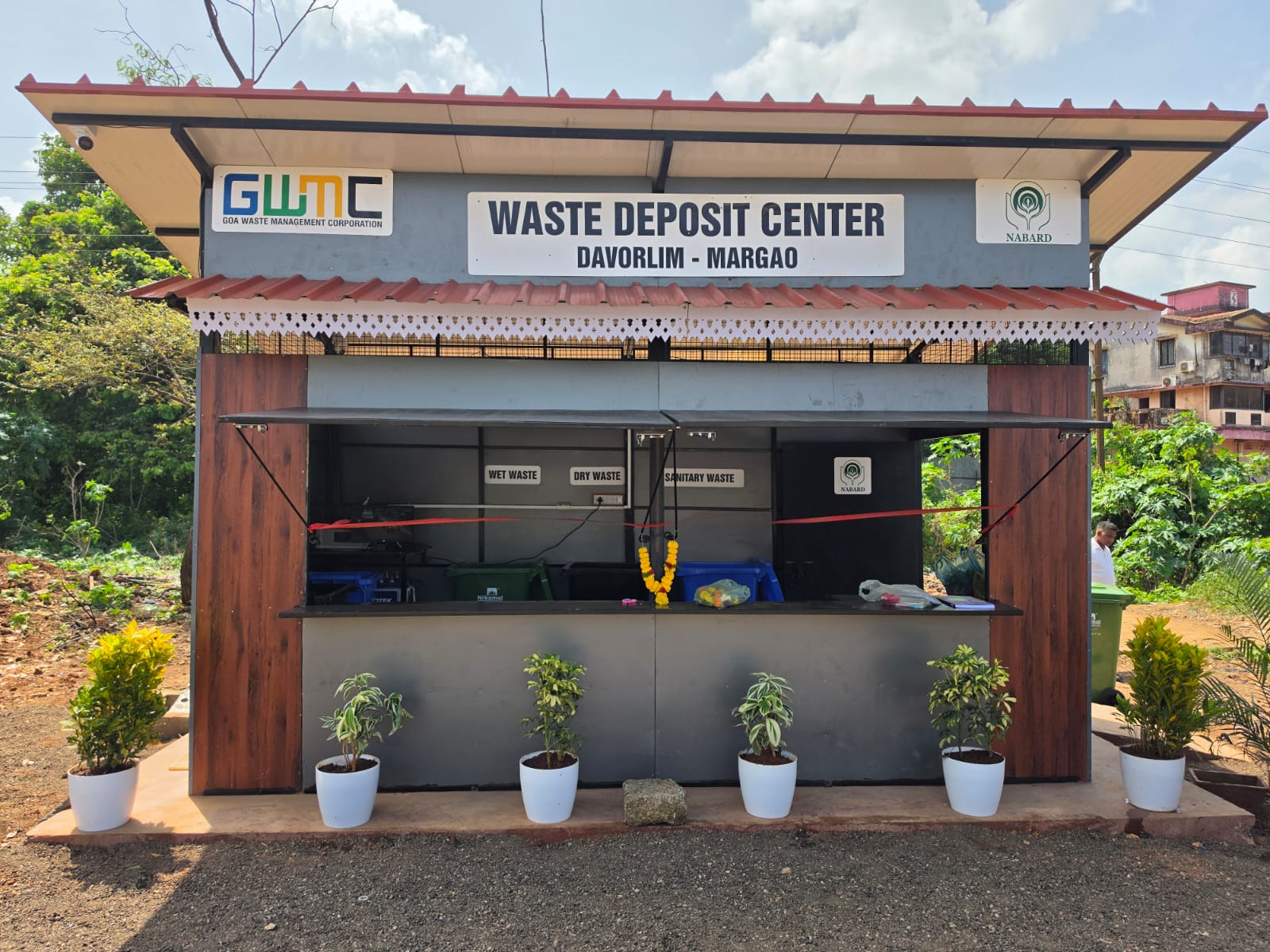
The corporation has set up its first CCTV-monitored waste collection centre at Davorlim and is preparing to establish a similar facility at Maddel in Tivim, one of North Goa's persistent roadside dumping hotspots.
GWMC Managing Director Harish Adconkar said the initiative aims to provide residents with a convenient and structured alternative to indiscriminate dumping while enabling authorities to keep a close watch on chronic black spots.
"We have found that wherever alternatives have been provided, people have responded positively. We are planning to expand this facility to more such black spots across the State," Adconkar said.
Located near the Maruti Temple at Davorlim, the collection centre allows residents to deposit segregated wet waste, dry waste, sanitary waste and other domestic hazardous waste.
The facility has been developed with assistance from NABARD and is equipped with CCTV surveillance and solar-powered infrastructure to ensure round-the-clock monitoring.
The response to the pilot project has been encouraging. Since becoming operational last month, the centre has collected nearly 150 kg of wet waste and continues to receive between 10 kg and 20 kg of sanitary waste every day.
Before the facility was established, the area had emerged as a notorious dumping point where food waste, including chicken waste and sanitary waste were routinely discarded in the open, creating unhygienic conditions and generating foul odour for nearby residents.
To improve accessibility, the corporation has also introduced a mobile waste collection point near the Davorlim church. Under the pilot initiative, a specially designated rickshaw remains stationed at the location to receive segregated household waste from residents during scheduled hours.
Encouraged by the outcome, the GWMC is now preparing to replicate the model at Maddel in Tivim, where garbage dumping along the State highway has remained a recurring problem despite regular clean-up operations.
"In Maddel, Tivim, there is a similar black spot along the State highway where illegal dumping takes place. We are presently clearing the waste from the location, but we now intend to establish a permanent waste collection centre there so that people have a proper disposal facility," Adconkar said.
According to the Corporation, nearly two to five tonnes of waste are removed from highways across Goa every day, much of it dumped illegally at recurring roadside locations.
Officials said the GWMC has identified around 10 major garbage black spots across North and South Goa that are under continuous monitoring.
If the Davorlim model continues to deliver results, similar facilities are expected to be rolled out at other identified hotspots across the State.