MARGAO
Fishermen who depend on shellfish, including oysters, along the banks of the River Sal are keeping their fingers crossed following reported findings by the National Institute of Oceanography (NIO) of cadmium contamination in oysters.
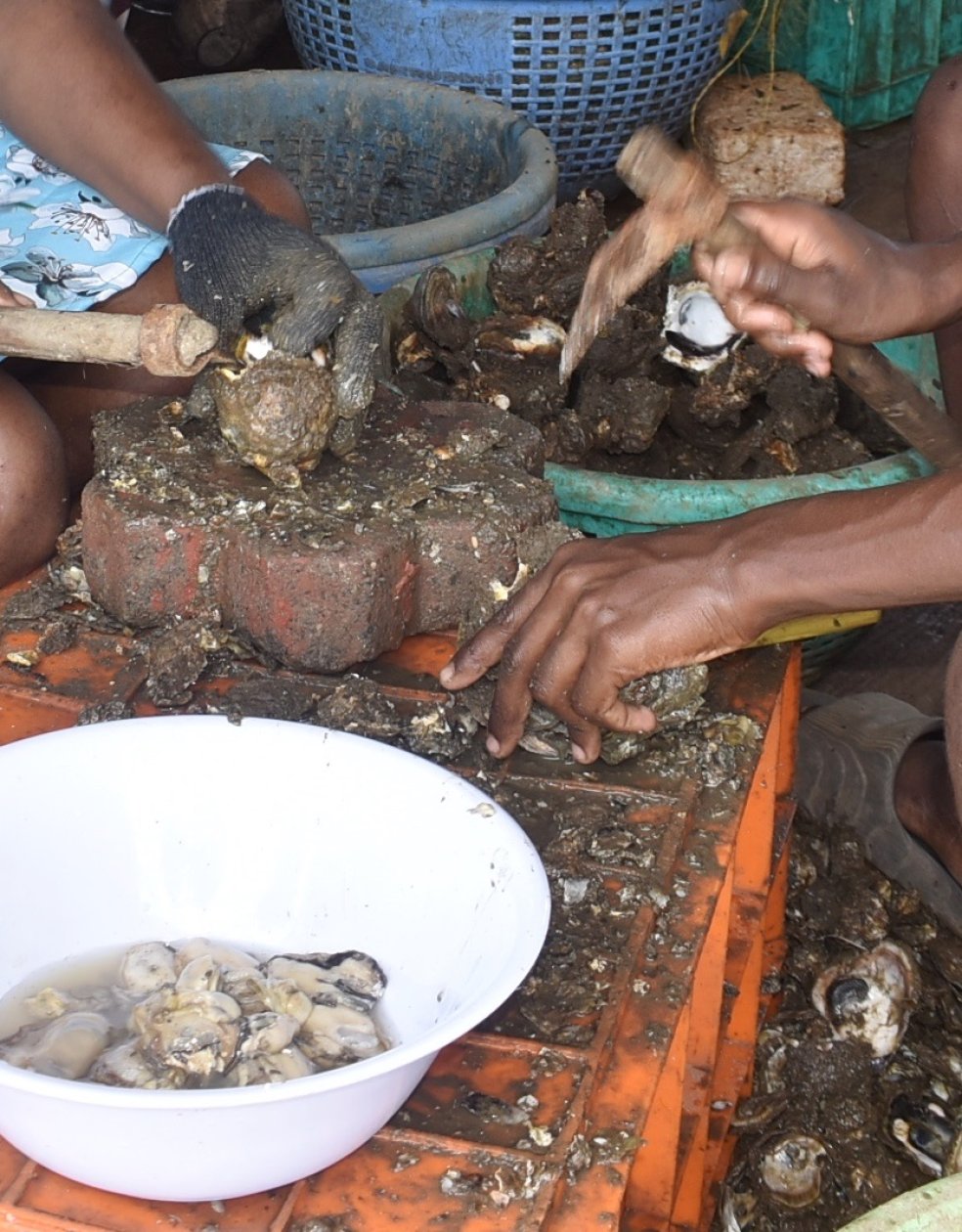
The Sal, stretching from Betul to Velim, Ambelim and Assolna, has long supported fishing communities that depend on shellfish harvesting. Oyster cultivation is an important source of income for several families along the river.
The NIO findings have raised fears that concerns over oyster safety could affect the traditional activity and the livelihoods of hundreds of fishermen and shellfish collectors. Men and women from these communities depend on oyster harvesting for a steady income.
“The River Sal is a rich source of oysters. Since seawater enters the river through its mouth at Betul, it helps in oyster production,” said Ambelim fisherman Avinash D’Silva.
He said generations of fishermen had depended on oyster harvesting in the Sal. “We have grown up watching our parents harvest oysters in the river. After the NIO report, there is a sense of fear. We are continuing our work as usual, but we do not know how consumers will react to the findings,” he said.
D’Silva urged the government to issue a clear statement on the NIO study and address the concerns of fishermen and consumers. He also sought a compensation package for fishermen who may lose their income because of the concerns raised by the report.
Velim MLA Cruz Silva, who has taken up the issue with the authorities, said he had made representations to the Fisheries Department, Directorate of Health Services, Food and Drugs Administration, Goa State Pollution Control Board, Environment Department, Chief Secretary, Fisheries and Health secretaries, and the NIO, seeking urgent clarification on the reported cadmium contamination.
Silva said the issue concerns Goa’s entire fishing community and consumers and cannot be treated as a local matter. With the fishing season under way, uncertainty over the safety of oysters and other shellfish is causing concern among fishermen, collectors and vendors.
He pointed out that Velim has a large fishing community and is home to Cutbona, one of Goa’s largest fishing jetties. Several families there also depend on oysters, mussels, clams and other shellfish.
“These are poor traditional fishermen and coastal families for whom shellfish collection is their bread and butter. They cannot be left in fear and uncertainty because of a lack of official communication,” Silva said.
The fishing community is now awaiting a clear response from the government and concerned agencies on the safety of oysters harvested from the Sal, as uncertainty continues to hang over a traditional livelihood passed down through generations.