


the goan I network
MARGAO
While Public Works Department Minister Sudin Dhavalikar was holed up in Delhi on Saturday, fire department personnel were on a mission at Tolleaband-Benaulim (one of the places from where the Western bypass passes) to rescue an aged husband and wife duo after their house was marooned by flood waters.
The incident only raised fear and anxiety amongst locals and brought to the fore the moot question whether it’s prudent to build the Western bypass through the
flood plains of Benaulim, Mungul and Seraulim, which act as water-catchment areas for rain water during the
monsoon.
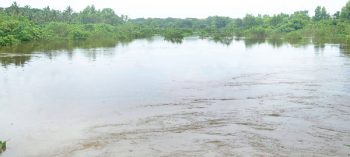
A visit to the Khareband-Tolleaband area on the Benaulim side of river Sal revealed that while the river was flowing in full spate all along its course, the water-catchment areas of Tolleaband and the one behind the
Vidya Vikay Academy building were all inundated since Friday evening.
The Tolleaband lake at Benaulim “ through which the Western bypass will pass before joining at Navelim at the River Sal near the petrol pump “ resembled a big swimming pool as the entire lake was submerged under the flood water. Though the Khareband-Pedda-Benaulim road was not submerged under water, the ground reality raised a pertinent question -- where will the rain water find its way if displaced by the construction of the Western bypass? Locals remain apprehensive that the rainwater will leave the village inundated in future.
Says Adv Radharao Gracias: “The Western bypass has been planned through the wet lands and water-catchment areas of Benaulim, Mungul and Seraulim. If the bypass is built with massive land filling through the water-catchment areas, the rainwater will find its way to the villages. You don’t require science to explain this”.
Former Benaulim Sarpanch John Barretto cautioned that the government should not bulldoze its way with the bypass through the flood plains just to save cost. “Let the PWD engineers explain to the villagers how and where would the flood waters go when displaced by the Western bypass. This is a serious issue,” he said.
Benaulim MLA Churchill Alemao has strongly batted for the desilting of the river Sal for smooth flow of rainwater. “Even if the bypass is built on stilts, flooding will continue if the river is not desilted. Let the government first take up the river desilting work,” Churchill said, while assuring that he will ask the PWD Minister to visit the water-catchment areas of Benaulim and Seraulim to see the ground reality. “The PWD Minister blames me for stopping work on the bypass. He should come and see for himself the ground reality,” he added.
The situation along the Mungul-Seraulim stretch of the proposed bypass was no better as the entire low-lying fields were submerged under water. Says Seraulim villager Rodney Almeida: “Residents of Seraulim have been demanding the construction of the bypass on stilts with valid reasons. The locals are aware of the flood situation. Taking such a project with massive land filling will certainly displace the water into the residential areas of the villages.”
A glance at the 2001 report compiled by high-level panel of officials, headed by then Margao SDM, Sanjit Rodrigues, which went into the causes of flooding in Salcete, had recommended a re-think on the Western bypass passing through the wet lands of Margao precisely because the low-lying fields acted as water-catchment areas during the monsoon.


