PANAJI
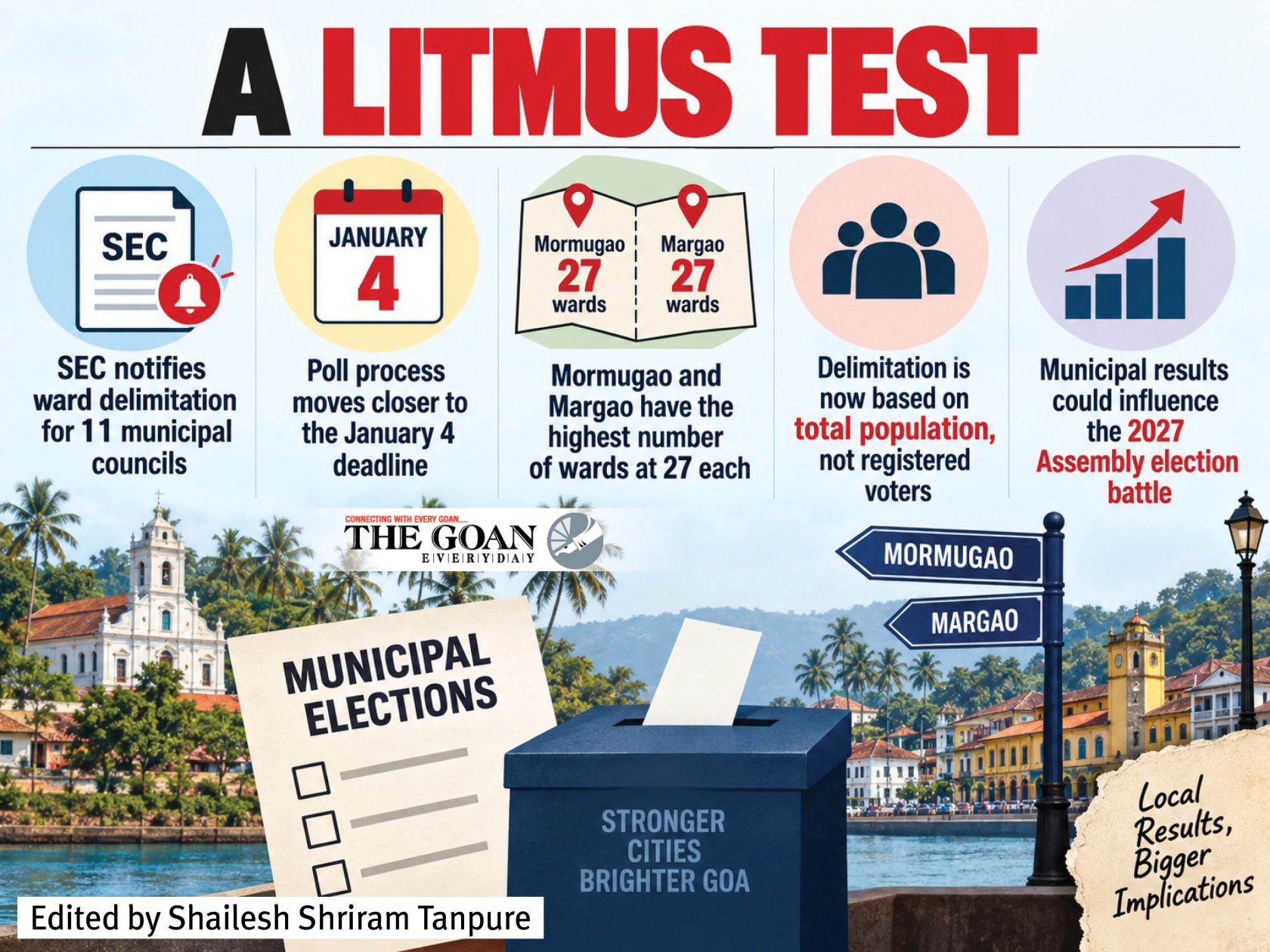
In a significant step towards holding the long-pending municipal elections, the Goa State Election Commission (SEC) on Wednesday notified the delimitation of wards for 11 municipal councils across the State, moving the process closer to elections that must be completed by January 4 as directed by the Bombay High Court at Goa.
The municipal elections are likely to carry political significance beyond the urban local bodies, with the results potentially setting the tone for the Goa Assembly elections that will follow soon after. As the last major electoral contest before the Assembly polls, the elections will give political parties an opportunity to assess their organisational strength, voter sentiment and alliance equations ahead of the Assembly battle.
Political test
The ward delimitation notification was issued by State Election Commissioner Menino D’Souza under Section 10(3) of the Goa Municipalities Act, 1968. It covers Mormugao, Margao, Mapusa, Curchorem-Cacora, Bicholim, Cuncolim, Quepem, Canacona, Valpoi, Pernem and Sanguem municipal councils.
The notification specifies the areas covered by each ward, including part numbers, Assembly constituency segments and house numbers.
Key election step
The delimitation is a key statutory step before the SEC can proceed with ward reservations, publish the election programme and conduct the polls. With the High Court directing that the entire electoral process be completed by January 4, the notification marks an important milestone towards meeting the deadline.
Ward structure
Under the revised ward structure notified earlier by the SEC based on population figures, Mormugao and Margao municipal councils have 27 wards each, making them the largest councils going into the elections.
Mapusa has 20 wards, while Curchorem-Cacora has 17. Bicholim and Cuncolim have 15 wards each, Quepem has 14 and Canacona 13.
Valpoi, Pernem and Sanguem will continue to have 10 wards each.
Population basis
The SEC has undertaken the exercise under the recently enacted Goa Municipalities (Amendment) Act, 2026, which changed the basis for determining the number of councillors and ward delimitation from registered voters to the total population of the municipal area. The delimitation process was earlier restarted after amendments to the municipal law changed the framework for ward formation and reservation. The SEC then began a fresh exercise and invited public objections and suggestions before finalising the ward boundaries.
Assembly impact
For the ruling BJP and opposition parties, the municipal results could provide an early indication of public sentiment and influence the larger Assembly contest.
With delimitation now notified, attention will turn to the ward reservation roster for each council and the election schedule as the SEC works towards the January 4 deadline set by the High Court.