On entering Mapusa town on Monday morning, one found a billboard in Marathi. It had local MLA Joshua Peter De Souza, among others, offering greetings on the centenary of the foundation of the Rashtriya Swayamsevak Sangh. It is termed as "an inspiring centenary celebration for the RSS, which has taken an eternal oath of patriotism and the spirit of service". Some might disagree.
That's interesting. Quite some comment has been made on the relationship between the RSS -- the rightwing paramilitary that believes in building a 'Hindu rashtra' (Hindu nation) -- and Indian religious minorities. But less is known, or understood, about the equation of some members of the minorities and the RSS.
Goa's case is unusual. "Minorities" here are of a different kind from, say, North India. In Goa, sections of the minorities have helped the BJP to come to power and stay there, both as MLAs and voters, though for rather complex reasons. This would be a lengthier subject in itself. But the odd connections between Goa's Catholic community and Hindutva might throw up interesting themes to research and understand.
Take the unusual case of Otto de Sequeira (or Siqueira) Coutinho, long forgotten in his own home. Sandra AtaÃde Lobo, a Goan-Portuguese scholar in Lisbon who has done fascinating research into the intellectual history of Goa, tells us much of what we know about him, including in this section.
He came from Baddem in Salvador do Mundo, Goa. Born in 1885, he died in 1978, at the age of 92, in Washington DC. Otto was a Professor at Georgetown University,
Joaquim Xavier Otto de Sequeira Coutinho (1885-1978) was an engineer. He was born in Cape Verde, being the son of a Goa doctor at the Portuguese colonial military medical service (José António Valeriano Coutinho) and brother of the writer Maria LuÃsa de Sequeira Coutinho. Dr Sandra says she came across him when doing research for her thesis.
Searching in the Portuguese parliament archives for candidates from the first parliamentary elections after the 1910 Republican Revolution, she came across his name. "I had never heard of him but started digging as he was described by his supporters --- headed by Luis de Menezes, who by that time was part of the team of the newspaper 'Debate' directed by Menezes Bragança --- as being "a devoted and years-long Republican, son of this land" residing in Lisbon," she wrote in the online forum of the Goa Book Club.
She further informs that according to Peregrino da Costa, Sequeira Coutinho studied in Lisbon and Cambridge (possibly in London and Oxford where there was a significant Indian student community). He left for Berlin and then migrated to the USA, after working for some years with the Portuguese Railways and becoming involved in Portuguese politics. After the Revolution, he was the secretary to Manuel de Arriaga, a Republican active in the political movements of his time...
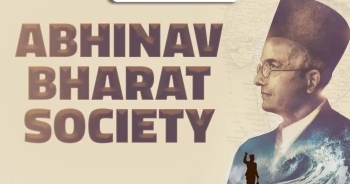
He found that, when in England, Dr Otto came into contact with the Abhinav Bharat Society, founded by Savarkar. He was a member, or at least a sympathiser. It was when living there that he was entrusted the manuscript of the book, which later became Savarkar's tome on 1857.
The Indian War of Independence 1857, first published in 1909, has been called Savarkar's "seminal" tome. Without the Goan intervention, the manuscript could have got lost, some believe, as the site savarkar.org has argued. The site narrates that Savarkar secretly met Coutinho, and that Savarkar entrusted him with the original manuscript of The Indian War of Independence 1857, which Dr Coutinho is said to have smuggled out of Britain (under disguise) into Lisbon, and preserved it for decades.
This book reinterprets the 1857 revolt as India's first war of independence. Savarkar challenges the British narrative that labeled it a mere "sepoy mutiny," presenting it instead as a coordinated uprising (though there is scholarly debate over this) against colonial rule, driven by a collective desire for freedom.
After Savarkar was arrested, Abhinav Bharat, that had liaisons with Madame Cama in Paris, came under pressure. As Dr Otto was seen as a Portuguese with no links with India, it might have helped. It is believed that he kept the manuscript until India's independence when he returned it to Savarkar.
Later, in the USA he became known as a specialist in Portuguese language and history, and geopolitics. He was part of the founding team of the Foreign Service School of Georgetown University which invested in the American sphere of influence in Latin America, among other assignments.
Among other honours, in the 1950s he was decorated with a medal by Salazar's government for his services to Portuguese language and historiography, AtaÃde Lobo has also mentioned.
Makarand R Paranjape, writing a largely hagiographical text titled 'Savarkar the Catalyst' credits him with having "redeemed the revolt of 1857 from imperial interpretations". It could be argued that a Goa Catholic link might have redeemed his manuscript from vanishing forever.
But that's not all... Vinayak Damodar Savarkar also played a pivotal role in the Shuddhi movement in Goa, seeking the "reconversion" of some Goan Catholics to Hinduism. He supported and facilitated the Arya Samaj-led campaign in times when the Portuguese Republican Revolution held influence here. Other key figures included Shyamji Krishna Varma (1857-1930), who laid early ideological groundwork for Hindu revivalism, and prominent Arya Samaj leaders like Swami Shraddhanand, who actively led reconversion drives across India.
Lokmanya Bal Gangadhar Tilak and local activists played some role. Masurkar Swami, a Arya Samaj preacher, organised conversion efforts locally, travelling through Goa's villages. This grassroots work helped build momentum for the movement, often working alongside leaders like Savarkar to strengthen the Hindu revival in Portuguese Goa.
This complex and not-so-easy relationship has had many diverse facets, it seems, some of which we are yet to understand.