The other day at an informal meeting of our cultural association, a member who is a prominent real estate developer from the port town of Vasco warned us of the intricacies of the latest ‘No Development Zones’ (NDZ) notified by the Town and Country Planning (TCP) through a series of official gazettes, with a strict warning for all of us to check whether the locations of our residential areas complied with current government notifications.
As an experienced professional, such notifications may not flummox him as they do a layman. For him, it is all about evaluating whether the notification indicates a serious enough issue that requires immediate intervention or whether it is just routine noise that can be dismissed outright.
But for people who are not in the know of things, such jargon does not make any sense unless translated by experts into plain, lucid language to ensure true understanding.
Even otherwise, Goans are perennially in a state of confusion vis-a-vis TCP rulings due to administrative opacity, complex legal ‘spot zoning’ amendments like the Section 39A, and opaque public consultation windows that often bury zoning changes in obscure gazettes.
Goa’s Town and Country Planning board rulings have sparked massive confusion and widespread public outcry. The core of this frustration stems from controversial legal provisions and rapid land conversions that bypass community consultation.
Section 17(2) of the Goa Town and Country Planning (TCP) Act, 1974, was introduced to allow the government to rectify inadvertent mapping errors or inconsistent zoning in the Regional Plan.
It was inserted into the Act via an Amendment in March 2023. Instead, this was frequently used to reclassify private agricultural or ecologically sensitive land into ‘settlement’ zones, thereby facilitating the altering of large tracts of non-development zones for commercial real estate without public notice.
However, following legal challenges, section 17(2) was read down and its rules struck down as unconstitutional by the High Court of Bombay at Goa in March 2025, ruling that they were exploited for arbitrary, private land-use conversions.
Section 39A was introduced later, in February 2024. It was enacted to replace similar controversial land conversion practices when the Bombay High Court at Goa began questioning and subsequently struck down Section 17(2).
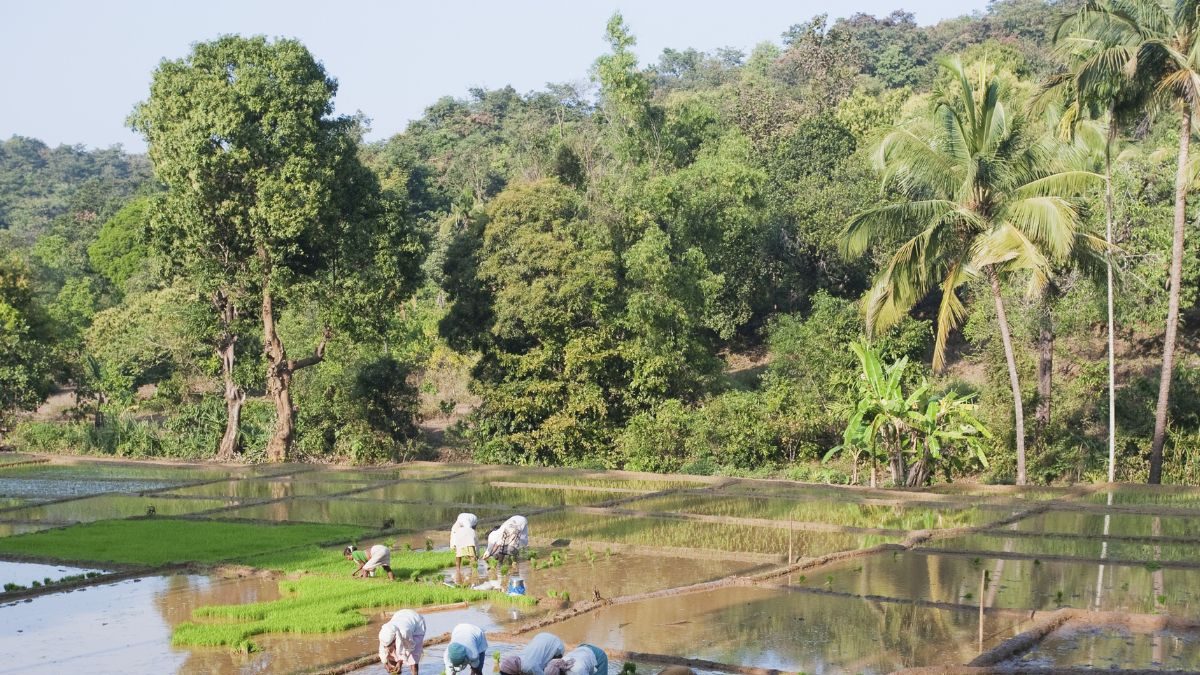
The provision allows for changing land use from Green Zones (paddy fields, hills) to settlement, enabling significant construction that critics say harms the environment and destroys Goa’s ecology.
The controversial Section 39A of the Goa Town and Country Planning (TCP) Act, 2024, has sparked intense protests, with residents and activists demanding its repeal to stop rapid land conversion.
The continued application of Section 39A has fuelled the grassroots ‘Enough is Enough’ campaign, demanding complete legislative rollbacks rather than localized suspensions.
Purportedly, the controversy over Section 39A of the Goa TCP Act encapsulates a major clash between the state’s drive for urbanization and the preservation of its ecological and cultural heritage.
Introduced as an amendment to the Goa Town and Country Planning (TCP) Act in 2024, the clause allows individual landowners or the government to apply for the reclassification of land parcels.
Under this provision, land originally categorized as green zones, orchards, agriculture/paddy fields, or no-development slopes can be rezoned into ‘settlement’ zones, legally paving the way for construction.
The state government and proponents argue that master zoning plans from decades ago are outdated and need ‘correction’ to reflect modern realities and housing needs. The provision gives authorities the flexibility to grant zoning approvals for projects of public importance.
On the other hand, the environmentalists and activists argue that Section 39A facilitates arbitrary ‘spot zoning’ or piecemeal conversions.
Critics warn that building on these ecological sensitive lands, such as hills that act as natural water recharge zones and paddy fields that retain monsoon water, threatens water security and risks causing ecological damage by 2051.
“Residents and community leaders argue that the ad-hoc land conversions and the influx of large-scale residential and commercial projects destroy the cohesive, community-centric nature of Goan villages, bypassing traditional Gram Sabha consultations,” reports a national newspaper.
Goa is indeed trapped in a classic development-versus-ecology crisis. State-backed mega-infrastructure and large real-estate projects are colliding with residents fighting to preserve their environment, leading to massive grassroots movements that highlight this sharp conflict between progress and the protection of the state’s ecological and cultural landscape.
Massive land conversions are allegedly taking place rapidly, but often with very little public awareness. The lack of public awareness often stems from the way these reclassifications are processed.
But it would be wrong to assume that environmentalists and activists are the only ones who can build awareness. In fact, grassroots community efforts, everyday citizens, and local leaders have successfully driven mass awareness against TCP highhandedness in Goa.
The fight for Goa’s ecology and land rights has become a broad citizen-led initiative, shifting public discourse well beyond traditional activist circles.
Needless to say, the Town and Country Planning (TCP) Department in Goa has drawn massive public outrage over its ad-hoc, hurried approach to passing ordinances and amendments to bypass comprehensive regional planning.
The ‘spot zoning’ approach is severely criticized for prioritizing private development over environmental sustainability.
The ‘zoning game’ in Goa is a highly controversial battle over the conversion of eco-sensitive natural landscapes, such as orchards, paddy fields, and no development zones, into profitable real estate settlement zones.
It is claimed that driven by a surge in demand for luxury second homes from urban buyers, this ongoing crisis has reshaped the state’s physical and political landscape.
It is only when sweeping discretionary clauses are either repealed or replaced by a permanent, ecologically responsible, and participatory Regional Plan that the state can protect its fragile ecology, ensure water security, and put an end to ad-hoc land conversions.