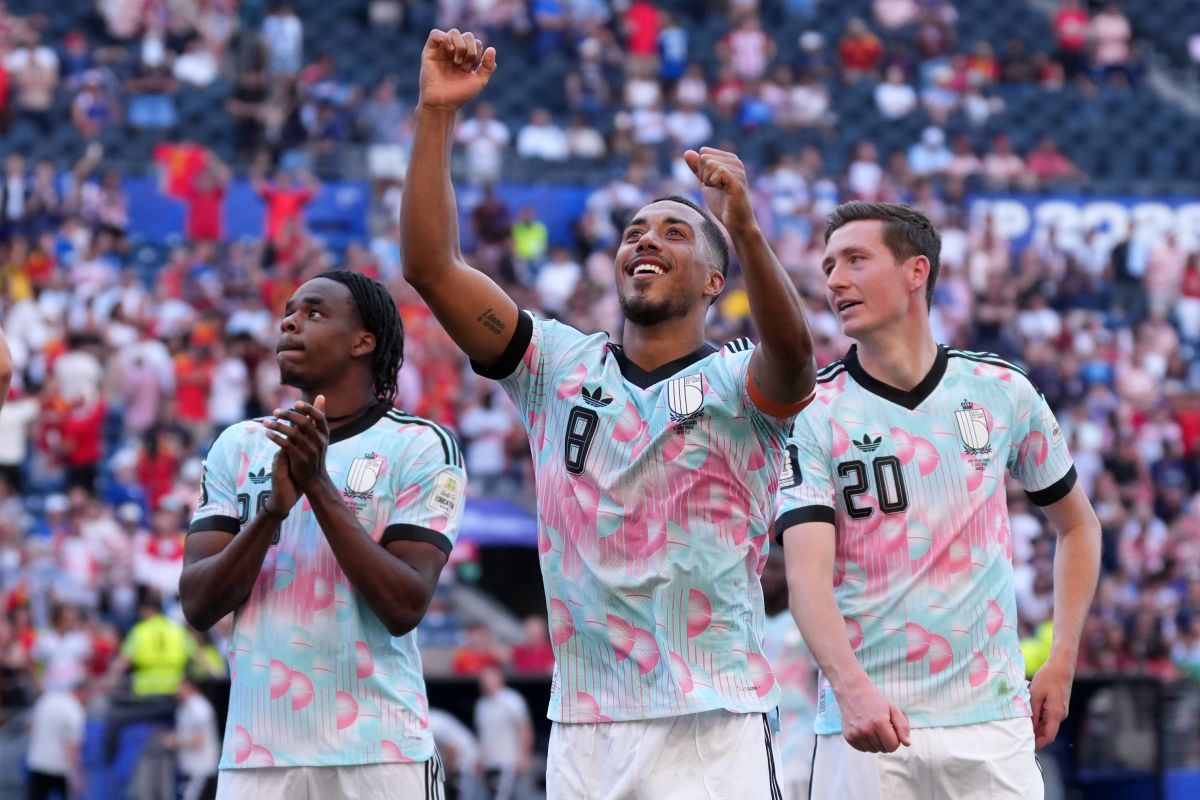
The top four teams in FIFA’s world rankings have made the semi-finals of the World Cup for the first time. They were put in separate quadrants of the draw so they could not meet before the semi-finals. FIFA described the move as ensuring ‘competitive balance’ by establishing ‘two separate pathways to the semi-finals’, according to the BBC.
As the highest stakes breed the fiercest drama, it is safe to assume that no sporting extravaganza on the international stage is ever complete without controversies. When global pressure mounts, the margin for error shrinks, leading to intense competition, scrutiny, and inevitable controversies.
The 2026 FIFA World Cup has faced its fair share of drama, with controversies spanning political interventions, contentious Video Assistant Referee (VAR) decisions, and logistical hurdles across the United States, Canada, and Mexico.
One of the most talked-about events of the tournament though involved the United States and FIFA leadership.
After US star striker Folarin Balogun received a red card in the Round of 32 against Bosnia and Herzegovina, FIFA controversially suspended his automatic one-match ban just before their match against Belgium.
There was a huge storm in the build up to kick-off against Belgium as Donald Trump applied pressure successfully on FIFA and their President Gianni Infantino to get Folarin Balogun back into the team and his ban for a red card frozen which sparked heavy criticism from pundits and other national federations regarding political interference in footballing decisions.
With Balogun’s inclusion having little bearing on the outcome, questions were to abound within the US Soccer Federation, and indeed FIFA, about whether it was really worth it to push to get Balogun back in the team and for the whole integrity of the World Cup to be undermined, particularly from leaders in European Football.
The Belgium win apparently removes the risk of any potential future legal action, which could have developed if they had gone out.
FIFA now stands accused of bowing to political pressure. President Donald Trump is getting mocked at; Gianni Infantino is seemingly involved in a war with Europe; all thanks to one decision that FIFA took in what seemed like a hasty reversal.
The 2026 World Cup is one such event where no match has been straightforward; no clash was a dead rubber. Every team gave their all on the pitch. But the Belgium versus America clash was different. Long before that first whistle blew, it would seem that the Round of 16 tie had become about FIFA losing credibility. Trump’s intervention has indeed tarnished the game of football.
An article in ‘The Guardian’ criticises Gianni Infantino’s organization for trying to turn the sport into a ‘scripted entertainment’. Football is supposed to be decided by the players who play the sport, the coaches, and of course, yes, the referees, and not by the President of the United States.
Just as much as President Donald Trump’s abrasive and deeply disruptive style of functioning, the ‘US-FIFA Synchronization’ in the matter of the suspension of Folarin Balogun only serves to ‘bolster’ his image as a man who has always believed in the deliberate cultivation of a personal brand. And now on the sporting field too, he is adamant on showing the world that America does not play by the rules!
Love for one’s nation is an emotional commitment and devotion to your country. But patriotism should not translate to mean glory for one’s country ‘at any cost’. When the pursuit of national glory overrides ethical principles, empathy, and fundamental human rights, it crosses the line into aggressive nationalism.
Have we just witnessed another exhibition of Donald Trump’s protectionist ‘Make America Great Again’ (MAGA) policies!
While traditional sporting etiquette demands strict adherence to decorum, the annals of sports history often reserve their most legendary pages for moments of fierce rebellion.
From amongst the most famous examples of fiercely contested, rule-bending, or controversy-fuelled spectacles, Diego Maradona’s infamous, unpunished handball goal against England in the 1986 FIFA World Cup quarter-finals is arguably the most recognizable breach of sporting decency - the ‘Hand of God’ incident.
It is widely recognized that ‘sporting spirit’ embodies the fundamental virtues of honourable competition. It relies on a motivating ethos of fairness, integrity, and respect for teammates, opponents, and the rules of the game.
At its core, the phrase means striving to win while maintaining the grace to accept defeat.
One’s mind however goes back to George Orwell’s 1945 essay, “The Sporting Spirit,” where he famously characterized competitive, large-scale sports as “war minus the shooting’.
He argued that modern-day sporting events reliably stir up intense nationalism, jealousy, and bitter hatred rather than promoting international goodwill.
Ever since its inception, the FIFA World Cup is known to transform football into a powerful catalyst for nationalism, uniting populations through shared pride and often exacerbating geopolitical or ethnic tensions.
“It serves as a metaphorical proxy for war, where national teams embody the state’s global status, yet simultaneously exposes the deep contradictions within modern national identities.”
This 2026 FIFA World Cup has become deeply entangled with geopolitics, with critics and foreign nations arguing that the US has leveraged the tournament to project power and pressurize rivals.
An article in ‘The Business Standard’ argues that football never escaped politics; it simply became better at pretending. “FIFA insists football and politics should never mix. It just has an extraordinarily flexible definition of politics.”
The POTUS-FIFA ‘duet’ has been evident of the glaring fact that although the World Cup may be marketed as a global celebration that transcends politics, its governance often reveals whose voices carry the greatest weights.
“If war is politics by violent means, international football often becomes politics wrapped in scarves, anthems, and 90 minutes of carefully choreographed symbolism.”