For two consecutive years, the Ram Navami festival has sparked riots and conflict in different parts of the country. This year, violence was reported in Hooghly, West Bengal during a procession led by BJP leaders where people held saffron flags resulting in commotion. The clashes came just days after Ram Navami clashes in Howrah. With rising communal tensions, a blame game ensued with West Bengal Chief Minister Mamata Banerjee blaming the BJP for the Howrah clashes while the BJP pointed accusing fingers at the other side. The BJP has called for a probe by the National Investigation Agency (NIA) into the Howrah violence. Further to the North in Bihar, Ram Navami violence left areas in Nalanda, Sasaram, and Bihar Shariff in disarray. A bomb blast also took place in Sasaram, leaving five people gravely injured. Shops were looted in Nalanda after the Ram Navami violence erupted, with 27 arrests in retaliation for illegal activities.
Last year, Goa too witnessed clashes in several parts of the State during the Ram Navami celebrations. A report based on a profound study by the Citizens Initiative for Communal Harmony (CICH) underscored the unprecedented nature of both the ‘celebrations’ and the violence that stemmed from it and observed how, across India, communal incidents took place on the day, thus highlighting the need to decode the reasons that led to the one on Goa. CICH’s report clearly affirmed that the rally “had an inherent Hindutva colour from the start.” That “functionaries and office-bearers of Hindu temples in the Vasco and Sancoale area, through which the rally passed, did not participate in the provocations which exposed the fact that the rally was externally induced mischief. It was not a clash between Hindus and Muslims in the area. CICH had negated the claim that there was “stone pelting on the Ram Navami procession from the Aqsa Mosque or the nearby ‘Madarsa’. The geography of the area established the claim as absurd.
The Hindus celebrate Ram Navami to honor the birth of Lord Rama. The word “Rama” literally means one who is divinely blissful and who gives joy to others, and one in whom the sages rejoice. The violence stemming from the festivals are clearly out of sync with the deeper meaning of the festival.
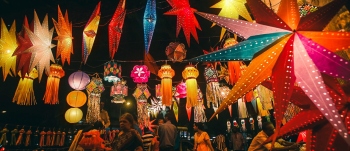
The generations that grew up celebrating the multi-religious context of India saw the young and old, neighbours, and entire communities share the joys of festivals. They not only learned about their neighbour’s faith but unconsciously absorbed the meaning of their faith and joyfully celebrated by sharing every aspect of the commemoration of the feasts while keenly observing their faith expressions and symbols. Indians functioned as a common humanity by celebrating all religious festivals including Holi, Diwali, Ramadan/Eid-Ul Fitr, Ramzan, Diwali, Mahashivrathri, Maha Sankranthi, Guru Nanak Guruparab, Ugadi, Gudi Padwa, Pongal, Raksha Bandhan, Ganesh Chathurthi, the Prophet's birthday, Onam; Christmas, Easter, and so on. There were 33 major festivals to choose from apart from National commemorations: Gandhi Jayanthi, Republic Day, Independence Day, etc. Religious plurality and multi-culturalism were the cornerstones and foundation of the nation.
Muslims and Christians are currently commemorating important religious milestones. Muslims are currently observing Ramadan which falls in the ninth month in the Islamic lunar calendar. It is one of the holiest celebratory months in Islamic practice. Muslims believe that, during the month of Ramadan, the Prophet Muhammad was given the Qur'an, Islam’s holy book. It marked the first time that God revealed to Muhammad that he was a prophet tasked with carrying God’s message.
Ramadan obliges Muslims to engage in acts of charity by depriving themselves of food and drink. They learn what it is to face bodily and material deprivation. Muslims are invited to be more charitable in this month and for the rest of the year because they have experienced self-deprivation in a direct way. When Muslims fast during Ramadan, it is a symbol of abstention of all pleasures. Muslim people break their fasts after an evening prayer with a meal called iftar. These meals are often communal events with family and friends of all faiths.
At the same moment, Holy Week is the most sacred week in the liturgical year in Christianity. Holy Week starts on the evening of Palm Sunday. It marks the events leading up to and including the arrest, crucifixion, death and resurrection of Jesus Christ. For Christian devotees, it includes fasting, abstinence, prayers, and symbolically following the Stations of the Cross. Christians are obliged to perform these acts from the heart. Holy Week is a string of eight days that allow Christians an opportunity to reflect upon the shift in humanity Jesus' sacrifice on the cross. Jesus came to earth to save humanity by dying on the cross on Good Friday and resurrecting on Easter Sunday.
Festivals of all religious communities are a time for shared celebration, thanksgiving, and joyous outpouring for the people.
There is a thread that binds our common humanity. Humanity must view God as one acting in the world through different symbols. We cannot possess God as mine and yours. The essential ways of God are unvarying. It is inopportune that wars and conflicts happen in the name of the same God who exists to achieve universality of purpose.
Religions and their profound spiritual teachings invite all of humankind to just and harmonious relations while transcending trivial differences that prompt hate and bloodshed. To celebrate our multi-cultural, multi-religious gifts can enable isolation of prejudice. It is the essential message of all faiths.