


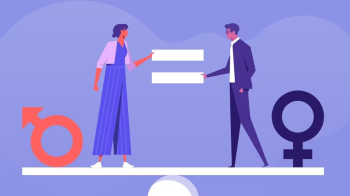
How does one argue with the contention that not one single country on this planet has achieved full gender equality! The very fact that gender discrimination is a routine matter in our society has necessitated efforts to ensure that equality between men and women is much more legally regulated.
It is indeed unfortunate that the sanctity of the workplace has never featured as a priority in modern day work culture.
The idea that the work environment should be treated with respect and dignity, where individuals are valued, treated fairly, and have the right to a safe and productive work space is yet to sink in.
More so when it is implied that female employees as those exploited are more often at the receiving end of harassment which deny them the opportunity to contribute meaningfully and thrive personally and professionally in their careers.
The Sexual Harassment of Women at Workplace (Prevention, Prohibition, and Redressal) Act, 2013, also known as the PoSH Act, is a law that protects women from sexual harassment in the workplace.
Although legally mandated, it is observed that the initial implementation of PoSH Act is not receiving anything more than a formal nod from employers.
In today’s working scenario where both men and women are supposed to be walking shoulder to shoulder, is it just threats of sexual harassment that is impeding the advancement of women in their chosen career!
Not many know that professional bias against females in the media world is far more serious a matter than it is made out to be. The term refers to the systematic prejudice within the media industry that greatly disadvantages women.
However, the confident demeanour and countenance of women who have made a name for themselves in the print and online media in India seems to dispel this notion. But there have been quite a few who could vouch for the fact that women journalists in the country face discrimination and prejudice in the workplace.
With a society evolving from a misogynist one to one more tolerant towards the achievements of women, it would lead us to believe that sufficient strides have been made in this direction.
Making significant contributions to the progress and development of their communities and the world at large, women have been giving shining examples of themselves.
Let us now move over to the defence forces in the country and the lady officers serving the country with unstinted devotion, putting the nation’s needs above their own.
These are times when young girls have been gaining entry into the hallowed portals of various training academies and institutions of the defence services in the country. It is only through sheer hard work and dogged determination that one can go through the rigours of the training here before passing out as officers of the Indian armed forces.
The two young Indian Navy women officers presently circumnavigating the globe in a 56-foot sailing vessel, the INSV Tarini, as a part of the ‘Navika Sagar Parikrama’ initiative, underscores the Indian Navy’s commitment to gender empowerment and maritime excellence.
A gruelling trip that will have the women officers navigating challenging sea conditions across the Indian, Atlantic and Pacific Ocean, the expedition reinforces the spirit of adventure and resilience.
But it comes as a great shock that at a time when the Indian Armed Forces have taken great strides towards correcting gender bias and are trying to get women to take on leadership roles; a letter from a top General alleged that there were serious management issues in the army units led by women officers.
In late 2024, the General had accused female commanding officers of having ‘mundane ego problems’ and a ‘lack of empathy’ for troops in their units. The five-page letter was intended to be an internal review of eight female commanding officers, but it sparked a fervent national discussion after it was published in Indian media.
A woman who decides to join the nation’s armed forces is seen as breaking several gender and social barriers. Yet it is argued that women in India continue to face obstacles getting leadership roles in the military.
If one is to lend credence to the argument that gender bias persists in the Indian Armed Forces due to deeply rooted patriarchal societal norms and several other factors, gender inclusivity in the Indian Armed Forces would definitely be a distant dream.
“Obviously men and women are physically different, there is no doubt about that, but when it comes to serving the nation, it does not depend upon the gender of a soldier, they all are trained equally!” This candid statement by a woman officer rightly sums up the state of affairs in the nation’s armed forces.
The ‘International Women’s Day’ serves as a reminder of the progress made and steps needed to achieve gender equality. This year it focuses on recognizing women’s achievements and promoting gender equality under the theme “Accelerate Action”.
Let us however understand that ‘Gender sensitization’ and ‘equality’ have been widely discussed subjects vis-Ã -vis their relevance in today’s society. But have these discussions and awareness programmes served any purpose! Barring a few exceptional cases, women in our country continue to suffer the ignominy of an inconsequential existence.
Upliftment and empowerment of women are simply topics for interactive sessions with various speakers suggesting remedial measures for the issue at hand only to have them overlooked in equally fast time.
Gender bias is a flaw within the structure of a society that needs to be addressed to achieve true equality. Academician Professor Simone Buitendijk’s views on this matter (March 2021) are explicit and to the point.
“As we mark International Women’s Day, it is clear global gender equality is still on the distant horizon. But to achieve it we must first cease the ubiquitous delusion that discrimination doesn’t exist.”


