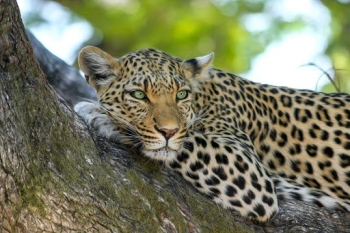
It’s festive time in Goa as the tourists pour in from near and far to bid adieu to the bygone year of anxiety, and while the youngsters dance to the beat of fusion melody, and the elders recline in their cozy armchairs and stare at the night sky from their balcãos with clinking wine glasses and the blinking stars; there’s a predator on the prowl in the dark alleys and isolated landscapes, wearing a tawny coat of black rosettes. It is soft on its padded paws, armed with razor sharp claws and pointed canines; and scouts for unsuspecting victims as soon as the sun sets and the party begins.
Away from the more illuminated and bustling coastal landscape of Goa’s year-end parties, in the midland plateaus and forest edges, is where the Indian leopard lurks; flushed out by a compelling hunger-drive, distressed by shrinking forest cover and encroaching agriculture. It is not uncommon for Goemkars to have sighted this generally elusive and nocturnal cat in their fields, roads, and rural backyards; where the squeals of piglets, bleats of goat kids and clucks of fowl chicks attract the attention of this carnivore that relies more on its keen hearing than sense of smell.
Recently, reports of carnivores roaming precipitously in public spaces especially in educational campuses are coming from various Indian states. In October, the sprawling campus of Maulana Azad National Institute of Technology in Bhopal was compelled to enforce a partial lockdown and restrict movements of its students and employees due to unprecedented entry of two tigers that stayed back for two weeks. What brought the carnivore into this educational complex cannot surely be the curiosity of our national animal towards our National Education Policy, but kept the system on tenterhooks until the big cats were taken captive and safely rescued.
Exactly two days ago, the Goa University got added to the list by issuing an advisory to its faculty and students to remain vigilant in view of reported sighting of a leopard in its campus. The lateritic plateau and the adjoining Odxel-Vaiguinim-Dona Paula valley offers a compatible terrain for this cat whose movements here are surely not unusual.
Historically a pristine wilderness and sparsely occupied only by the agro-pastoral community, the plateau in the last three decades has been transected by roads, fragmented by ‘gated concrete-clusters’ of the rich and retired, and crowded by the politically cognate ! The native flora has been replaced by the tendered avenue plantations of little nutritive value to the wildlife, and the noise levels of this once tranquil stretch have skyrocketed. The cauldron of Goa’s socio-political events, the Shyama Prasad Mukherjee Stadium has also very significantly brought increased footfall into this once isolated terrain.
How do leopards thrive here? Well, this cat is highly ‘disturbance adapted’ and a generalist carnivore. Unlike its elder cousins, leopards invest in stealth and silence for their operations and take their prey by surprise. Most importantly it is a synanthropic species that benefits from humans, their pets and livestock; which effectively buffer its depleted ‘preferred prey base’ in the forest. Also, old and infirm leopards find it easier to take relatively sedentary domesticated prey like dogs, cats, calves and pigs that offer little resistance on being attacked and lifted under the cover of night sky.
Panic triggered by a single isolated sighting of the leopard actually need not warrant much intervention from wildlife authorities, though the university has done well by asking its constituents to be cautious. However, if the sightings progress to become episodic, then there will have to be an active search for the cat and need to understand its movement trajectory. This may require installation of IR-camera traps in strategic locations inside the university campus, some of its blocks being acutely vulnerable due to the porous and potentially violate design in their architecture. Probably Satish Gujaral was not briefed in the planning stage on such exigency that would follow in years to come.
The Indian leopard is the next ubiquitous top-slot predator after the tiger in India, the Asiatic lion being restricted only to Gujarat. The leopard, that roams the Indian landscape is one of the nine global subspecies and its numbers are highest here outside Africa, the latest enumeration counting close to 13,000 individuals in our country.
Nature has bestowed upon this shrewd and agile hunter an arboreal dexterity with which it can escape a chase by a more powerful competitor, as well as ascend to canopy heights for surveillance and hiding its precious kill. Demonstrating remarkable ecological niche partitioning by avoiding competition with larger co-predators, it can survive on small prey when larger herbivores are less accessible. Rarely, it can also turn into a man-eater, though usually it only attacks people when threatened and cornered.
Currently, the attention and funding is all hogged by the charismatic tiger and the lion, leaving the leopard in the lurch; fighting its own battles of survival and conservation future. To make matters worse, leopard is now a regular ‘conflict species’ across its range; causing loss of livelihoods and unleashing terror in settlements along the forest edge.
It dies falling in deep wells, gets electrocuted and even snared unintentionally dying a slow agonizing death as was reported last week from Kopardem in Sattari, ironically a hub of passionate wildlifers of Goa! Enumeration of 2018 puts Goa’s leopard count at 86 and it is time to give the leopard its dues and bail it out from an impending crisis due to chronic indifference and vilification. A leopard may not ‘change its spots’, but we can always change our attitude towards it!