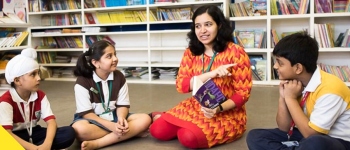
In a welcome first massive attempt to incorporate mental health programmes in education, the Telangana Minority Residential Schools (TMREIS) have embarked on a plan to set up a comprehensive initiative to benefit over 1.3 lakh students across 200 plus schools and colleges in the State.
As a part of the above programme, about 250 teachers have been identified as counsellors after a careful selection process and made to undergo an extensive orientation programme. Post the orientation the teacher-counsellors will be able to identify signs and symptoms of students having any mental health-related issues to red-flag the desired authorities. This initiative when ably implemented will highlight the long-term benefits of early intervention in mental health and wellbeing services for young people in the State.
Around the world it is felt that issues like adolescent depression and anxiety already at crisis levels before the pandemic have surged amid the disruption during the pandemic. Students across the entire spectrum of the education world faced mental health challenges which became apparent not just during the online classes but also upon the resumption of physical classes.
After the pandemic, it is specifically realised in India that the mental health of students has taken a toll across all age groups to an array of mental health issues across the board. While the ICMR survey revealed that 12-13% of students in India suffer from psychological, emotional and behavioural conditions, it is feared that the number, in reality, is much higher.
According to UNICEF’s survey findings for 21 countries in the ‘State of the World’s Children 2021’ report, every one in seven youngsters between 15 and 24 years in India have some form of poor mental health such as feelings of depression or disinterest.
The NISA Learning Loss Report 2022 survey conducted on 1502 students across 17 Indian states and the recent NCERT study show high vulnerabilities. Around 42% of the respondents went through stress, tension, and anxiety because of Covid-19 the NISA report states while 81% of school students in India experienced anxiety and depression due to academic pressure, examination and results, revealed the NCERT survey.
The NCERT’s Mental Health Survey was conducted with the help of the Ministry of Education given the perspectives of National Education Policy, 2020 which emphasizes students’ mental health and well-being to provide holistic development. A total of 379,842 students of classes 6 to 12 from different schools were surveyed and the report was released in September 2022.
The results of the survey are very intriguing and demonstrative of a crisis relating to mental health among students in India. The survey reports that students face frequent mood swings, and feel anxious about studies, examinations, and results which increased from the middle to the second stage and were reported more by girls in comparison to boys. Similarly a decline is observed in students’ responses about their physical appearance, satisfaction with personal and school life, and availability of people to share their feelings and experience of happiness, as they move from the middle to the secondary stage.
The findings of this survey showcase the present-day reality of today's students and their concerns ranging from personal and emotional. There are also social issues to challenges related to educational and career choices, and those related to dealing with the stress and anxiety.
Apart from the paucity of mental health experts, there are issues of integration and delivery of mental health care through primary health care. Budgetary constraints and a lack of government financial backing entail serious limitations. The treatment gap in India is also very wide, compounding the problem by a severe shortage of trained professionals.
A study from the Indian Journal of Psychiatry estimates that India has 0.75 psychiatrists per lakh patients, which is much lower than the recommended 3 psychiatrists per lakh patients. According to the Ministry of Health and Family Welfare, our country needs 13,500 psychiatrists and 20,250 clinical psychologists, but only 3,800 psychiatrists and 900 clinical psychologists are currently giving mental healthcare services.
The government's role in funding mental health-related initiatives is very insufficient in India. The average annual budget for mental healthcare in India in the last five years is as little as 0.05% of the total healthcare budget. Relatively, for developed nations, the average proportion of the total healthcare budget devoted to mental health is at least 5%.
Realising that addressing mental and emotional health issues is a big task for educators, the policymakers have appreciably taken desired steps in that direction. The Ministry of Education launched a ‘Modular Handbook on Early Identification and Intervention for Mental Health Problems in School-Going Children’ containing guidelines for early identification, detection and intervention of mental health problems in school-going children, for hands-on training of teachers, counsellors and other stakeholders.
The effort of the two national education boards in India is praiseworthy. The NCERT has initiated a ‘Diploma Course in Guidance and Counselling with a teacher counsellor model so that such teachers apart from teaching can also extend help to students in dealing with academic, personal and career-related issues while the CBSE provides pre and post-examination tele-counselling facilities through a centralized toll-free helpline. CBSE has also brought out a manual on mental health and psychosocial well-being during the pandemic and has launched the mental well-being app ‘Dost for Life’, to provide free counselling sessions by principals and counsellors.
Though its good to see educational institutions gearing up to address lack of education and awareness concerning psychological disorders among students in India, a lot still needs to be done. The findings of mental health surveys would have promoted the all-around development of students in India if a budgetary support and the good reach of mental health professionals is provided for.