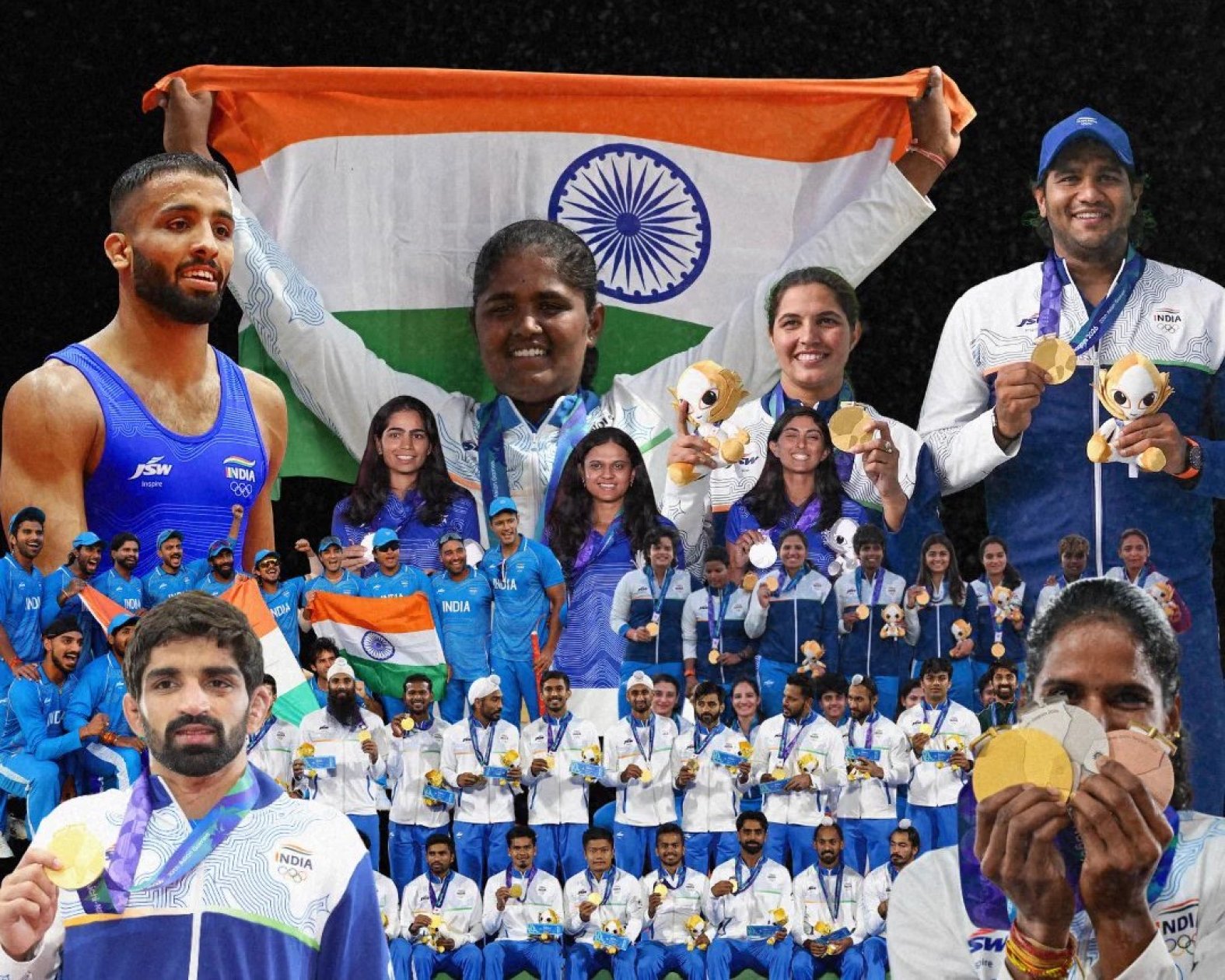
Recent international sports extravaganzas have crowned surprise champions from India, illuminating the rich tapestry of the country’s rural heartlands. Far beyond its metropolitan borders, these quiet hinterlands have evolved into a magnificent crucible of raw, unstoppable talent.
No longer just remote villages, they are now the primary engine driving the nation’s international sporting success.
India’s extraordinary performances at the 2026 Commonwealth Games in Glasgow and the Asian Games in Aichi-Nagoya highlight a major shift in the sporting landscape.
By overcoming systemic infrastructure deficits and severe financial hardships to secure global victories, these rural competitors prove that India’s truest sporting treasures are being forged far outside elite urban training centers.
For a country deeply wedded to cricket, the sport is not merely a pastime but the very pulse of the nation. Every empty alleyway is a stadium, every citizen is a selector, and a single match has the power to dictate the national mood.
This profound obsession mirrors India’s broader societal structures, its relationship with authority, and its reverence for monumental figures. It functions as a powerful lens through which we can understand modern globalization, post-colonial history, and international relations.
However, cricket’s absolute dominance has historically crowded out other disciplines. This lopsided focus has created a massive imbalance in funding, media coverage, and youth participation for decades.
Despite cricket’s massive footprint, India’s sporting culture is finally diversifying. Driven by major policy revamps over the past decade, the ecosystem has shifted from relying on ‘accidental’ individual brilliance to institutionalized, data-driven high performance.
This momentum is sustained by three distinct pillars.
First, the IPL-style model has successfully commercialized alternative sports through platforms like the Pro-Kabaddi League (PKL), and the Indian Super League (ISL), securing stable salaries and media exposure for athletes.
At the same time, historic achievements by icons like Neeraj Chopra, alongside consistent podium finishes in badminton, boxing, and wrestling have shifted national pride toward Olympic disciplines.
Finally, government programmes like ‘Khelo India’ have institutionalised talent identification, creating a structured, multi-tier system to systematically build a thriving non-cricketing ecosystem.
Athletes from humble, agricultural, or working-class families regularly outperform expectations, winning major championships and dominating physically demanding sports. Their success highlights how grit, natural environment, and community support can triumph over a lack of high-tech infrastructure. Yet, significant hurdles remain.
Geographic and financial isolation directly stifles athletic potential; when talent is separated from infrastructure, the path to elite competition becomes a lottery rather than a meritocracy.
Furthermore, the Indian sports scenario has historically faced intense scrutiny regarding nepotism, political interference, and administrative corruption- systemic barriers that continue to spark fierce national debate.
The modern challenge is turning silver and bronze medals into gold on the international stage. When athletes consistently finish second or third, it means their foundational talent, fitness, and technique are already world-class. Moving from a podium-contender to an Olympic champion requires a surgical shift from broad athletic development to high-precision performance optimization.
Global finals place an intense psychological and physiological load on athletes that ordinary practice sessions cannot replicate. To bridge the gap between raw potential and the top of the podium, India must adopt a highly strategic, high-performance model focused on three areas.
To truly prepare an athlete for the biggest stage in sports, modern sports science relies on ‘simulation training’—the practice of deliberately engineering environment, mental, and physical stressors into daily training.
Besides, athletes must undergo a profound shift from outcome satisfaction to process obsession. While celebrating a podium finish is natural, a clinical winner views anything less than gold as information rather than a success.
In high-stakes sports, performance under pressure relies on automation, focus control, and physiological regulation to ensure that critical moments are executed cleanly. When a fraction of a second or a single point decides the outcome, athletes use specific, practice routines to eliminate panic and rely on procedural memory.
It is a poignant paradox that a nation so rich in grassroots potential often struggles to make a definitive, golden mark on the global stage. While rural hinterlands are deeply rich in natural resilience and untapped athleticism, talent alone is not enough.
To cement a lasting legacy in the world of sports, a nation must bridge the gap between raw grassroots potential and elite podium finishes through synchronized systemic efforts. Ultimately, talent is everywhere, but opportunity is not. A nation truly conquers the global stage only when its sports ecosystem becomes as widespread and accessible as the talent it seeks to nurture.
Ultimately, India’s journey toward becoming a global sporting superpower hinges on a cultural evolution. The nation must transition from being a society that merely celebrates sporadic, miraculous triumphs to one that systematically manufactures excellence.
The inspiring stories emerging from the quiet villages of Haryana, Manipur, Tamil Nadu and rural Odisha should no longer be viewed as anomalies or romantic tales of defying the odds. Instead, they must become the blueprint.
By uniting the resilient spirit of rural India with a precise, high-performance administrative framework, the nation can transform its grassroots potential into a permanent legacy of global sporting excellence. True victory extends beyond winning the gold medals; it lies in creating a sustainable structural foundation for future generations.
Success will be realized when a child in a remote village looks at a local field and sees a clear, viable pathway to the Olympic podium.
By systematically converting the raw rural grit of the hinterlands into a structured engine of high performance, India will redefine its sporting identity and prove that its true progress begins in the rural heartlands.