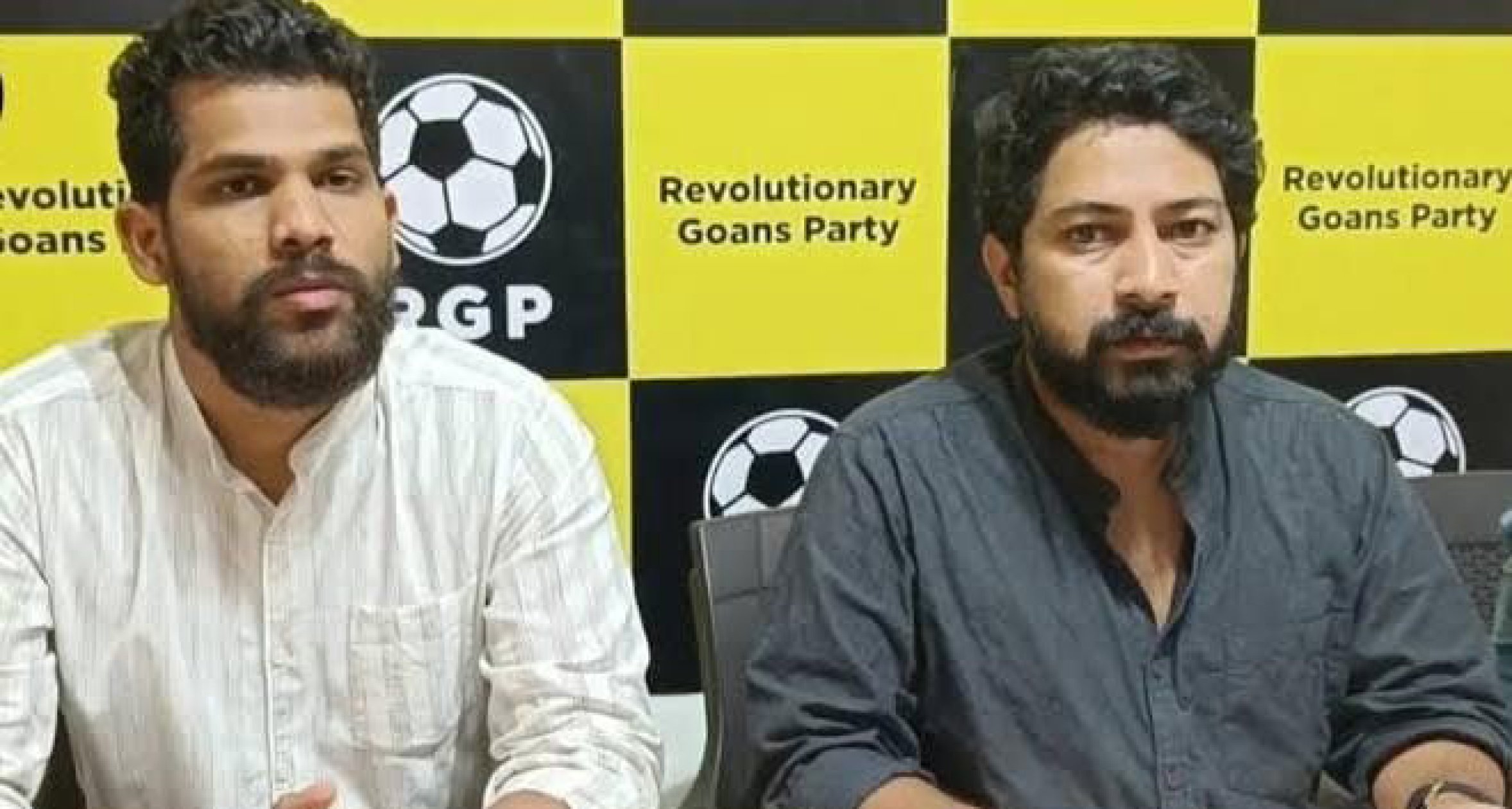
The Revolutionary Goans Party (RGP) in Goa is a political start-up which has nearly succumbed due to managerial problems. The near-collapse of the RGP offers a political lesson that goes beyond Goa. It is also a management lesson that winning votes and building an enduring political organisation are two very different tasks.
RGP's rise was remarkably swift. Formed out of a regionalist movement around 2016, it became a political party in 2021. RGP’s initial movement was evolved around the idea of protecting Goan identity, land, employment, culture and the interests of native Goans. When it entered electoral politics, it found a political environment unusually receptive to a new entrant. RGP made a concerted effort to draw public attention to what it portrayed as a growing crisis of Goan identity and advocated the need for a legislative framework to safeguard the interests of Goans. In doing so, it popularised the acronym POGO (Person of Goan Origin) as a central element of its political narrative. At the same time, Goa's established political parties had accumulated considerable public distrust. The Congress experience was particularly damaging as it had suffered a severe credibility shock following the mass defection of its MLAs after the 2017 election. Congress had won 17 seats in 2017, but in 2019 ten of its MLAs crossed over to the BJP.
Thus, in 2022 Assembly elections RGP managed to create political disruption. It secured 92,454 votes, or 9.96 per cent of the total votes polled. It emerged as the third-largest party by vote share and won one Assembly seat. The party's 31 candidates secured more than 1,000 votes each, which is significant considering small constituency size and thin winning margin in many constituencies.
In the 2027 assembly elections, the RGP could have done better as section of its support could have represented an anti-establishment vote, a protest against political defections and a search for an alternative to the established parties. But, the RGP lost the bus even before the race had started and nearly collapsed under its own weight. Though, the splinter group of RGP may try for its political survival, it has lost its credibility, public trust and organizational strength as its founding leaders washed their dirty linen in public fighting like cats and dogs.
This is where the management lesson begins. RGP had several sources of political energy like its founders, grassroots activists, the Goan identity narrative, social-media mobilisation, young supporters, diaspora enthusiasm and voters disillusioned with established parties. In management terminology, RGP had accumulated considerable electoral capital. The challenge was converting that into organisational capital, where the party miserably failed. The distinction is fundamental. A movement can mobilise people for an election, but it requires an organisation to mobilise them again five years later. A movement can revolve around two or three charismatic leaders. But an institution needs lot many capable of leading constituencies, managing campaigns, raising resources and eventually succeeding the founding generation. A movement can survive informal decision-making but a political institution needs rules. The important lesson is understanding the difference between creating an electoral momentum and building a durable and sustainable political institution, wherein the RGP lacked vision.
RGP's internal crisis makes another management principle apparent. A founder-driven movement must eventually become an institution that can function without the founder. A founder is extremely valuable during the start-up phase. He or she supplies vision, identity, energy and decision-making speed. A mature organisation needs rules for leadership succession, candidate selection, discipline, finances and internal appeals. Otherwise, every disagreement becomes a contest for control of the entire organisation. That is exactly what happened with RGP.
Political organisation also requires financial depth. RGP's grassroots and crowd-funded image is potentially a strength because it can create a sense of ownership among supporters. But a statewide political organisation needs continuing resources, not merely money during an election. It needs offices, staff, research, communication systems, travel, training, legal and accounting support and year-round constituency work. The publicly disclosed RGP accounts indicate relatively modest financial resources compared with those available to established political parties.
But, the crisis with the Congress is entirely different. It may possess a popular brand, experienced politicians and a long political history, but if voters stop believing that elected representatives will remain with the party they voted for, the organisational brand itself becomes weakened. Thus, the Congress is still struggling to come out of the trauma of defections. However, now the fall of RGP may be of some advantage for Congress but again subject to bridging trust deficit. While the Congress has announced a coalition with the splinter group of RGP, its electoral impact is uncertain due to dented image of both the parties. With the entry of too many defectors, the BJP too has lost its originality as MLAs from its own cadre are reduced to minority. Therefore, it would be interesting to see whether the electorate would endorse defectors in the 2027 general elections.
Politicians are manufactured by the electorate from the available pool of candidates in the fray. Therefore, the electorate cannot be entirely blamed for manufacturing defect if the quality of available choices itself is poor. Just as defective products are harmful to consumers, defective political leadership can be harmful to the health and progress of a State or Nation. Ultimately, democracy is not merely about choosing political products, it is about ensuring that the products we manufacture through our votes are fit to govern.
Thus, the political space in Goa has become more uncertain and less predictable, with traditional loyalties no longer offering the same clarity as before. Much may ultimately depend on which political formation can convince the electorate that its promises, leadership and organisational commitment can survive beyond the election itself.