Election season has a fascinating effect on Goa. Banners become larger, birthdays become more public, generosity becomes more visible and social media becomes unusually compassionate. Something else happens too. The population of “social workers” appears to increase dramatically. Suddenly, introductions change. “He is a businessman and social worker.” “She is an entrepreneur and social worker.” “He has been doing social work for years.” And somewhere, professionally trained social workers quietly wonder whether their profession has become an open-source occupation that anyone can download just before elections.
To be fair, many people describing themselves as social workers genuinely serve society. Goa has committed volunteers, activists, philanthropists, youth leaders, faith-based workers and ordinary citizens who have stood beside people during illness, disasters, financial crises and personal tragedies. Some have worked quietly for decades without expecting recognition or political office. Their contribution deserves respect. If some eventually enter politics, there is nothing inherently wrong with that either. Grassroots experience can produce sensitive political leadership. But an uncomfortable question remains: Is every person who helps somebody automatically a social worker?
Perhaps we have been confusing people for years because we ourselves have failed to distinguish between charity, philanthropy, social service, development work and professional social work. We casually put everything under one umbrella and call it “social work.” Someone distributes groceries—social worker. Someone donates an ambulance—social worker. Someone sponsors a football tournament—social worker. Someone pays a student’s fees—social worker. Someone organises a blood donation camp—social worker. Someone distributes wheelchairs—social worker. Someone visits an old-age home on their birthday—social worker. By that definition, Goa probably has the highest social-worker-to-population ratio in the world, particularly during election season.
Professional social work is a recognised discipline grounded in knowledge, methods, values, ethics, human rights and social justice. All these forms of contribution have value. But calling all of them social work blurs important distinctions.
Professional social work places social change, social development, social cohesion, empowerment and liberation of people at its centre. It is anchored in social justice, human rights, collective responsibility and respect for diversity. Notice what is missing from that description: Selfies, banners, birthday cakes, sponsored reels and, thankfully, election tickets.
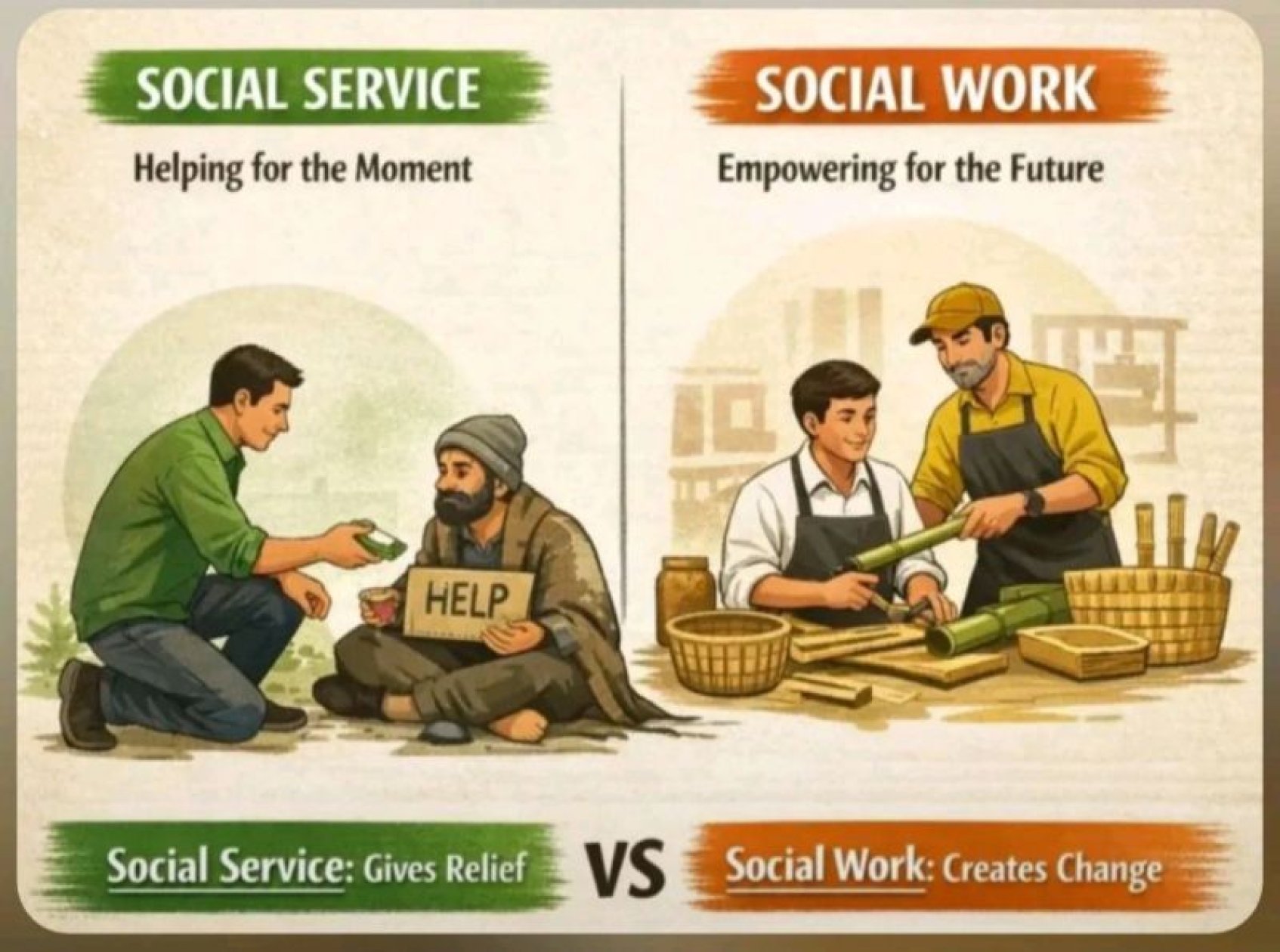
Social work is not primarily about doing things for people. It is about working with people so they gain the power, opportunities and resources necessary to change their circumstances. Charity may give a struggling family groceries for a month. Social work also asks why that family is hungry. Charity may pay a child’s school fees. Social work asks why poverty prevents that child from accessing education. Charity may provide a wheelchair. Social work asks whether schools, workplaces, transport and public buildings are accessible. Charity may rescue a child from exploitation. Social work asks what family, community and institutional failures allowed that exploitation—and what must change so another child does not suffer similarly.
That is why genuine social work can become uncomfortable. It does not merely treat symptoms. It questions structures, inequality, discrimination and power. Sometimes it even questions governments. Sometimes it questions political parties. Sometimes it must question the very person financing the charity.
Social work is equally about values: Human dignity, self-determination, participation, confidentiality, non-discrimination, integrity and respect. Apply those principles to some of what we casually call social work. Did the vulnerable child whose photograph appeared online consent to becoming part of someone’s publicity? Does an elderly woman receiving groceries need her photograph circulated on WhatsApp? If somebody’s vulnerability becomes somebody else’s publicity, perhaps dignity was lost somewhere between the donation and the photograph.
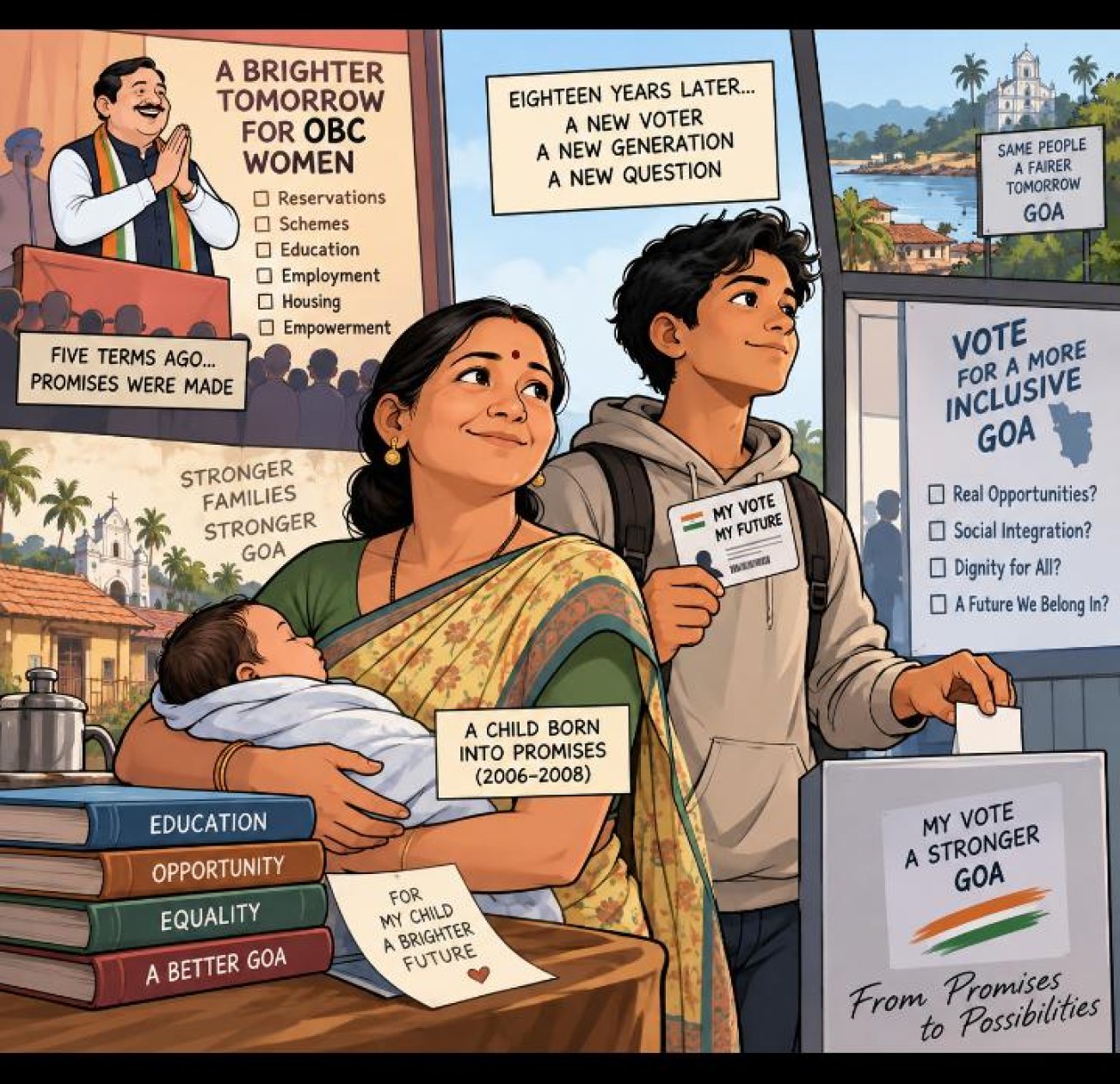
This becomes particularly interesting as elections approach. Goa will soon experience its periodic flowering of compassion. Blood donation camps will multiply. Football tournaments will acquire sponsors. School bags will appear. Medical camps will flourish. Visits to children’s homes and old-age homes may increase. Birthdays will become philanthropic occasions.
How do we distinguish genuine commitment from seasonal social work? Perhaps simply: Look backwards, not forwards. Where was this person when elections were four years away? Did the work continue without cameras? Did they stand with vulnerable communities when it was politically inconvenient? Did they challenge injustice when those responsible belonged to their own political circle? Most importantly, did their work empower people—or make people dependent upon them?
That question goes to the heart of social work. Patronage politics says, “Come to me. I will get your work done.” Social work asks, “Why should you need me to get something that is already your right?” One can create beneficiaries and followers. The other seeks rights-holders and empowered citizens.
Professional social work, however, also involves specialised knowledge, methods, ethics, supervised practice and accountability. Social workers study human behaviour, families, communities, policy, law, counselling, research, welfare administration and systems of inequality. The profession deserves the same conceptual respect we give other professions.
So, as Goa moves towards another election and another smiling face appears with the familiar description “social worker,” do not ridicule the person. Become curious. What social work? For how many years? With whom? What changed? Whose rights were strengthened? And would you still be doing it if there were no election to contest?
So donate blood. Sponsor sports. Support education. Give generously. Volunteer. Goa needs citizens who care. But let us finally stop confusing everything with social work. Charity can relieve suffering. Philanthropy can provide resources. Social service can offer support. Development can build capacities. Social work must also ask why suffering and exclusion exist—and work with people to change the conditions producing them.
And when someone introduces themselves this election season as a “social worker,” perhaps Goa needs to ask just one question: “Wonderful. What social change did your social work actually create?”
The answer might tell us whether we have discovered a social worker—or merely another candidate who has suddenly discovered social work.