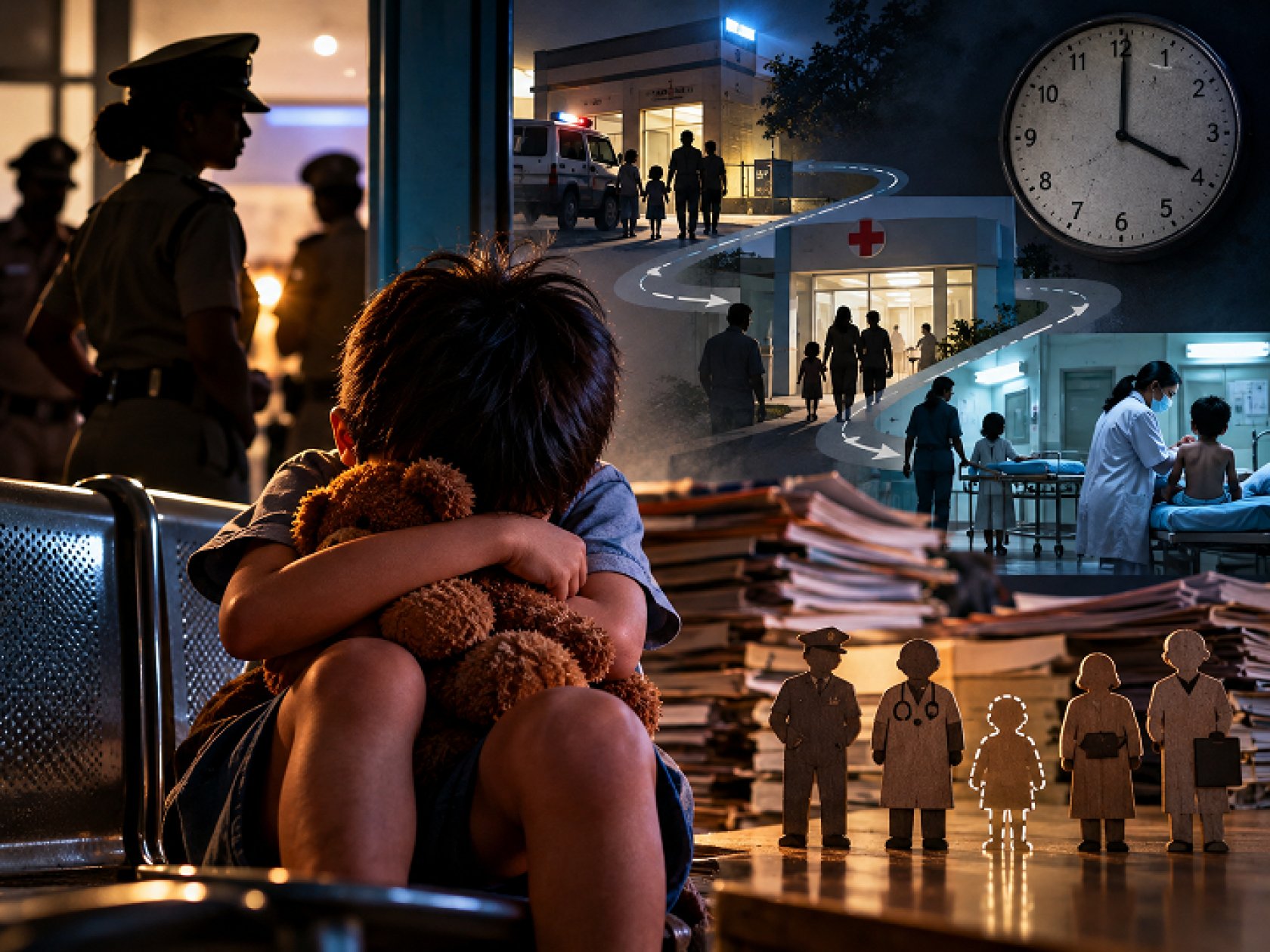
In Verna, a four-year-old survivor of alleged sexual assault finished his medical examination at four in the morning after delays and hospital transfers. In Panaji, a child reporting sexual assault waited because no woman police officer was available on duty. Two children needed protection. Why did seeking help become another ordeal?
In the Caranzalem case, the child reportedly waited in distress while a woman officer was called from Agassaim, already occupied with another matter. Police acted swiftly to arrest the accused. But does an arrest erase the child’s avoidable suffering? Why should prompt investigation and compassionate care not happen together?
In the Verna case, which my team and I have been assisting, the abandonment continues. To date, no child protection agency has come forward to aid the struggling family. No assigned support person. No immediate relief. How can an entire machinery exist while a child remains beyond its effective reach?
The initial response was to dispatch an outpost officer whose preparedness we challenged. Was this person trained and equipped for such a grave case? Who authorised the response? Leadership cannot delegate responsibility and then disappear from accountability.
After we objected, a police van collected the child, his parents and young siblings for transport towards a station without a child-friendly room. Through intervention, I arranged their redirection to an experienced woman Police Inspector. Why should appropriate handling depend on personal contacts?
The following evening, the child and his father were picked up around 6.30 p.m. The officer met them around 7.15 p.m., citing important meetings. They remained until approximately 9.15 p.m., waiting for a medical examination letter. No snack or refreshment was offered.
What meeting was more important than ensuring this child received prompt care? Who noticed his hunger, exhaustion or need for reassurance?
They reached the hospital around 10.30 p.m. Incorrect referral paperwork sent them from Casualty to Paediatrics, back to Casualty and then to Forensic Medicine. I eventually contacted a forensic doctor to help resolve the situation. The examination concluded around 4 a.m.
Even after authorities had been alerted, the investigating officer was absent when the child’s statement was recorded. Who ensured continuity and explained the arrangements? On my latest information, no accused has been arrested. We have received no indication of multiple investigative teams being mobilised. Where is the urgency communicated to this family?
These failures expose the gulf between investigating an offence under POCSO and activating care through the Juvenile Justice framework. The child is one person. Why does the response arrive in disconnected pieces?
Form B, the preliminary assessment report, should reach the Child Welfare Committee within 24 hours of FIR registration. Are police submitting it promptly and meaningfully? Are needs assessed, or are boxes merely ticked? Delayed reporting can delay support. But missing paperwork must never become an excuse for agencies to ignore a child whose distress is already known.
Are families receiving Form A and understandable explanations of their rights, services and legal assistance? Who tells a frightened parent what happens next?
Where are the trained Child Welfare Police Officers? Where is the functioning Special Juvenile Police Unit? Are these arrangements operational when needed, or merely names in official records? What explains the absence of a readily available woman officer in the capital’s station?
Child-sensitive statement-taking requires attention to location, privacy, language and manner. The law provides for recording at the child’s residence or chosen place and without the recording officer wearing uniform. Why should a young survivor be subjected to unnecessary station visits and late waiting?
Where is the Child Welfare Committee’s active assessment of safety and support? Where is the District Child Protection Unit coordinating referrals, professionals and follow-up? Who ensures a support person is explained, offered and assigned through the appropriate process?
Where are accessible psychologists, interpreters and special educators when needed? Who supports a child with communication difficulties? Who arranges continuing counselling after the immediate procedures end?
Emergency relief and interim compensation are different provisions; neither should disappear into bureaucratic confusion. Who facilitates essential assistance and applications to the appropriate authority? Poor families face transport costs, food expenses and lost wages immediately. Financial abandonment can leave them more vulnerable to pressure and less able to pursue proceedings.
And what budget does a police station actually have for children? Can an officer immediately arrange food, drinking water, transport and basic comfort? If no accessible allocation exists, who designed such a response? If funds exist, why did this child receive no refreshment?
Are we really so poor when it comes to children that even a snack depends on somebody’s goodwill? What does a child protection budget mean if it cannot meet a child’s immediate needs?
The golden hours of response should bring safety, medical care, sensitive evidence preservation and reassurance. There is no single deadline after which justice becomes impossible. But early confusion can compound trauma. If the first response fails, what foundation are we laying for justice?
A colourful room cannot compensate for untrained personnel. A workshop cannot substitute for supervision. A referral cannot count as success until care reaches the child. Who audits these outcomes?
As grooming and sexual exploitation also move online, how credible is our preparedness for complex cases when basic physical support fails? Where are coordinated digital investigation, survivor assistance and protection from further exposure?
National leaders were visiting during the Verna ordeal. Our administration understands planning, deployment and contingencies for important visitors. Why does a child’s emergency require frantic personal intervention?
Parents, would you accept this for your child? Officials, would “important meetings” satisfy you while holding that child’s hand? Political leaders, where are the staffing, budgets and accountability behind your assurances?
Who examines these failures? Who answers for absent support? Who ensures the next family encounters care instead of confusion? Must public outrage become the unofficial emergency service? Who takes responsibility when everyone waits?
Four years old. Four in the morning. Still no support person. Still no relief. If this is what protection looks like, who will protect children from the failures of the protection system itself?
(The writer is an Assistant Professor of Social Work, Goa University and former Chairperson of the Goa State Commission for Protection of Child Rights)