On hearing the word 'elections', one's thoughts go back some decades, and how polls used to be covered in the Goa of those times. It looked all so simple, but today, there has been a severe loss of innocence.
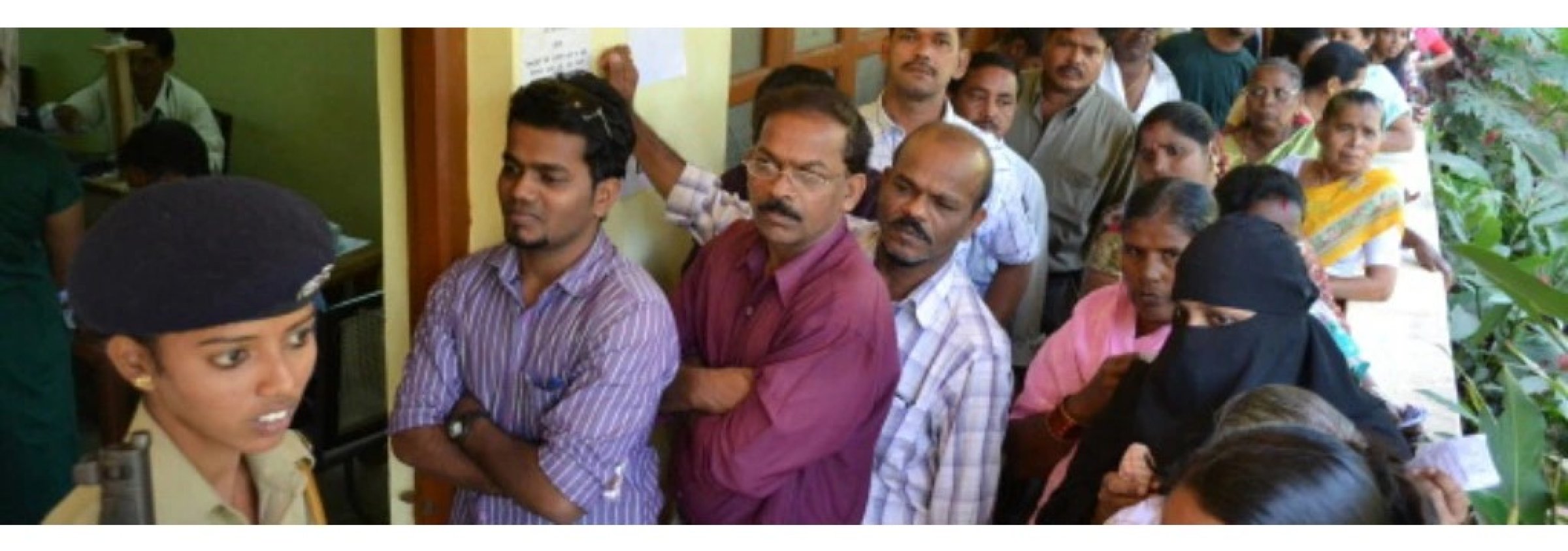
It was a day-long picnic, or almost. We believed what was being told. We (mostly) hitched a lift in a minibus or taxi hired by the Department of Information. From there, we took a round across many polling booths, covering part of the state.
At each, we would get out, march up to the polling officials, and faithfully ask how many voters had cast their votes till then. We'd carefully take the figures, and carry on to the next, satisfied that we were doing our job.
At some point, thoughts did crop up in the mind. Every booth reported a high voter turnout. The only exception was the rare bye-election, or one which was not bitterly contested. Everything seemed to be going smoothly. Hardly anyone was protesting. Everything looked fair and square. But was it?
(There were a few strong exceptions though. Once, in Navelim, Luizino Faleiro won the seat 'unopposed'. Elsewhere, rivals who could not defeat the then dominant Congress party candidates managed to score. They played largely by the rules, but not entirely, and filed the nomination of an ailing man. When he died, three elections, two assembly and one parliamentary, got 'countermanded'. That was in 1989 in the seats of Curtorim-Velim-Mormugao and involved the strange case of Caetano Jackson Fernandes. But that is another whole story, the trajectory of which has been fairly well documented through news reports in cyberspace.)
At some stage, the exercise did seem futile. But not suspicious enough for anyone to raise an issue persistently.
What point were we trying to prove? That voting was fair and peaceful and untoward? Only once we saw anything close to what looked like the takeover of a polling booth was in Curtorim. It was apparently dominated by supporters of a ruling politician.
Electronic voting was supposed to have halted all those ills. It didn't; it caused its own issues. In addition, on looking back with hindsight, an unlevel playing field can be created even before a single vote is cast.
In the Goa of the 1980s and 1990s, electoral competition could involve a fairly inventive range of pre-poll and procedural manoeuvres. That was, alongside more conventional inducements and blandishments.
Candidates could be put forward merely to split votes or confuse the opponent's voters. 'Mistakes' in electoral rolls could get rivals out of the contest. There were sometimes allegations of impersonation.
But Goa largely didn't see the open booth capturing and open fraudulent voting that was spoken of in some parts of the country.
Gerrymandering (creating convenient constituencies for particular politicians or parties) were at times alleged in Goa. But this remained in the realm and speculation in Goa. Only more recently we understand the bizarre constituency lines drawn up in places like Assam.
Election officers came from the government bureaucracy. Most however saw them then as neutral umpires--rightly or otherwise.
But times have since changed. Rather dramatically.
The recent skepticism over the fairness of the electoral system nationwide has thrown open the debate wide and deep. Tiny Goa did not escape being part of the national mainstream this time.
For a decade and more (at least since 2009), the debate over the EVMs was taken up vigorously. The lack of transparency over the software running it has long been suspect. That issue has meanwhile been overtaken by many others.
We have had a series of shocking headlines. About the functioning of the Election Commission, the manner in which the Special Investigative Revision (SIR) has deleted millions of people from India's electoral rolls, and even unexpected results coming up from near and wide make us all sit up with concern.
Today, so many questions over elections have crept up. Over the SIR, its impact on the electoral rolls and the large-scale deletion of names. So far, nationwide, over 130 million names were reportedly been struck off the electoral rolls.
In terms of sheer numbers, an electorate of 130 million voters is roughly equal to the total combined population of Europe's three most populous countries after Russia: Germany, France, and the Netherlands.
There have been controversies over the ECI's independence, transparency and decision-making. So also over reported disagreements among Election Commissioners themselves over voter-list revisions, software and procedures.
Staring us in the face are allegations of wrongful deletion, duplication and addition of voters, disputes over electoral-roll data and the adequacy of safeguards and appeals.
So will all of this make us more alert? Are we willing to be more careful about the impact this could have on election results? Who are the persons who man these institutions, what is their background, and how strong are these institutions themselves? Can our public intellectuals take a more public stance, when it's needed most? Political watchers no less than Parakala Prabhakar have warned about the impact this could have.
By way of some relevant figures:
Goa's 40-seat Assembly is known for its small constituency size (average 28,900 voters per seat). In the last elections, in 2022, 16 seats were won on margins of less than 2,000 votes. Out of these 10 seats were won on margins of less than 1,000 votes, including six seats on margins of under 500 votes. This gives a new meaning to "wafer-thin margins".
With nearly 1.4 lakh voters being deleted out of Goa's total of 11.6 lakh, this meant there were almost 3,490 deletions per constituency. We can draw whatever conclusions we wish....