Sainandan Sridhar Iyer
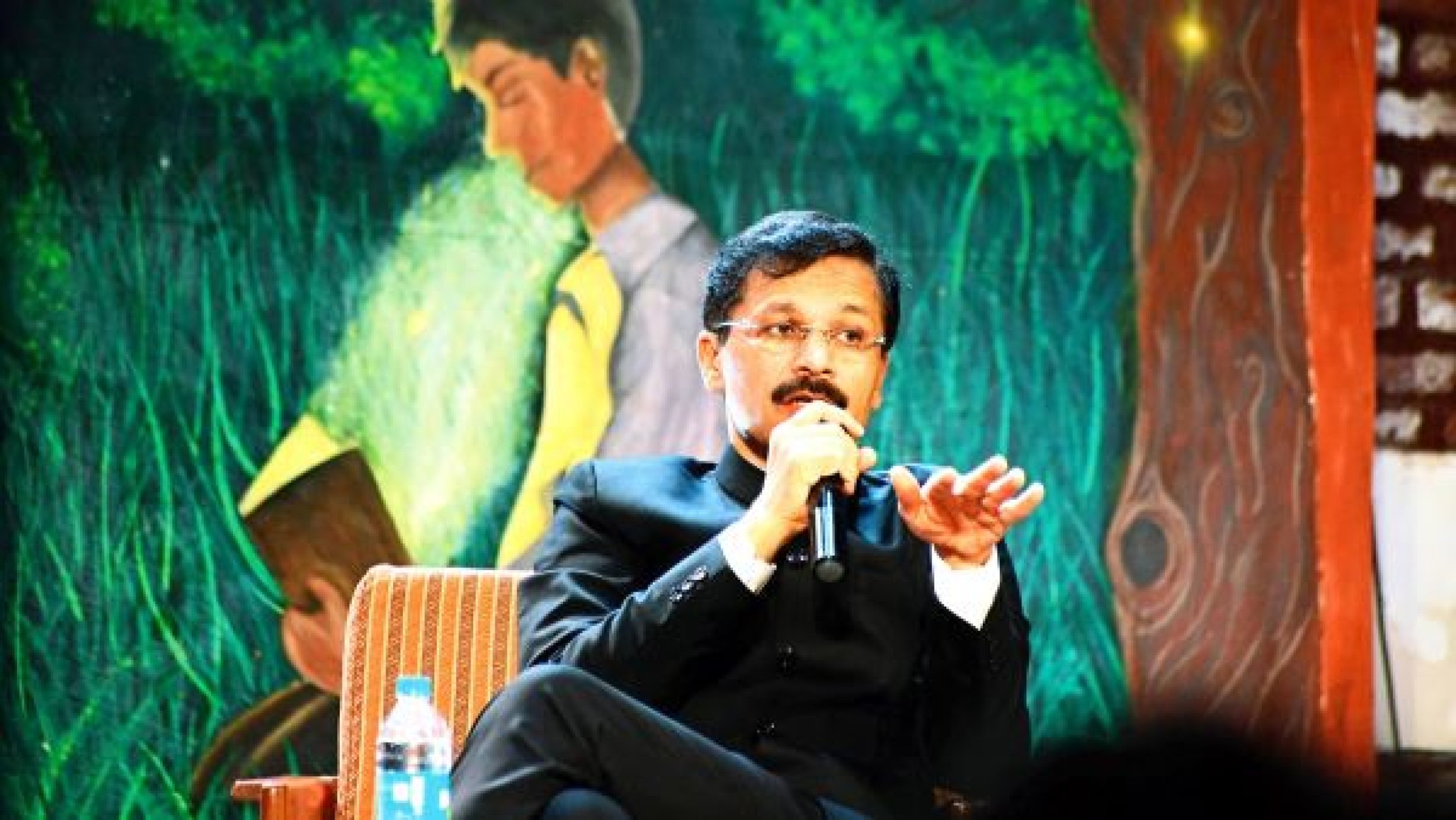
There is something deeply revealing about the public fascination with officers like Tukaram Mundhe. When he cracks down on adulteration, conducts inspections or takes action against establishments that ordinary citizens would hesitate to question, social media celebrates him. Videos of his actions circulate widely. People praise his courage and willingness to act. Yet there is another, less glamorous side to the Tukaram Mundhe story: The extraordinary frequency with which his postings have changed.
Mundhe, a 2005-batch IAS officer, has experienced numerous transfers during his career. His current tenure as Maharashtra's Food and Drug Administration Commissioner has again placed him in the public spotlight for his enforcement-oriented approach. At the same time, his methods have attracted criticism, with some arguing that administration requires consultation and the ability to take stakeholders along. India should never make integrity, independence and the willingness to enforce the law professionally liabilities in a bureaucratic career. And that is where the real Tukaram Mundhe story begins.
We have developed a strange relationship with honest bureaucracy. We want the honest officer to clean up our city, but we do not necessarily want the consequences of that enforcement to affect us personally. We expect the police officer to enforce the law, but preferably against somebody else. We want illegal constructions removed, provided ours is not among them. We want corruption eliminated, but we also expect our own file to move quickly when regulations become inconvenient. When an officer refuses to accommodate these contradictions, the vocabulary changes. The officer may suddenly be described as rigid, arrogant, difficult, impractical or unwilling to cooperate.
Sometimes such criticism can be justified. Administration is not simply about enforcing rules mechanically. Officers have to balance competing interests, consult stakeholders and understand the social consequences of their decisions. An administrator who mistakes every disagreement for corruption can also cause institutional problems. But there are occasions when being called impractical simply means that an officer has refused to become comfortable with practices that should never have become normal. That distinction matters.
India has seen
this story before
Tukaram Mundhe is hardly an isolated example. Consider Ashok Khemka. The Haryana-cadre IAS officer retired in 2025 after a 33-year career marked by 57 transfers. He became nationally prominent after his decision in 2012 to cancel the mutation of a Gurgaon land deal involving Robert Vadra and DLF. Whatever one's political interpretation of that particular controversy, the sheer number of transfers in Khemka's career remains remarkable.
Then there is Kiran Bedi, India's first woman IPS officer. Her reforms at Tihar Jail attracted national and international attention and earned her the Ramon Magsaysay Award. Yet her tenure at Tihar ended with a transfer in 1995 amid controversy surrounding security and administrative issues.
Another striking example is Armstrong Pame, the IAS officer whose work in Manipur became associated with the construction of what came to be known as the People's Road. Faced with inadequate connectivity and limited resources, he helped mobilise public participation to construct a road connecting remote areas.
These officers had different careers, different circumstances and different administrative styles. Yet their stories raise a common institutional question: What happens when a civil servant becomes unusually visible because of initiative, independence or an unwillingness to accept the status quo? The answer should not be frequent displacement, institutional isolation or a career in which independence becomes professionally costly.
An IAS officer may have to reject the demands of a powerful contractor. A police officer may have to act against a politically connected individual. A district administration may have to stop an activity that is popular but unlawful. A regulator may have to inspect the establishment of someone with influence.
This is precisely why civil services require professionalism, institutional independence and moral courage. Yet, administrative culture can sometimes send contradictory signals. Officers are expected to follow the rules while also understanding unwritten expectations. They are encouraged to be independent while being cautious about becoming inconvenient. They are expected to take decisive action while simultaneously avoiding conflict with powerful stakeholders.
That contradiction needs to be addressed. Good administration cannot mean obedience to personalities. It has to mean fidelity to law, constitutional values and public interest. This does not mean that every action taken by an honest officer is automatically correct. Accountability remains essential.
The real test of
Viksit Bharat
We often speak about becoming Viksit Bharat as though development were primarily an economic destination. Higher incomes, better infrastructure, modern cities, technological advancement and improved public services are all important. But development must eventually become institutional.
A genuinely developed administrative system is one in which citizens can reasonably expect the same law to apply to the powerful and the powerless. It is one where an officer does not require political protection to enforce a government regulation.
Perhaps the greatest irony is that our fascination with officers like Tukaram Mundhe reveals how much we still depend on individuals to compensate for institutional weaknesses. We celebrate the honest collector, the strict commissioner and the fearless police officer. We circulate their videos and stories because they represent something we want from the State.
An honest officer should not need to become a celebrity. A law-abiding commissioner should not require a fan following. An upright police officer should not need public support simply to enforce the law. Such behaviour should be normal. India needs more officers who possess the courage to act, the professionalism to listen, the integrity to resist improper influence and the humility to accept legitimate scrutiny.
More importantly, India needs an administrative system that protects these qualities rather than punishing them. That is what becoming Viksit should mean in the real sense. The measure of a developed India will not ultimately be how loudly we applaud an honest officer after he or she has been transferred. It will be whether, one day, we no longer find that honesty extraordinary.