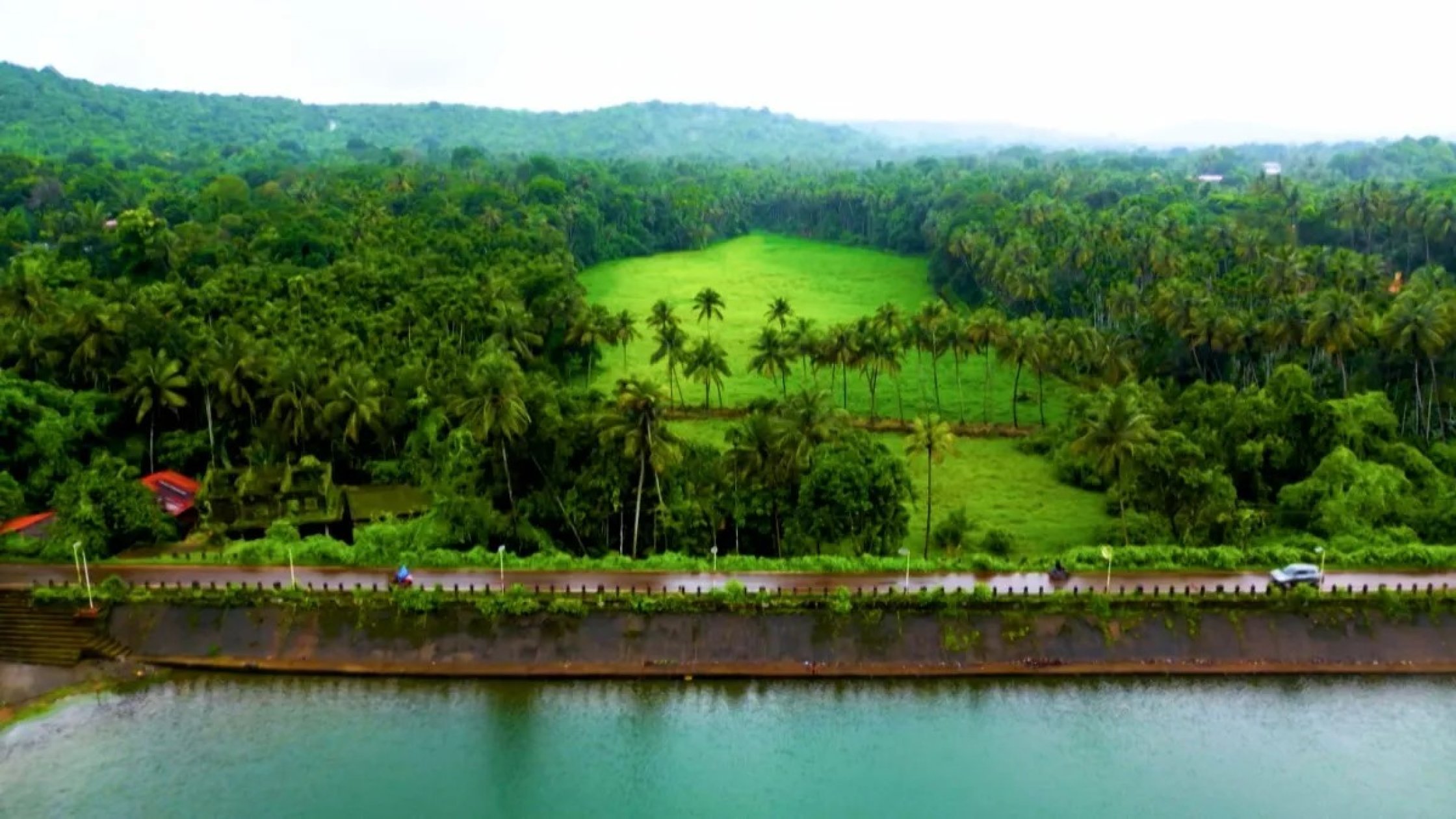
The recent collapse of the temporary floating jetty built by the Oil and Natural Gas Commission (ONGC) near the mouth of the River Sal at Betul is more than just an engineering failure. It is a grim reminder that hastily built or poorly planned infrastructure can never withstand the test of nature. Erected ahead of India Energy Week, the structure could not withstand the pounding monsoon seas and turbulent currents of the Arabian Sea. Today, its twisted metal remains scattered across the river mouth, creating a serious navigational hazard for the traditional fishing communities of Betul, Cavelossim and Velim.
What makes the incident even more surprising is that, within hours of this collapse, Ports Minister Digambar Kamat announced that the government was considering constructing two or three more floating jetties at Betul, claiming that local fishermen had sought them. The announcement was swiftly rejected by the Cutbona Fisheries Society and the local panchayats, who questioned both the claim and the government's intentions. It may be recalled that only last year, locals strongly opposed the proposed Cavelossim-Betul tourism circuit, fearing it would pave the way for corporate control over their traditional fishing grounds, damage the fragile river ecosystem and gradually transform their quiet village into a commercial port or even a coal-handling terminal.
The growing disconnect between the government's vision and the concerns of the people who depend on these waters points to a larger problem. Maritime development in Goa cannot be driven solely by random enthusiasm or political preference. Infrastructure planning must strike a balance between economic aspirations, environmental realities and, above all, the voices of the traditional fishing communities whose livelihoods depend on the seas.
That is not to suggest that floating jetties are a bad idea. Around the world, and under the Centre's Sagarmala initiative, they are recognised as practical, cost-effective alternatives to conventional concrete docks. They are relatively inexpensive, adapt to changing tidal levels and require far less intervention on the riverbed. For projects such as the proposed Goa Water Metro or for supporting beach safety operations, they may well be the most sensible option.
However, every location has its own challenges. The collapse of the ONGC jetty demonstrates that floating infrastructure is ill-suited to the rough conditions at the mouth of the River Sal during the monsoon. Proceeding with similar projects in such ecologically sensitive and high-energy environments without rigorous scientific evaluation could be disastrous, leading to colossal waste of public money.
Moreover, leave aside the floating jetties, the local fishermen have more pressing requirements which they have been raising for over three decades. For over 35 years, they have sought the construction of a permanent training wall at the mouth of the River Sal. Such a structure would regulate the river's flow, reduce silt accumulation and protect fishing vessels from the dangerous crosscurrents that regularly endanger lives and damage boats. Yet while well over ₹100 crore has reportedly been spent on temporary infrastructure that has failed within months, this basic safety requirement continues to gather dust in government files.
Development succeeds only when it responds to real needs rather than imposing predetermined solutions. Floating jetties cannot be constructed just because someone has met the minister. If the Ports Ministry genuinely wants to improve the lives of fishing communities, it should begin by engaging with those who know these waters best. Arbitrary proposals must be scrutinised, and priority must be given to upgrading the existing jetties, some of which are in pathetic condition. The welfare of the fishing community rests here.
Goa's maritime ambitions must be grounded in scientific evidence, environmental prudence and the lived realities of its coastal communities.