MARGAO
The waste management crisis plaguing the South Goa Planning and Development Authority’s (SGPDA) mega retail market complex is now raising a critical question for the authorities concerned: did the government agencies responsible for public health, pollution control and local administration ever issue specific directions to the SGPDA to scientifically handle and dispose of the market waste in accordance with the Solid Waste Management Rules, 2026?
The question is likely to put the Goa State Pollution Control Board (GSPCB), Margao Urban Health Centre (UHC), Margao Municipal Council (MMC) and the South Goa district administration under the spotlight, particularly since the waste and sanitation problems at the SGPDA market are not new.
Consider this: A joint inspection of the SGPDA retail fish market was conducted on June 17, 2026, by a team comprising the chairman of the Consumer Conciliation Committee of the Department of Civil Supplies and Consumer Affairs, Panaji, along with representatives of the SGPDA, UHC Margao, GSPCB, Margao Municipal Council, PWD and GOACAN.
The subsequent report prepared by the urban health centre painted a grim picture of the sanitary conditions prevailing at the market and its surrounding areas.
The report observed that the premises of the retail fish market and the areas around it were “not maintained in a satisfactory sanitary condition.” The sanitation concerns identified during the inspection primarily related to the improper handling of garbage, fish waste and other waste materials, which were found strewn at several locations within and around the market premises.
The report further observed that regular cleaning and proper waste management measures did not appear to be being undertaken adequately.
The findings of the June 17 inspection therefore raise a larger question: what action followed the inspection? Did the participating government agencies issue written directions to the SGPDA to immediately rectify the deficiencies? Were specific timelines prescribed for cleaning the market, removing accumulated waste and putting in place a scientific system for the segregation, collection, treatment and disposal of fish and other solid waste? And, if such directions were issued, were they complied with?
These questions assume significance because there appears to have been no perceptible improvement in the conditions at the mega retail market from the date of the joint inspection. This is evident by the fact that the municipal council has approached the South Goa district collector to issue directions to the SGPDA under section 5 of the Environment Protection Act to clear up the messy market.
Remarked an official: “The June 17 inspection itself involved multiple government departments and civic agencies. This makes the absence of visible corrective action all the more significant. The inspection was not merely an internal assessment by the market management; it involved representatives of agencies entrusted with responsibilities relating to public health, pollution control, civic infrastructure and administration.”
He added: “If directions were issued, the authorities may need to clarify their contents, the deadline given to the SGPDA and whether any subsequent inspection was conducted to verify compliance.
If no directions were issued despite the deficiencies being formally recorded, the question becomes: why no immediate enforcement or corrective measures were initiated?”
Consumer commission flags SGPDA waste woes; civic body finds lapses
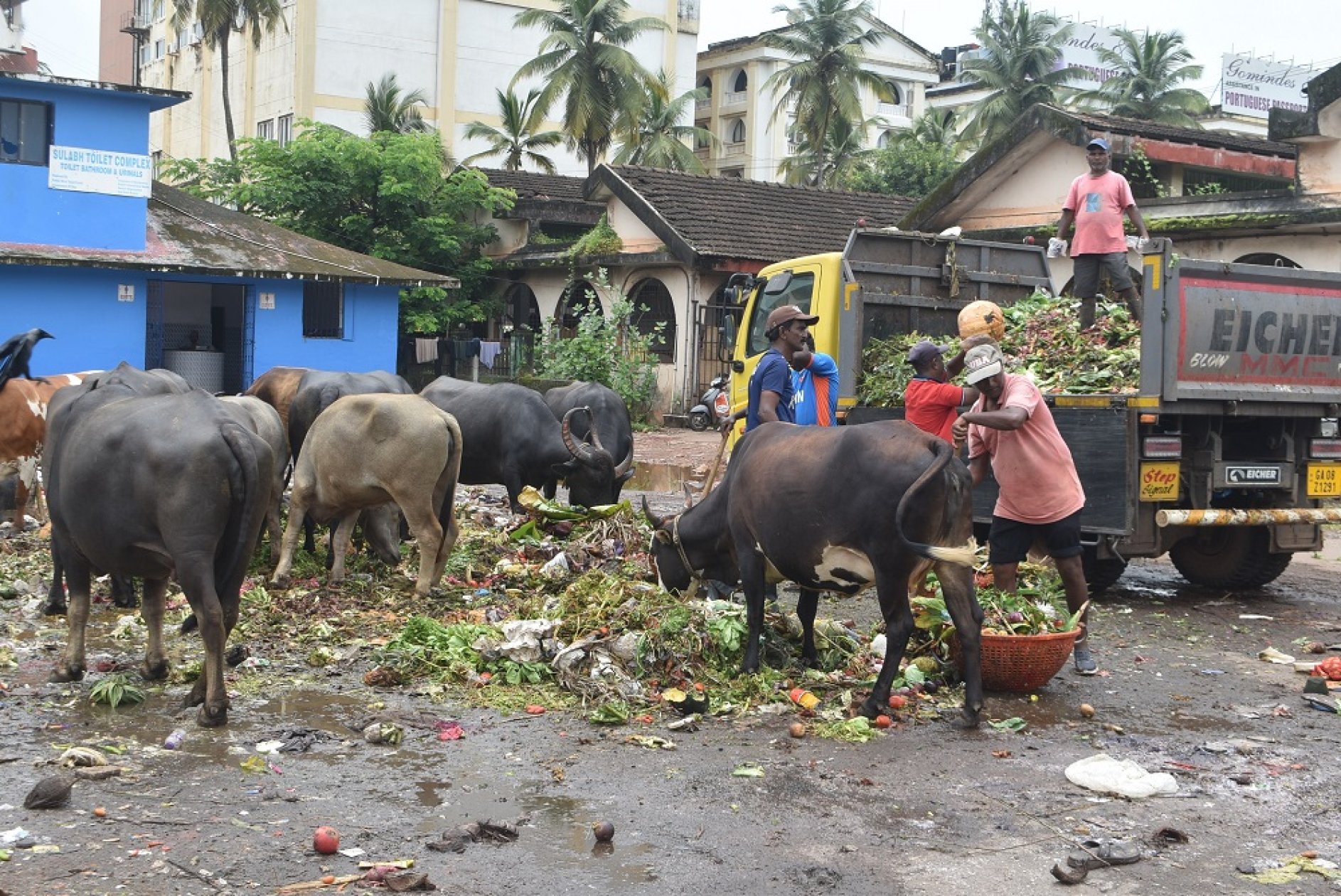
MARGAO: A complaint by the District Consumer Redressal Commission, South Goa, over garbage dumping and an overflowing Sulabh toilet on the SGPDA ground adjoining its building has been borne out by a Margao Municipal Council inspection, which found unsegregated garbage, foul smell and sewage stagnation at the site.
In a letter addressed to the Margao Municipal Chief Officer on August 11, the president of the commission, Bela Naik, pointed out that on account of the overflow of the septic tanks and the stinking smell of the garbage dumped by the side of the tanks, it becomes difficult to function in the building. “It also creates an unhygienic environment which results in a health hazard not only to the staff of this commission but all the occupants of the building. There is a rise in dengue in the city; hence, in the interest of public health and hygiene”, the letter stated.
Naik drew the attention of the MMC Chief Officer to the public toilet located within a distance of 5-10 metres from the commission’s premises. “There are two septic tanks in between the building and the toilet. In the rainy season, it is observed that the septic tanks are overflowing, creating an unhygienic environment and mosquito breeding,” the letter stated.
Acting on the complaint, the Margao municipality on August 13 inspected the site only to find that garbage was being dumped within the premises of the SGPDA retail market in an unsegregated and haphazard manner.
It was further observed that the garbage was not being properly collected on a day-to-day basis, resulting in foul smell and an unsightly condition in the area.
The inspection team further observed that the septic tank of the Sulabh Toilet, situated adjacent to the Consumer Redressal building premises, was overflowing, resulting in stagnation of sewage in the vicinity of the Sulabh Toilet premises, creating a public nuisance and potential health hazard, and may lead to the spread of diseases if immediate remedial measures are not taken.
“The issues observed during the inspection are within the premises of the South Goa Planning and Development Authority (SGPDA), which is responsible for the management and control of the Retail Market and the Sulabh Toilet”, the report added.
The inspection team suggested to the civic higher-ups that they write to the SGPDA to stop the overflowing of the septic tank of the Sulabh Toilet and arrange for proper cleaning and disposal of the accumulated sewage.
"Ensure that garbage is not dumped in an unsegregated and haphazard manner within the market complex and take necessary measures to maintain proper sanitation and hygienic conditions in the area," the inspection report stated.
“Further, the municipal council may work out concrete measures for ensuring proper disposal and management of garbage in coordination with the concerned authorities of the SGPDA," the report added.