MAPUSA
The number of registrations does not always tell the real story of Ganesh idol trade in the State.
Registration figures obtained from the Goa State Pollution Control Board show a striking variation between the number of registered operators and the volume of idols they handle, with some talukas accounting for relatively few registrations but disproportionately large numbers of idols.
The clearest example is Quepem.
The taluka has just 22 registrations, but those registrations cover 13,155 idols – a volume that places Quepem ahead of several talukas with considerably more registered operators. The unusually high figure is largely explained by one registration covering 8,500 idols sourced from Kolhapur.
The Quepem figures highlight an important feature of Goa’s Ganesh idol economy: a relatively small number of high-volume operators can account for thousands of idols, while other registrations may represent small traditional producers or retailers handling far fewer idols. As per the data available, 466 registrations cover 81,254 idols in the entire State this year. Bicholim leads the State with 94 registrations covering 16,604 idols. Bardez follows with 74 registrations and 13,366 idols, while Ponda has 70 registrations covering 9,688 idols and Pernem 67 registrations covering 8,250 idols. Together, these four talukas account for 305 registrations – nearly two-thirds of all registrations and more than 48,000 idols.
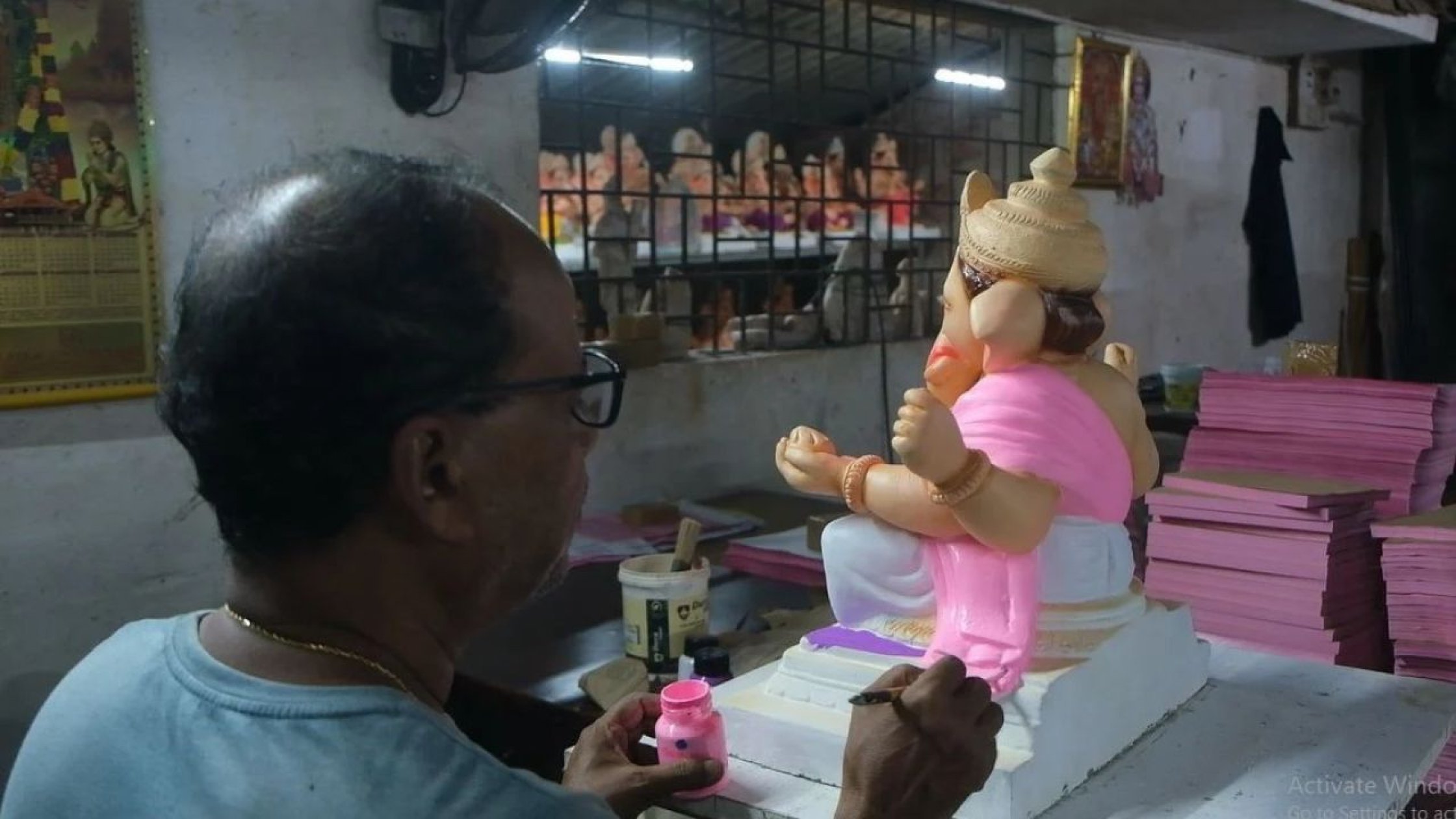
But the numbers also reveal the importance of looking beyond the registration count. In Bicholim, the figures reflect the strength of the traditional idol-making community. Forty-four registrations specifically mention Kumbharwada and Mayem, covering about 9,185 idols. Several producers state that the idols are made locally using chikat mati or clay, and some mention their own chitrashalas. At the other end of the spectrum are large-scale sellers and distributors sourcing idols from outside the State. At least 43 registrations mention Kolhapur in their source or supply details, covering around 5,565 idols.
This suggests that Goa’s Ganesh market is not dominated by one type of operator. It ranges from traditional artisans producing idols in local workshops to larger traders capable of handling thousands of idols sourced from outside the State. The material composition of the registered idols further adds to the complexity. PoP is marked as present in 89 registrations covering around 24,986 idols, while other applications identify the idols as clay, chikat-mati, shadu-mati or eco-friendly.
The figures therefore offer more than a taluka-wise ranking. They show a festival market where the number of operators and the volume of business are two very different measures and where a handful of high-volume registrations can significantly influence the overall picture.