THE GOAN NETWORK
VALPOI
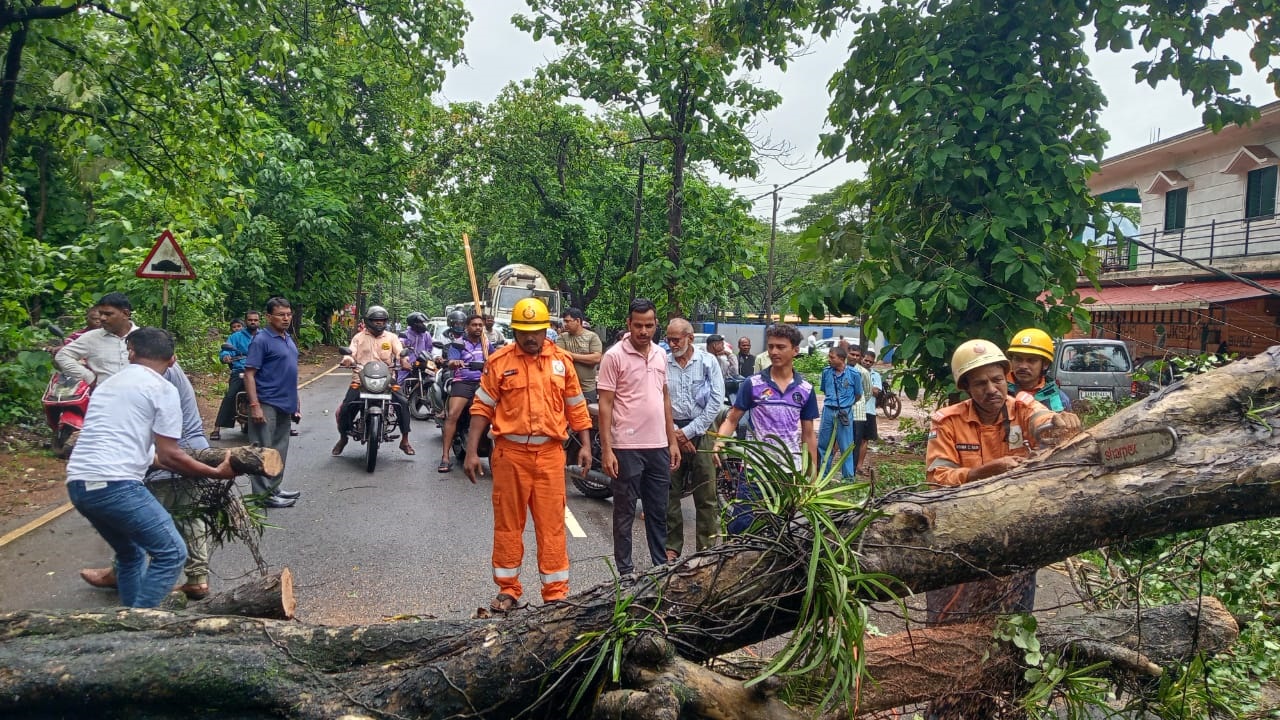
The delay in identifying and removing hazardous trees in Goa's Sattari taluka has once again come under scrutiny as heavy monsoon rain and strong winds continue to trigger tree-fall incidents. Residents say nearly 40 trees have fallen over the past 15 days, damaging around 15 houses, disrupting traffic, and posing a constant threat to life and property.
Despite repeated concerns over the past three years, surveys, pruning, and removal of dangerous trees have not progressed at the required pace. As a result, every monsoon brings fresh incidents of trees crashing onto homes, roads, vehicles, and power lines.
Sattari, one of Goa's most densely forested talukas, is particularly vulnerable as many villages are connected by roads passing through thick forests. Continuous rainfall weakens the soil and tree roots, while strong winds increase the likelihood of trees being uprooted or large branches breaking off.
The number of incidents have risen sharply this monsoon. Last year, nearly 57 houses were reportedly damaged by fallen trees. This year, 15 houses have already been damaged within the first two weeks of the season, raising fears that the situation could worsen as the monsoon intensifies.
Several major and interior roads have also been blocked after trees collapsed during heavy rain and wind, leaving commuters stranded for hours. The Valpoi Fire and Emergency Services have been clearing fallen trees and restoring traffic, but the increasing number of emergencies has placed added pressure on the department. Although no fatalities have been reported, residents fear the continuing rains could lead to serious accidents.
Residents allege that hazardous tree removal remains painfully slow, with cutting work in some areas last year continuing even after the monsoon had ended. They question why preventive action is not completed before the rainy season despite annual disaster preparedness meetings chaired by the Deputy Collector involving the Forest Department, PWD, Electricity Department, Fire and Emergency Services, Panchayats, and other agencies.
Apart from damaging houses and blocking roads, falling trees have repeatedly brought down power lines, causing prolonged outages in several villages.
Residents have urged the administration to complete hazardous tree surveys before every monsoon, improve coordination among departments, prioritise trees near homes, schools and public buildings, and convene an immediate review meeting to ensure time-bound action. They warn that delays continue to increase financial losses and the risk to lives and public infrastructure.