


THE GOAN NETWORK
SANGUEM
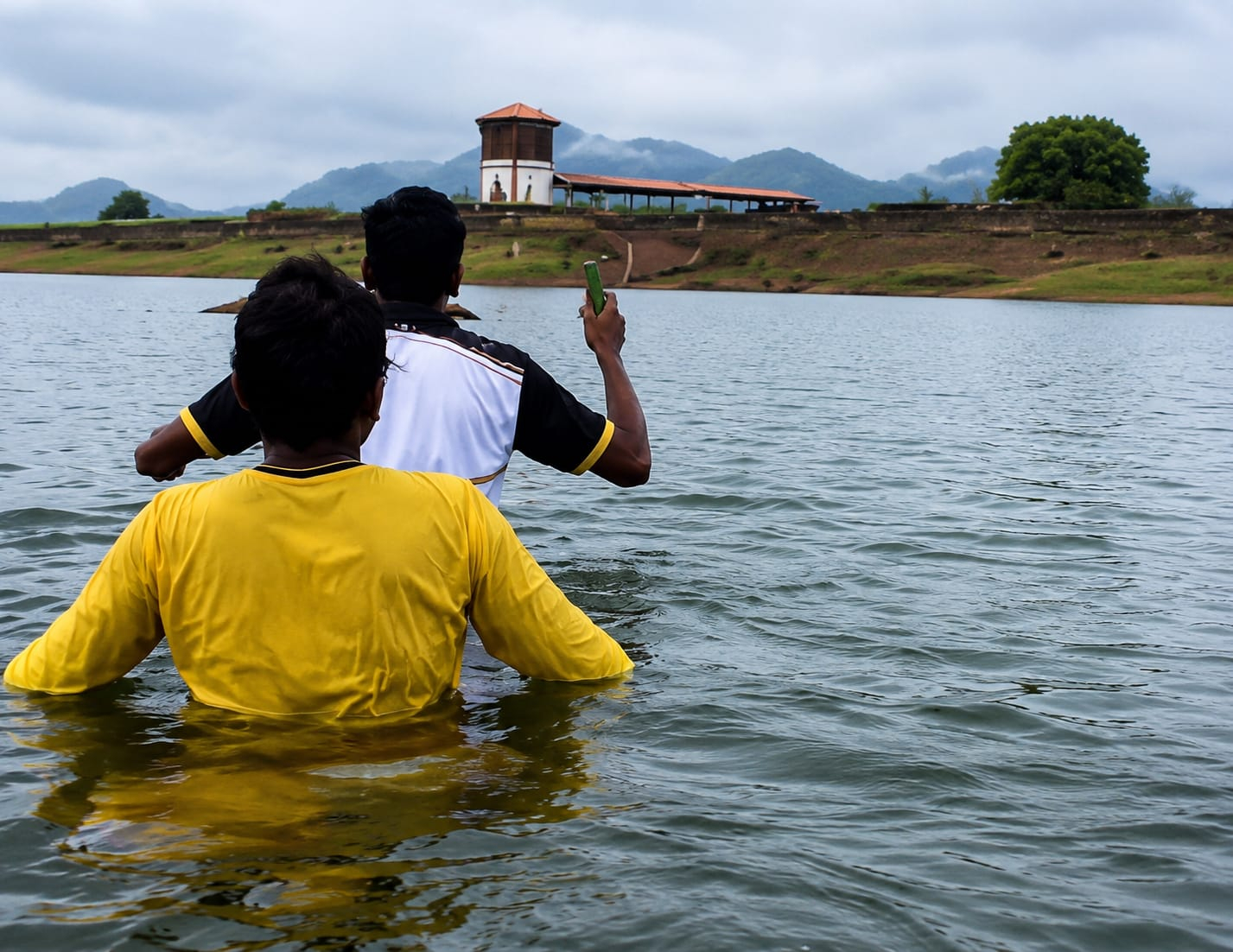
Undeterred by rising waters of the Salaulim reservoir, women, children and other devotees waded through waist-deep water on Tuesday to offer prayers at the ancient Lord Someshwar Temple in the submerged village of Kurdi, reflecting the deep-rooted faith and emotional bond the displaced community continues to share with the deity.
The shrine, located in the old Kurdi village of the Sanvordem constituency, remains submerged for nearly 11 months every year and becomes accessible only for a brief period when the reservoir's water level recedes.
With the recent rains raising the water level once again, the approach to the temple has gone underwater, yet devotees continue to make the journey through the flooded pathway.
Kurdi, along with the neighbouring villages of Talsai and Mangal, was submerged following the construction of the Selaulim Dam more than four decades ago.
While the affected families were rehabilitated in Vaddem, Valkini and other areas, and several temples and deities were relocated before submergence, Lord Someshwar continues to remain at the original sacred site.
According to local belief, a traditional ritual was performed before the evacuation of the village to seek the deity's guidance on relocation. It is believed that Lord Someshwar expressed the wish to remain in Kurdi, following which the temple was left untouched at its original location.
Every year, displaced families and devotees from nearby villages return to the shrine to perform annual rituals and seek the blessings of Lord Someshwar. During the brief period when the temple emerges from the waters, a large number of devotees from across Goa visit the historic shrine.
For many of the local devotees, the journey through the submerged landscape is not merely an act of devotion but an emotional return to their ancestral village.
Familiar with the old pathways hidden beneath the reservoir, they continue to preserve a tradition that has endured for decades, symbolising an unbroken bond with their homeland and their presiding deity.


