


THE GOAN NETWORK
VALPOI
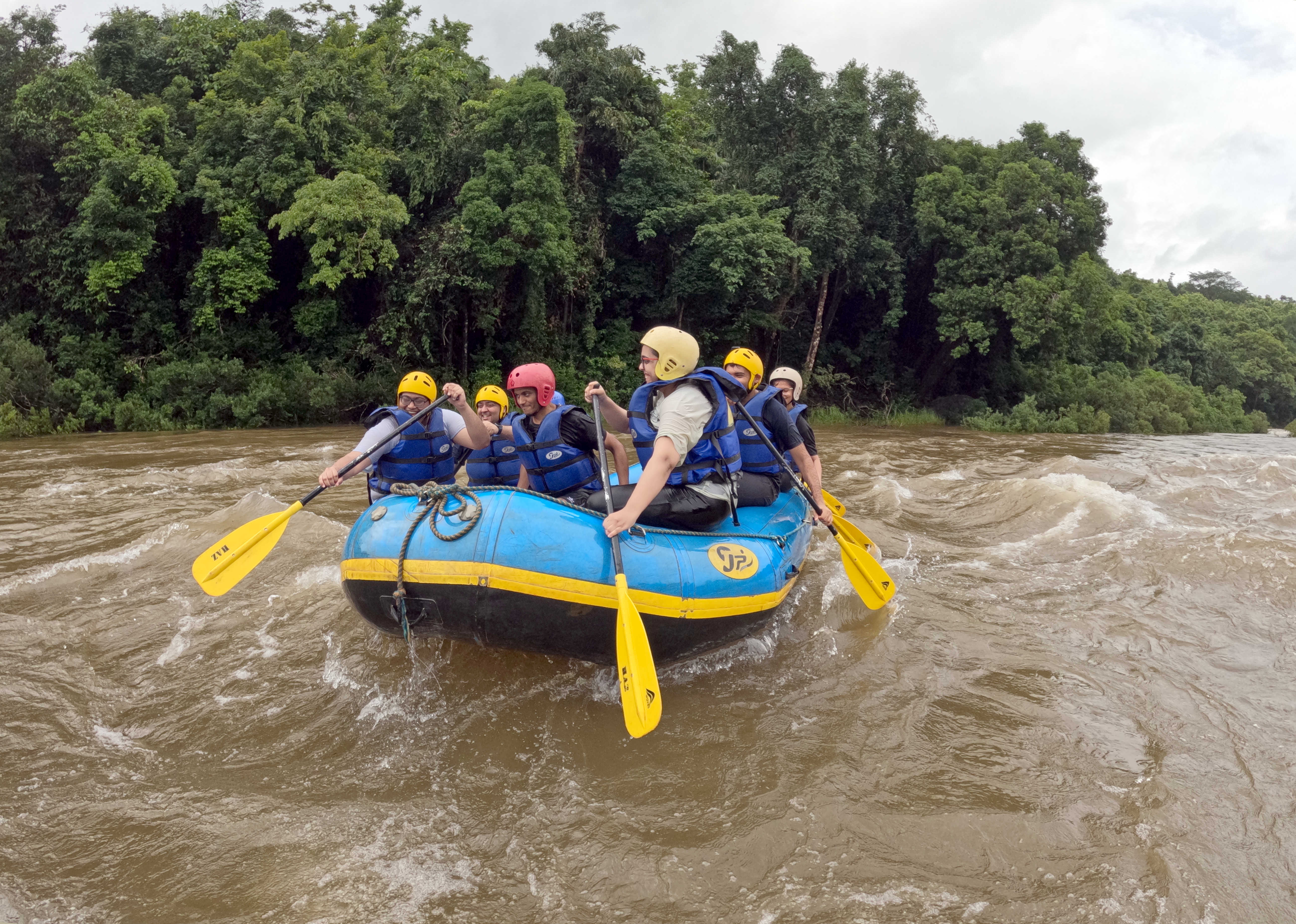
The popular white water rafting adventure tourism activity at Uste in Nagargao village of Sattari taluka, operated through the Goa Tourism Development Corporation (GTDC), is facing uncertainty due to the ongoing dry spell.
If rainfall does not resume in the coming days, the activity may have to be temporarily suspended as the water flow in the Mhadei River has reduced significantly.
With little or no rainfall over the past several days, the river's current has weakened considerably, directly affecting rafting operations.
The situation has raised concerns not only among adventure tourism operators but also among local businesses, the village panchayat, and others whose livelihoods depend on tourism.
White water rafting at Uste is one of Goa's popular adventure tourism attractions. The project was launched under the vision of former chief minister late Manohar Parrikar and has, over the years, attracted thousands of domestic and international tourists.
The monsoon season is considered the best time for rafting, as the swollen river provides the fast-flowing rapids needed for an exciting and safe adventure.
The rafting season had commenced last week, and five successful rafting trips were conducted during the initial days. However, the sudden break in rainfall has caused a sharp decline in the river's water level and flow. Since the ghat region has also received very little rainfall in recent days, the volume of water entering the Mhadei River has dropped considerably.
Officials associated with the activity are reportedly considering temporarily suspending online bookings because the present river flow is below the desired level for rafting.
Since tourists from across the country make advance online reservations, management is evaluating the move to avoid inconvenience in case scheduled rafting sessions have to be cancelled.
Last year, the rafting activity received a record response, with large numbers of tourists visiting Uste everyday. Strong river currents make the rafting experience more thrilling, while low water levels reduce both the excitement and the quality of the experience.
Adequate water flow remains the most important requirement for the successful operation of the activity.
The impact of a possible suspension extends beyond tourism alone. The rafting project generates revenue for Nagargao Panchayat and provides business opportunities for hotels, restaurants, transport operators, local guides, small vendors and several tourism-related enterprises in and around Valpoi.
A prolonged closure could therefore affect the livelihoods of many people who depend on the tourism season.


