THE GOAN
PANAJI
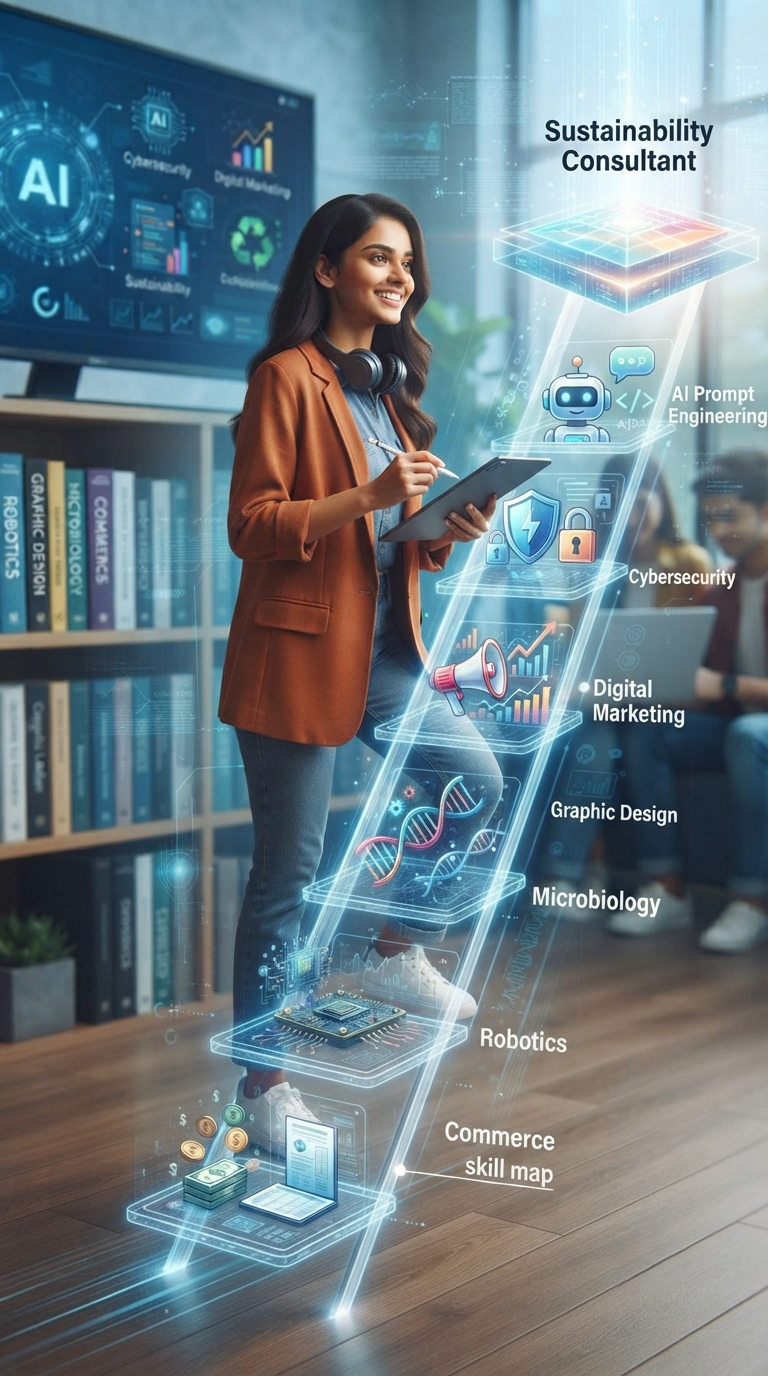
You ask a 10th-standard child, fresh from their board exams, what they want to be, and the answers are likely to include careers many adults had never even heard of a decade ago. User experience designer, microbiologist, AI prompt engineer, game developer and sustainability consultant are just some of the professions that now feature on young people's career wish lists. The old belief that Humanities leads only to teaching, Commerce to banking or accounting, and Science to engineering or medicine is steadily giving way to a far broader range of possibilities. It is no longer unusual to find a commerce student learning coding, an engineering student studying digital marketing, or an Arts student pursuing graphic design and artificial intelligence certifications.
Skills revolution
While the world marks World Youth Skills Day on July 15, this changing approach to education is becoming increasingly significant. As industries evolve and technology reshapes the workplace, employers are increasingly looking for graduates who combine academic knowledge with practical expertise, adaptability and digital literacy. The growing interest in upskilling is also reflected in online learning trends. According to reports by an online education platform in 2025 on Global Skills, India recorded a 107 per cent year-on-year increase in Generative Artificial Intelligence course enrolments, the highest in the world, with more than 2.6 million enrolments. The World Economic Forum's Future of Jobs Report 2025 also estimates that around 39 per cent of workers' core skills will change by 2030, with technological literacy, Artificial Intelligence, analytical thinking and resilience among the fastest-growing skills employers will seek in the coming years.
Beyond degrees
For Anita Naik, who has just recently graduated with her Bachelor of Commerce, learning does not end with lectures and textbooks. “While I have completed my B.Com, I don’t want to pursue the typical careers. Hence, during this break, I educated myself on social media marketing, budgets, and advertisements. So when I finally do enter the job market, I have something more than just a degree to show my employer,” she remarks.
Rohan Lobo, a Computer science graduate, mentions his interest in cybersecurity. “I am very much interested in ethical hacking; hence I have enrolled myself in the certification course. Their assignments and projects have allowed me to get hands-on practical learning experience,” he remarks. “In a field like computer science, Technology is changing so quickly that what we learn in the first year may already be outdated by the time we graduate. Upskilling is no longer optional. It is something we have to keep doing throughout our careers," he says.
Changing job market
Goa's changing economy is also influencing the way young people think about careers. While tourism and hospitality remain key employers, other opportunities in information technology and digital marketing are steadily growing. Recruiters increasingly look for candidates who possess practical skills alongside their degrees, particularly in industries where employers expect graduates to contribute from the very beginning. However, the growing emphasis on upskilling also brings its own challenges. Many specialised certification courses are offered at a high cost, making them inaccessible to some students. Others admit they often feel pressured to keep adding new qualifications simply to remain competitive in an increasingly crowded job market.
Following passion
For Nadia D'Souza, choosing Science did not define her future. "While I chose Science, I realised that my real interest was photography and content creation. What started as a hobby has now become something I genuinely enjoy," she says. However, she believes passion alone is not enough. "If I want to make it my full-time career, I will have to learn editing, Photoshop and even social media marketing. There is always something new to learn." Nadia's journey reflects a wider shift among students.
Future learning
Recognising these changing aspirations, colleges and educational institutions are increasingly introducing multidisciplinary and skill-based courses in areas such as robotics, coding, culinary arts and visual media, encouraging students to explore interests beyond their core subjects while building practical skills for the future. There was a time when choosing a stream almost decided a person's career. Today, that path is far less predictable. Perhaps that is why asking a teenager what they want to become no longer has a simple answer. For many young people, a degree is only the starting point. What shapes their future is the willingness to keep learning long after the classroom lessons end.