Historically, major revolutions, including the American, French, and Industrial Revolutions, often began due to a combination of political, social, economic, and intellectual factors. And while each revolution had its unique triggers, some notable instances were:
American Revolution (1775-1783): British colonial policies, especially heavy taxation, without colonial representation, stirred economic discontent. The colonists resented being taxed by a distant government without having any political voice.
French Revolution (1789-1799): The widespread poverty, high taxation on commoners, and the extravagant spending of the monarchy fueled anger. The French population faced severe food shortages and economic inequality under the feudal system, where the aristocracy and clergy enjoyed privileges, while the peasantry and emerging bourgeoisie bore the tax burden.
Russian Revolution (1917): Continuous oppression under the Tsarist regime, coupled with the disenfranchisement of workers and peasants, led to calls for a more inclusive and representative government, culminating in the overthrow of the Tsar and the establishment of a socialist state.
Latin American Revolutions (19th century): Class tensions also escalated in Latin America, where the creoles (American-born descendants of Spaniards) resented the dominance of the peninsulares (Spaniards born in Spain) who held the highest government and church positions. Despite their wealth and influence, creoles were often excluded from top positions, creating class-based tension that contributed to independence movements.
And then, in the historical parallel there were the revolutions in Christianity.
The Great Schism (1054): Also known as the East-West Schism, was the formal split between the Roman Catholic Church in the West and the Eastern Orthodox Church in the East. It was a culmination of centuries of growing tensions between the Western Latin-speaking Church and the Eastern Greek-speaking Church.
The Protestant Reformation (16th Century): It was one of the most significant religious revolutions in Christianity, beginning in 1517 when Martin Luther posted his Ninety-Five Theses. The Reformation sparked the division of Western Christianity into Catholicism and various branches of Protestantism.
English Reformation (16th Century): It was a political and religious revolution that resulted in the creation of the Church of England, separate from the authority of the Pope and the Roman Catholic Church.
The Catholic Counter-Reformation (16th Century): It was the Catholic Church’s response to the Protestant Reformation. It sought to reaffirm Catholic doctrines. These religious revolutions often escalated through class tensions, with both the common people and the emerging middle class pushing back against the privileges and wealth of the established Church.
Unity, peaceful dialogue,
and reaffirmation of faith
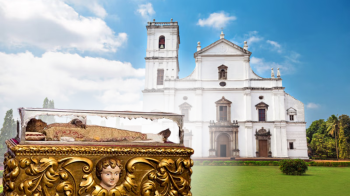
When Christians face an attack on the sanctity of their patron saints by individuals from another faith, their response ought to focus on unity, peaceful dialogue, and reaffirmation of faith.
Fostering unity through faith and prayer: Christian denominations (Catholic, Orthodox, Protestant) can unite across theological lines during such times. Ecumenical gatherings can bring together different Christian communities in joint prayer and reflection, promoting unity and shared devotion.
Promoting peaceful dialogue and mutual respect: One effective response to attacks on religious figures is to engage in interfaith dialogue. Christian leaders can open communication with religious leaders to foster mutual understanding and respect. Such dialogue often helps reduce tensions and encourages respect for religious symbols across different communities.
Emphasizing Christian values of forgiveness and peace: A central tenet of Christian teaching is forgiveness. While it may be difficult, emphasizing forgiveness and peaceful responses in the face of perceived or real disrespect reflects the Christian faith and moral high ground.
Fostering environment
of religious unity
Ecumenical gatherings can play a significant role in fostering an environment of religious unity and tolerance by creating spaces where diverse Christian denominations come together to engage in dialogue, share in worship, and work on common goals. These gatherings promote mutual understanding, respect, and cooperation among different Christian traditions, often helping to heal historical divisions and build bridges across theological and doctrinal differences.
Theological conversations: Ecumenical gatherings provide a platform for representatives of different Christian denominations to engage in theological discussions.
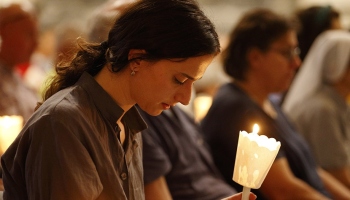
Joint prayer services: Ecumenical gatherings often include joint prayer services or worship sessions where participants from different denominations come together to pray and worship.
Working together on social causes: Ecumenical gatherings often focus on social justice issues that resonate across denominational lines, such as poverty, human rights, environmental sustainability, and peace.
Celebrating diversity in unity: Ecumenical gatherings often emphasize the idea that diversity within the Christian faith can be a source of strength rather than division.
Affirming a common
Christian identity
Ecumenical gatherings often emphasize the core beliefs shared by all Christians, such as the divinity of Christ, the centrality of the Bible, and the importance of baptism. By focusing on these commonalities, ecumenical movements reinforce the unity of Christians as part of one body, despite their diversity.
John W De Gruchy, (2002) in his book entitled: Reconciliation: Restoring Justice examines the role of ecumenism in reconciliation efforts, particularly in post-apartheid South Africa. His work demonstrated how ecumenical gatherings could be platforms for promoting both religious unity and social justice, showing the profound impact of ecumenism in real-world conflicts.
Jacques Dupuis, (2001) in his book entitled: Christianity and the Religions: From Confrontation to Dialogue examined how the ecumenical movement had evolved to include interfaith dialogue, recognising that the path to Christian unity often intersects with the broader world of inter-religious engagement.
Ecumenical gatherings can play a pivotal role in fostering unity among Christian denominations in response to Subhash Velingkar’s statements.
Christians by uniting in shared prayer, advocacy for religious freedom, and efforts to promote tolerance, through large scale gatherings could help present a strong, peaceful, and unified front.
Such an approach would not only reinforce the sanctity of St Francis Xavier but would also promote a broader religious harmony and understanding, ensuring that the response is rooted in Christian values of love, respect, and peace.