Peter F Borges
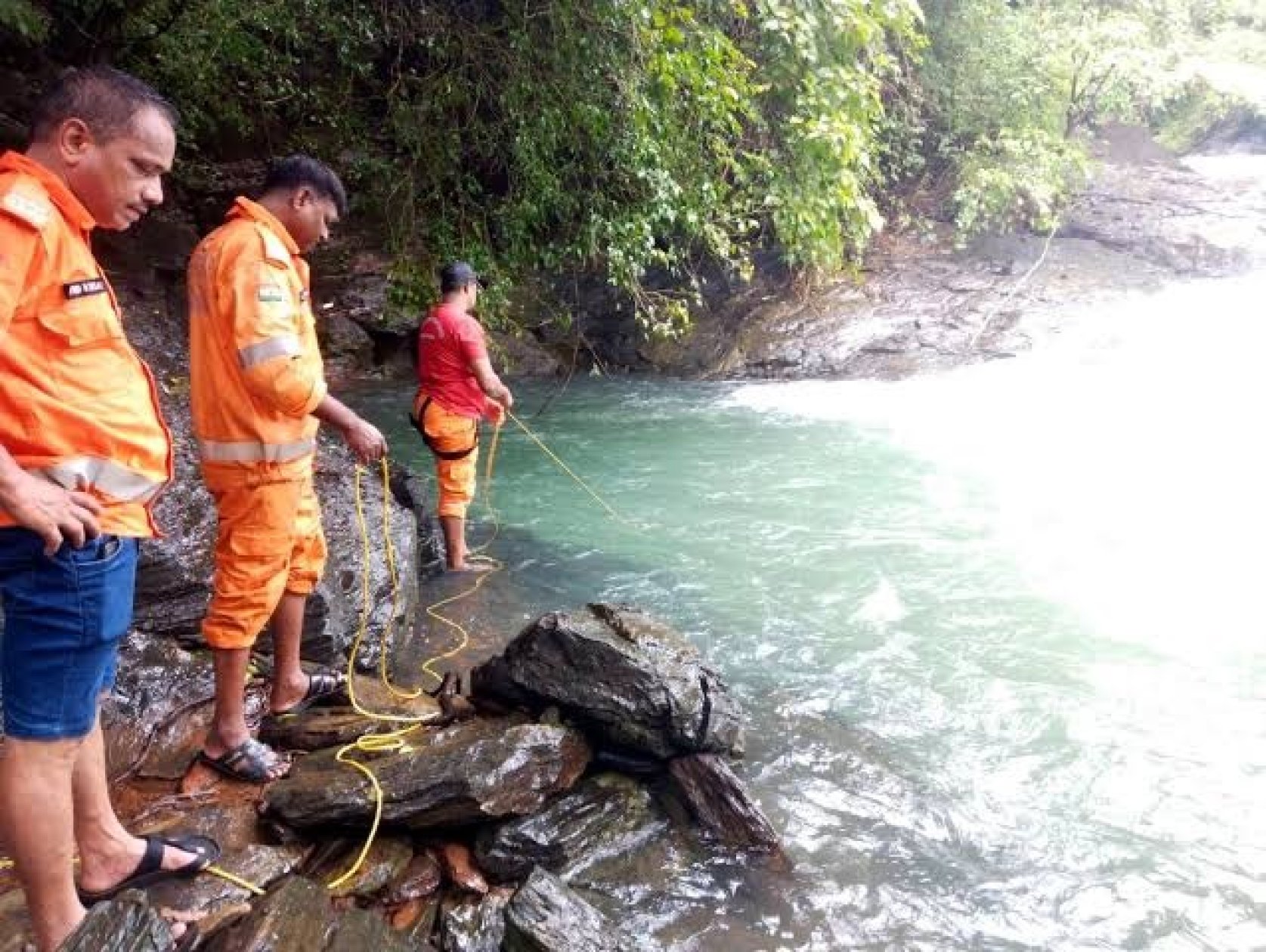
A child goes for a picnic and does not return home. Another enters a water-filled quarry with friends and disappears beneath the surface. Four schoolchildren go on a trek and never return alive. A five-year-old enters a hotel swimming pool while on holiday and drowns. Elsewhere, a teenager ventures towards a waterfall. Within minutes, recreation becomes rescue, rescue becomes recovery, and another family begins a lifetime of grief.
Over the past decade, Goa has repeatedly witnessed children drowning in rivers, waterfalls, canals, abandoned quarries, mining pits and swimming pools. Some were on school outings, some with friends or families. We call these “drowning accidents”. But after how many deaths does an accident become a warning? And after how many warnings does failure to prevent the next death become a question of accountability?
The more disturbing question is whether Goa can say how many children have drowned in the State every year for the last ten years. Not how many people drowned, but how many children; where they drowned; their ages; and whether it was a quarry, pool, river, well, canal, waterfall or the sea.
Despite repeated tragedies, a readily accessible consolidated child-specific drowning database does not appear to be available in the public domain. That should worry us. If we are not systematically counting and analysing how children drown, what exactly are we preventing?
The 2019 tragedy at Tuem should have shaken Goa permanently. Four schoolchildren, reportedly aged between 11 and 14, drowned in a water-filled laterite quarry during a trek. Four children. Four families. One tragedy that should have forced us to examine every abandoned quarry accessible to children. Yet years passed. In July 2023, another 16-year-old boy drowned in a water-filled abandoned laterite quarry at Cansaulim.
During my tenure as Chairperson of the Goa State Commission for Protection of Child Rights, the Commission took suo motu cognisance of the Cansaulim death. We called upon the District Magistrates of North and South Goa to survey abandoned quarries, including illegal ones, identify risks and initiate preventive measures. Restricting access, fencing hazardous sites and ensuring that such places did not remain death traps accessible to children were among the concerns raised.
That was 2023. It is now 2026, and Goa is once again discussing fencing dangerous quarries, restricting access to hazardous water bodies and strengthening enforcement following more drowning deaths. What happened in between? Were the quarries mapped? How many were fenced? How many remain accessible? Who was responsible for monitoring them? Were inspections undertaken before every monsoon? If we cannot answer these questions, perhaps the problem is not that Goa did not know about the danger. Perhaps we knew and failed to follow through.
Quarries tell only part of the story. In 2023, the Child Rights Commission raised concerns over children drowning in commercial swimming pools. Following the drowning of a five-year-old child in a hotel swimming pool at Varca, it was reported that six children had died in swimming pools in Goa since 2017. The Commission called for stricter safety standards, including trained lifeguards, restricting access when pools were unsupervised and appropriate safety measures for younger children.
The same principle applies elsewhere. An abandoned quarry filling with rainwater is foreseeable. A waterfall becoming dangerous during the monsoon is foreseeable. Sudden river currents are foreseeable. Adolescents being attracted to scenic waterfalls and deep pools is foreseeable. Children taking risks with friends is foreseeable. Child protection exists precisely because children cannot be expected to assess danger like adults.
Yet after drowning deaths, our questions often turn towards the victim. Why did they enter the water? Why did they go there? Where were the parents? Why did the teachers allow it? These questions may sometimes be relevant, but they cannot replace the bigger question: where was the prevention system?
School excursions require clear risk assessments, destination verification, adequate adult-child ratios, emergency preparedness, parental informed consent, weather assessment, first-aid capability and strict protocols around water bodies. Arresting teachers or tour operators after a child dies cannot become our drowning-prevention strategy. Neither can issuing prohibitory orders after deaths.
Goa needs a State Drowning Prevention and Water Safety Strategy with children at its centre, beginning with a ten-year child drowning audit. We need to know how many children drowned each year, their ages, locations, type of water body and circumstances. Police, health and other official records should be reconciled into one child-specific database.
Every abandoned quarry, mining pit and recurring drowning hotspot should then be geo-mapped, with identifiable authorities responsible for fencing, signage, inspection and enforcement. High-risk rivers and waterfalls need seasonal risk classifications. Commercial pools require enforceable child-safety standards. School excursion protocols need genuine risk assessments. Communities around dangerous water bodies need rescue and CPR capacity. Children need age-appropriate water-safety education, swimming and survival skills. Prevention must go beyond bans, barricades and warning boards.
There is a disturbing irony. Goa understands water safety when it chooses to. On our major beaches, we identify danger zones, deploy lifeguards, raise warning flags, conduct rescues and communicate risks. Why should a tourist entering the Arabian Sea encounter a stronger safety ecosystem than a child approaching an abandoned quarry in Goa’s hinterland?
Every drowning death may not be preventable. But there is a moral difference between an unforeseen tragedy and a death occurring within a danger society already knew existed.
We knew children were drowning in swimming pools. We knew abandoned quarries were dangerous. We knew waterfalls and rivers become treacherous during the monsoon. We knew children would continue exploring them. We recommended preventive measures. And children are still dying.
Before another child disappears beneath the water and another family waits helplessly on the bank, Goa must answer: How many children have we lost to drowning in the last ten years? And if we cannot even readily answer that, what exactly are we doing to prevent the next one?
The writer is an Assistant Professor of Social Work, Goa University and Founder, Human Touch Foundation and Former Chairperson of the Goa State Commission for Protection of Child Rights