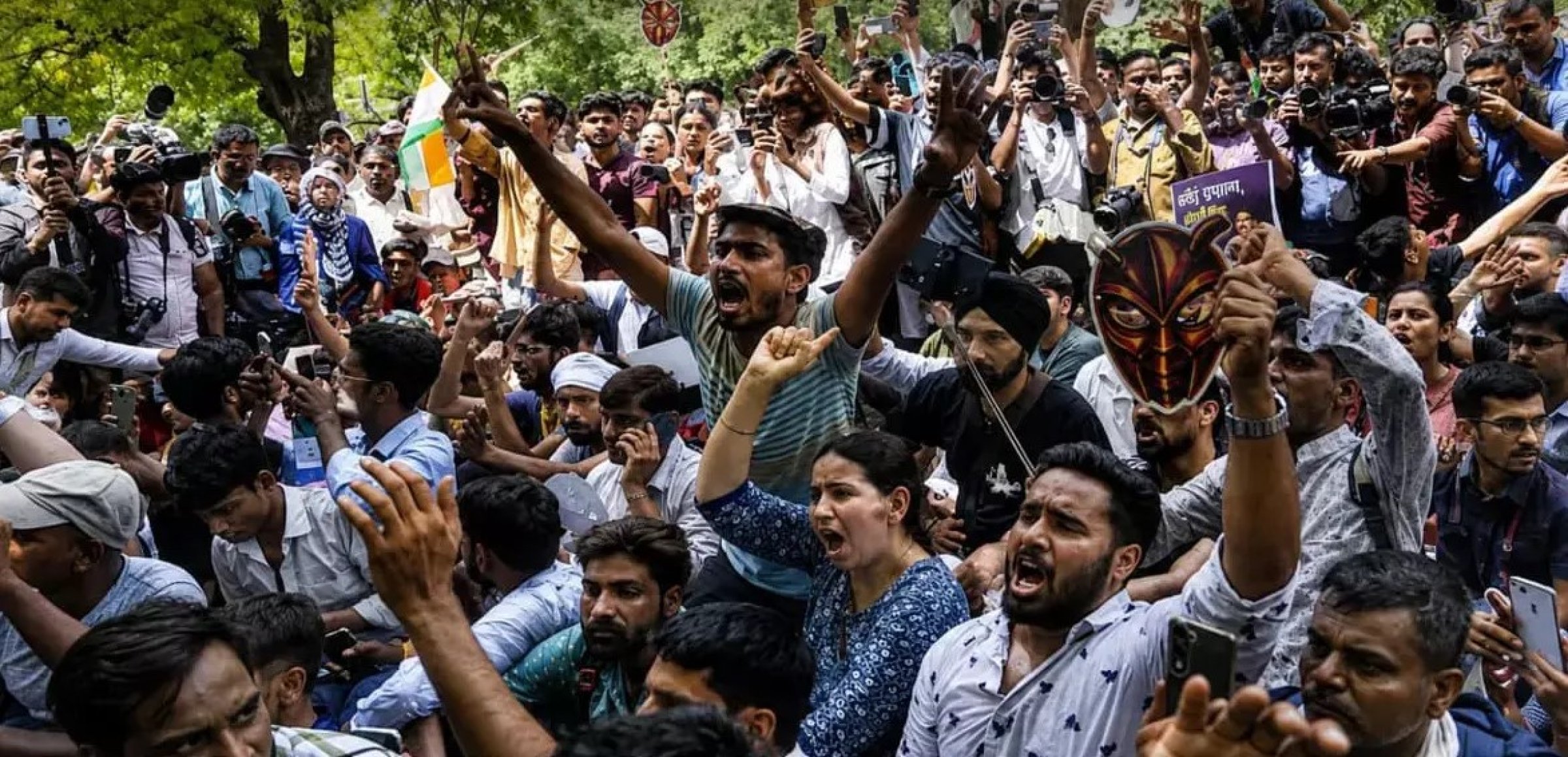
Digital agitation is now a core part of modern social and political movements. The Cockroach Janta Party protests are a hybrid movement which began as a satirical virtual campaign online, and went on to successfully transition into physical mass demonstrations on the streets of New Delhi.
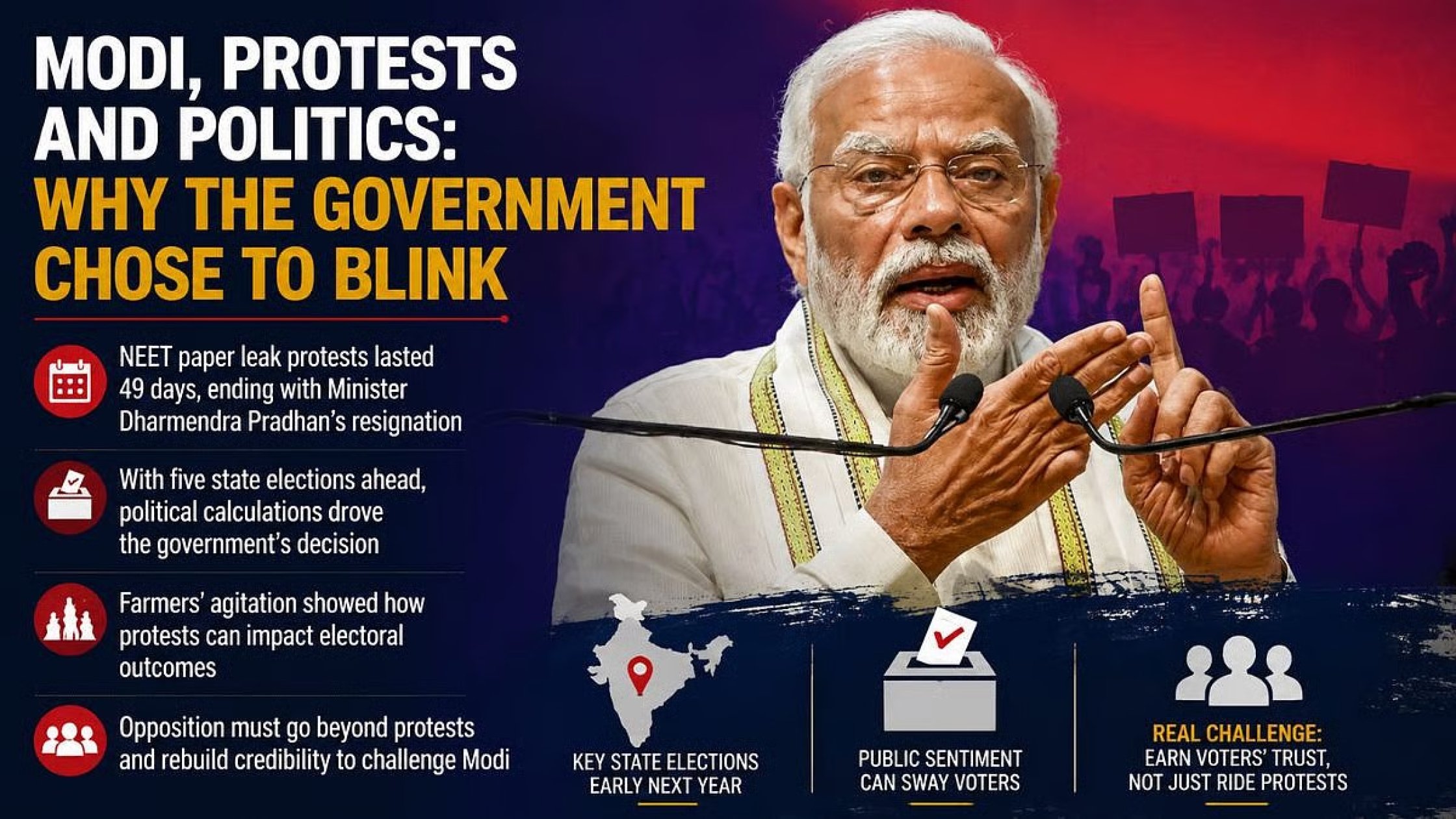
Whether the ‘Cockroach’ movement has dramatically altered Indian politics is difficult to say; but yes, stopping just short of threatening a Gen Z revolution of the kind India’s neighbours have undergone, it did successfully dent the ruling administration’s aura of invincibility.
Repeated competitive exam paper leaks, deep job scarcity, and vanishing career paths have galvanized India’s Gen Z, turning online anger and street protests into a loud demand for accountability that leaders can no longer ignore.
While youth-led activism has always existed, the digital revolution has fundamentally altered how adolescents communicate, form identities, and coordinate collective action.
Online youth movements are uniquely resilient because they are built on decentralized digital infrastructure, continuous identity formation, and interconnected global causes rather than a solitary, fleeting demand.
Unlike historical single-issue agitations like, say anti-war protests; modern digital youth activism integrates deeply into daily social media habits and adapts to changing political climates.
However, it is believed that online youth culture shifts rapidly due to new technology, changing social values, and evolving digital platforms. What captures the attention of young people today can completely disappear tomorrow.
In this context, would it be right to term the intense protests that marked the Cockroach Janta Party’s digital viral campaign an ‘interim’ phase!
Many however believe that calling the CJP movement a purely temporary fad would be inaccurate. The online youth phenomenon just cannot be expected to fade away like past single-issue agitations.
“While it started rapidly as a viral digital joke, it translated into sustained offline mobilization, forced a high-profile cabinet resignation, and is actively institutionalizing its civic footprint.” (BBC)
The belief that digital youth movements do not fade away is a common misconception driven by the permanent nature of the internet’s archives. A hashtag, a meme party like India’s Cockroach Janta Party can remain viewable online forever, but their real-world momentum often drops sharply after the initial viral wave.
However, digital youth movements do tend to fade if they fail to bridge the gap between viral online traction and physical, structured grassroots organization.
“While social media algorithms can generate millions of views and massive initial hype overnight, research shows that digital-only activism is highly vulnerable to rapid burnout and algorithm modifications.” (ResearchGate)
India has experienced multiple wave-based digital youth movements before the recent CJP ‘uprising’, transitioning from decentralized hashtag awareness campaigns to massive online-to-offline mobilizations like the ‘India Against Corruption Movement’, ‘#Farmers Protest’ and ‘#MeTooIndia’.
The new vocabulary of protest has just changed. Modern political dissent has shifted from rigid street chants to internet-native satire, moving rapidly through social media platforms.
Analysts highlight how Gen Z protesters utilized satirical humour, internet slang, and meme culture to subvert conventional political hierarchies and redefine dissent.
So, would it be suggestive of the fact that youth-led agitations and protests henceforth would assume the digital path! That is far from true, say experts.
The shift toward digital spaces does not mean physical protests will disappear! Rather, youth-led movements now operate on a hybrid model where digital tools and physical actions permanently reinforce each other.
Digital platforms serve as the logistics network, while the streets remain the ultimate stage for political impact.
Nevertheless, digital platforms are the new normal in protests, transforming how people organize, share information, and fight power. Phones and apps let groups bypass traditional media to mobilize crowds instantly, though governments increasingly fight back with digital blocks and surveillance.
Social platforms constantly chase fresh trends and immediate reactions, quickly burying older topics to feed users new spectacles. Moreover, many viral trends lack offline organization, clear leadership, or practical steps to turn digital noise into real world change.
Different generations use social media in distinct ways, primarily split by preferred platforms, communication styles, and content expectations. Older groups lean toward community and family updates, while younger groups drive fast-paced trends and visual communications.
Gen Z social media movements, on the other hand, are fast-moving, decentralized digital campaigns driven by short-form video algorithms, viral humour, and peer-to-peer networks rather than formal organizational hierarchies.
Let us not forget that mass uprisings and people’s movements have significantly reshaped India’s political landscape. These profound swings demonstrate how collective action alters national power structures, regional authority, and public policy.
Modern India has seen the rise of various movements that have not only responded to historical injustices but have also addressed new and emerging challenges.
It is all the more encouraging to know that the country’s social movements are adapting to new dynamics, with digital activism, youth engagement, and global inspiration shaping how protests and campaigns unfold.
Social media has revolutionized activism, enabling local issues to gain national traction by helping them to grow fast, reaching wider audiences, and organizing people instantly.
Digital networks facilitate both horizontal collaboration among grassroots actors and vertical pressure on institutions, enabling campaigns to transcend geographic boundaries and engage a global audience.
Digital movements are a modern form of social movements, characterized by hashtag campaigns, viral petitions, and decentralized online organizing. They use the internet to connect people, share ideas, and build shared goals.
If social media fundamentally changed how governments operate, it has also completely transformed how citizens organize and execute protests.
It is becoming more than obvious now that protests in the digital age which seem to rely on decentralized networks, rapid online coordination, and social media platforms to mobilize crowds instantly, are transforming traditional civic action into leaderless global movements.