MARGAO
The controversial end to the Indian Super League playoff match between Bengaluru FC and Kerala Blasters and the handling of the situation by the officials drew sharp responses across the football fraternity and fans.
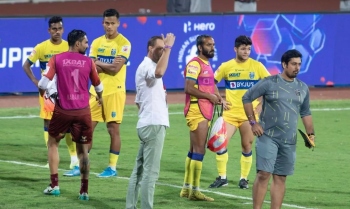
The Blasters walked off the pitch, abandoning the match after what they thought was an illegitimate goal off a free-kick allowed by the referee. Kerala's protest that “the referee allowed a player from the BFC to take a free-kick without blowing a whistle” was rejected by the All India Football Federation Disciplinary Committee.
"It is unfortunate the match had to finish controversially. Along with the laws of the game, the referee has to make sure the game is played in a manner fair to both teams. I am not happy to see the Kerala Blasters team walk out contesting the referee's decision," said Francis D'Souza, former national referee and former international footballer. "I saw the game on TV. There is nothing wrong with the goal. Kerala players were not organised, it's their fault. The referee had not stopped play, it is so visible to everyone," said Gasper Crasto, former Salgaocar striker. "It was a legitimate goal. I am not arguing with the referee's decision and act as per the laws of the Game," said Alvito D'Cunha, former India and East Bengal player.
"I think the goal is valid. The opponent should be alert and ready to defend at all times. The referee had no other option but to allow the goal. Whether Chhetri should have taken advantage of such a situation is a different question," said former India midfielder Lector Mascarenhas.
At the surface level, many believe that neither did referee Crystal John blow the whistle before the free-kick nor did he use the vanishing spray to mark the wall's line. However, a closer look at the FIFA rules may bring some clarity. According to FIFA's Law 13 which deals with free-kicks, "all opponents must be at least 9.15m (10 yds) from the ball until it is in play." This means that all the Blasters players should have been at least 10 yards away from Chhetri. "If, when a free kick is taken, an opponent is closer to the ball than the required distance: the kick is retaken," the rules further read.
"It was the referee's mistake. The free-kick was given in the danger area of the rival team and that meant he should have ensured that the kick was taken only after the wall was set and the goalkeeper was ready. What the referee did was wrong," said a former national referee, who did not wish to be named.